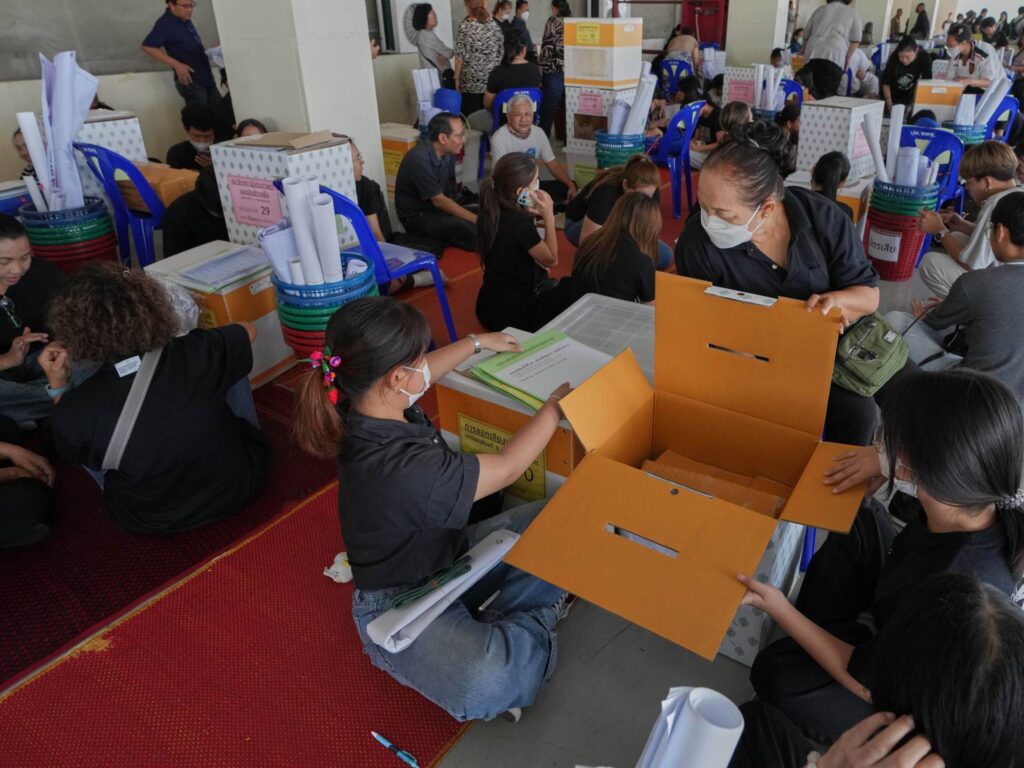
As polls open in Thailand for the highly anticipated Sunday general election, the political landscape is marked by uncertainty and intense competition among three main parties. Voters are heading to the polls to cast their ballots in what is expected to be a tightly contested race. No single party is currently projected to secure a clear majority, raising concerns about the potential for political instability following the election results.
The three dominant parties have campaigned vigorously, each presenting distinct platforms and visions for Thailand’s future. Their policies range across economic reform, social welfare, national security, and addressing longstanding issues such as income inequality and democracy. The electorate is divided, reflecting varying regional, social, and economic interests.
Political analysts suggest that the election outcome may lead to coalition negotiations, as parties strive to form a workable government capable of delivering stability and progress. However, the fragmented mandate could complicate the legislative process and governance, with potential impacts on investor confidence and international relations.
The election comes at a critical juncture for Thailand, which has experienced political turmoil and changes in government in recent years. The public’s desire for effective leadership and sustainable policies is palpable, but the risk of political deadlock remains high.
Observers are closely monitoring voter turnout and electoral integrity, as the democratic process is vital to maintaining public trust and preventing civil unrest. The role of smaller parties and independent candidates could also prove significant in tipping the balance during coalition talks.
In summary, Sunday’s election is a pivotal moment for Thailand, encapsulating the country’s ongoing quest for democratic stability and governance that reflects the will of its diverse population. The coming days will reveal how this competitive electoral contest shapes the nation’s political trajectory amid hopes and concerns about a fragmented parliamentary landscape.