The last remaining treaty between Russia and the United States aimed at curbing nuclear arms is set to expire, raising alarms within the international community about the future of global peace and security. The treaty, a crucial agreement in arms control between the two nuclear superpowers, has played a pivotal role in limiting the number of deployed strategic nuclear warheads and delivery systems.
The United Nations has openly expressed deep concern over this development, describing it as a ‘grave moment for international peace and security.’ The UN has urged both Russia and the United States to engage in diplomatic talks to prevent a potential arms race that could destabilize the global order.
Historically, arms control agreements between Russia and the US have significantly reduced the likelihood of nuclear conflict and fostered a measure of strategic stability. The upcoming expiration of the current treaty without a subsequent framework poses the risk of an unchecked buildup of nuclear arsenals.
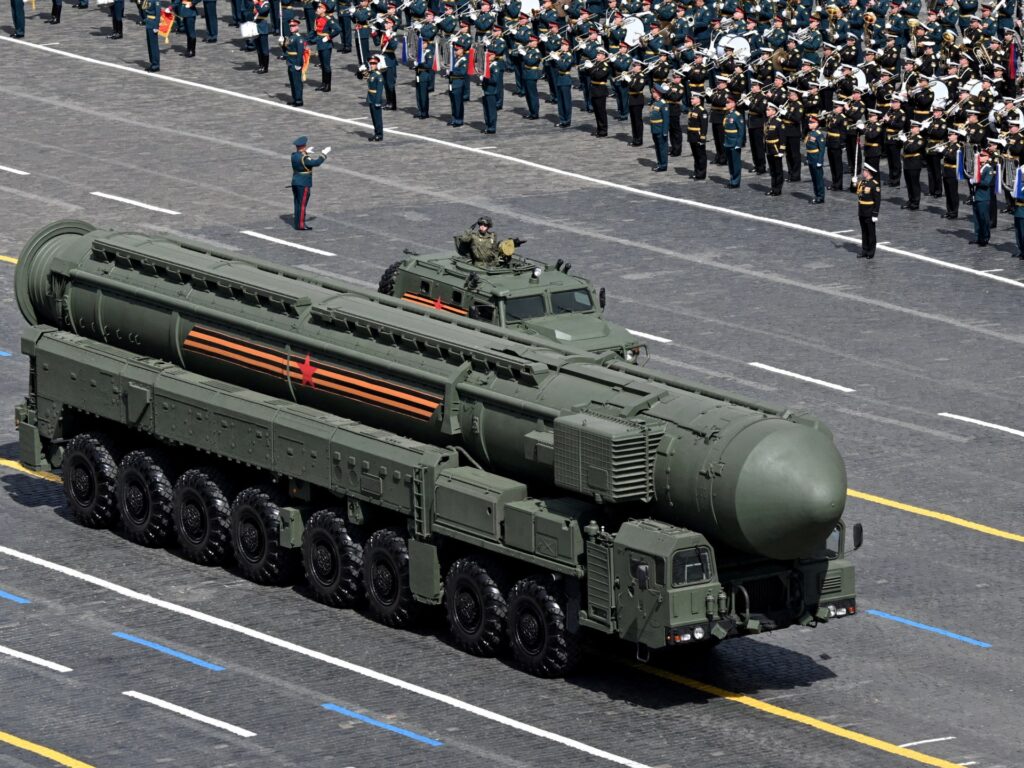
The treaty, which has been in place for several years, requires both nations to maintain austere limits on the number of nuclear warheads and delivery vehicles, including intercontinental ballistic missiles (ICBMs), submarine-launched ballistic missiles (SLBMs), and heavy bombers.
Experts warn that without a renewal or replacement of the treaty, the arms control regime could unravel, leading to uncertainty and increased tensions between the two nations. This development comes at a time when geopolitical complexities and regional conflicts have already strained international relations.
The expiration of the treaty could also have a ripple effect, potentially causing other nuclear-armed countries to reassess their own policies and possibly accelerate their nuclear weapons programs. Such a scenario would further complicate global disarmament efforts and diminish the prospects for non-proliferation.
International security analysts emphasize the importance of dialogue and cooperation between Russia and the United States, highlighting that preserving arms reduction agreements is vital for global stability.
The UN Secretary-General has appealed for urgent negotiations, stating that the world cannot afford to face a new era of nuclear uncertainty. He encouraged both parties to demonstrate leadership and responsibility by extending the treaty or crafting a new agreement that addresses current and emerging security challenges.
Civil society organizations, disarmament advocates, and many governments worldwide have also voiced their concerns, calling for renewed commitment to nuclear arms control and disarmament.
As the expiration date approaches, the global community watches anxiously, hoping that diplomatic channels will remain open and that Russia and the United States will prioritize peace and security over strategic rivalry.
The coming weeks are critical as both nations consider their next steps amid mounting international pressure. Observers note that proactive engagement could pave the way for a new chapter in nuclear arms reduction, reinforcing the global non-proliferation regime and contributing to a safer world.
In summary, the impending expiration of the last Russia-US nuclear arms treaty represents a potential turning point for international peace and security. The call from the UN and the world is clear: Russia and the United States must enter talks and reaffirm their commitment to controlling and ultimately reducing nuclear weapons to ensure a stable and secure future for all.