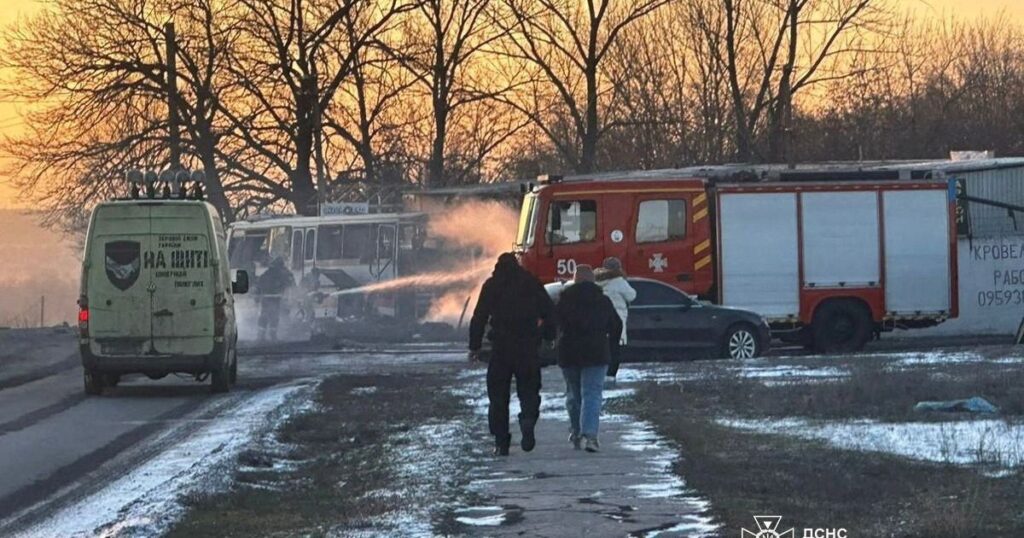
A deadly Russian drone strike targeted a bus carrying mine workers in Ukraine’s Dnipropetrovsk region, resulting in the deaths of at least 12 individuals and injuring seven others.
The attack, which has shocked the local community and drawn international condemnation, underscores the ongoing dangers faced by civilians in the conflict zones of Ukraine.
According to local officials, the bus was hit directly, causing significant casualties among the workers who were on their way to or from a mining site. Emergency services rushed to the scene to assist survivors and transport the injured to nearby hospitals for treatment.
The Dnipropetrovsk region, known for its industrial and mining activities, has been under threat due to its strategic importance and proximity to contested areas.
This incident is one of several recent attacks in the area attributed to Russian forces, highlighting the escalation in drone warfare tactics used during the conflict.
The Ukrainian government has condemned the attack as a war crime targeting civilians, urging the international community to hold the perpetrators accountable.
Witnesses described the scene as chaotic and terrifying, with emergency workers struggling to reach and evacuate victims amidst ongoing dangers.
Medical personnel have reported that the injured include both critical and moderate cases, requiring urgent and intensive care.
Local authorities have called for increased security measures to prevent further tragedies and protect critical infrastructure and workers.
This attack not only devastates families and communities but also disrupts vital mining operations which are crucial for the local economy.
International human rights organizations have called for thorough investigations and increased humanitarian support for affected regions.
As the conflict continues, incidents like these highlight the severe impact on civilian populations and the challenges faced by Ukraine in maintaining stability and security.
Efforts to negotiate peace have so far been unsuccessful, with both sides continuing military operations and applying new technologies such as drones in their strategies.
The use of drones has increased the risk to non-combatants, complicating protection efforts and raising ethical and legal questions.
In response to the attack, Ukrainian officials have reassured citizens that measures are being enhanced to detect and neutralize drone threats.
They have also called on international allies to provide technical assistance and increase support for Ukraine’s defense capabilities.
The tragedy in Dnipropetrovsk serves as a stark reminder of the unpredictable and lethal nature of modern warfare and the high toll it takes on innocent lives.
As investigations continue, authorities aim to gather intelligence to prevent similar attacks and bring those responsible to justice.
The community mourns the loss of the mine workers, many of whom were essential providers for their families and contributors to the region’s economy.
Relief organizations have mobilized to offer psychological support and aid to the affected families, recognizing the long-term impact of such violent incidents.
Regional leaders have called for unity and resilience in the face of ongoing aggression.
The incident has drawn commentary from global leaders who emphasized the need for diplomacy and a halt to hostilities to prevent further civilian casualties.
This attack illustrates the grim reality of warfare tactics that increasingly target infrastructure and workers, intensifying the humanitarian crisis in Ukraine.
The resilience of the Ukrainian people remains evident as communities rally to support victims and push for peace.
Meanwhile, the international community faces mounting pressure to increase aid and diplomatic efforts.
The events in Dnipropetrovsk are a somber chapter in the ongoing conflict, reminding all of the urgency for sustainable solutions to end violence and suffering.