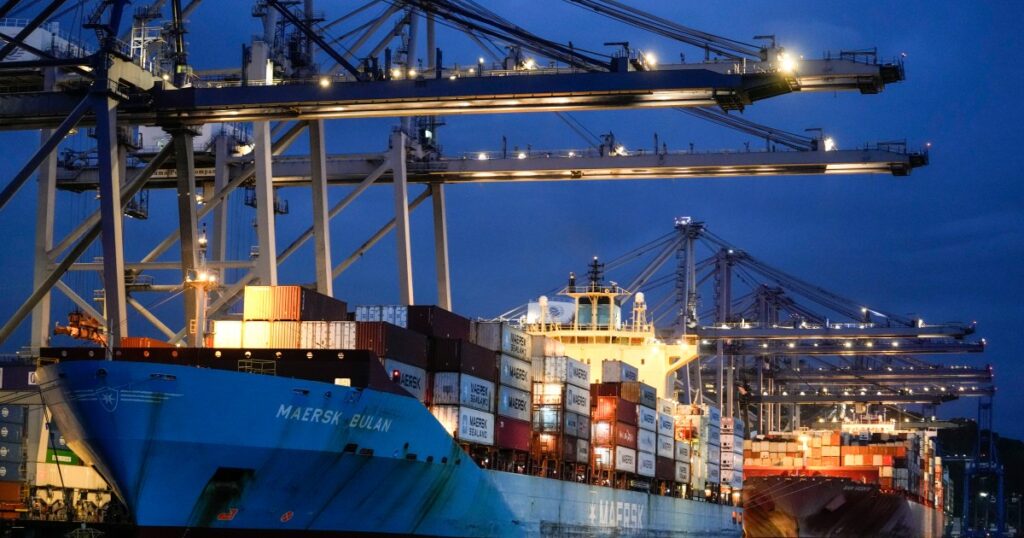
In a landmark decision in 2025, the Panamanian Supreme Court declared the agreements granting China control over key ports along the Panama Canal unconstitutional. This ruling has significant geopolitical implications as it comes at a time when the United States openly threatened to seize control of this strategic waterway to maintain its influence over the crucial canal.
The lawsuit, brought before the Panamanian court earlier in 2025, challenged the legitimacy of the port control agreements signed between Panama and Chinese companies. These agreements allowed China to operate and control several critical port facilities near the canal, raising concerns about national sovereignty and security.
The Panama Canal is one of the world’s most vital maritime routes, connecting the Atlantic and Pacific Oceans and facilitating global trade. Control over its ports grants significant strategic leverage, prompting international scrutiny and political tension, especially between China and the US.
The court’s ruling stated that the agreements violated Panama’s constitution by undermining the country’s sovereignty over its territory and compromising the control over national assets deemed essential to its security.
Chinese officials expressed disappointment and stated their intention to negotiate further with Panamanian authorities to resolve the issue diplomatically. However, the ruling marks a setback for China’s expansion of influence in Latin America and complicates its Belt and Road Initiative strategy.
On the other hand, the United States government welcomed the decision, viewing it as a reaffirmation of Panama’s sovereignty and a deterrent against foreign interference by global powers in the Western Hemisphere.
Experts suggest this ruling could set a precedent for other nations in the region that face similar challenges regarding foreign control over their critical infrastructure assets.
The Panama Canal’s status as a strategic asset has historically attracted international attention, with the US having controlled the canal zone until the late 20th century. The new geopolitical contest in the region signals shifting power dynamics between global superpowers.
The court emphasized the importance of safeguarding Panama’s territorial integrity and ensuring transparency and public interest in any future agreements related to the canal’s operations and infrastructure.
The decision is expected to lead to renegotiations of port management contracts and tighter regulations on foreign investments in Panama’s critical infrastructure.
Panamanian civil society and political groups largely supported the court’s ruling, viewing it as a victory for national sovereignty and democratic governance.
In the wider context, this development challenges China’s growing global economic footprint and raises questions about the limits of its influence in the Americas.
The situation remains fluid, with diplomatic channels between Panama, China, and the United States actively engaged to navigate the consequences of this ruling and maintain stability in the region.
This Panamanian court ruling represents a pivotal moment in the ongoing competition for influence over vital global trade routes and strategic assets in the 21st century.