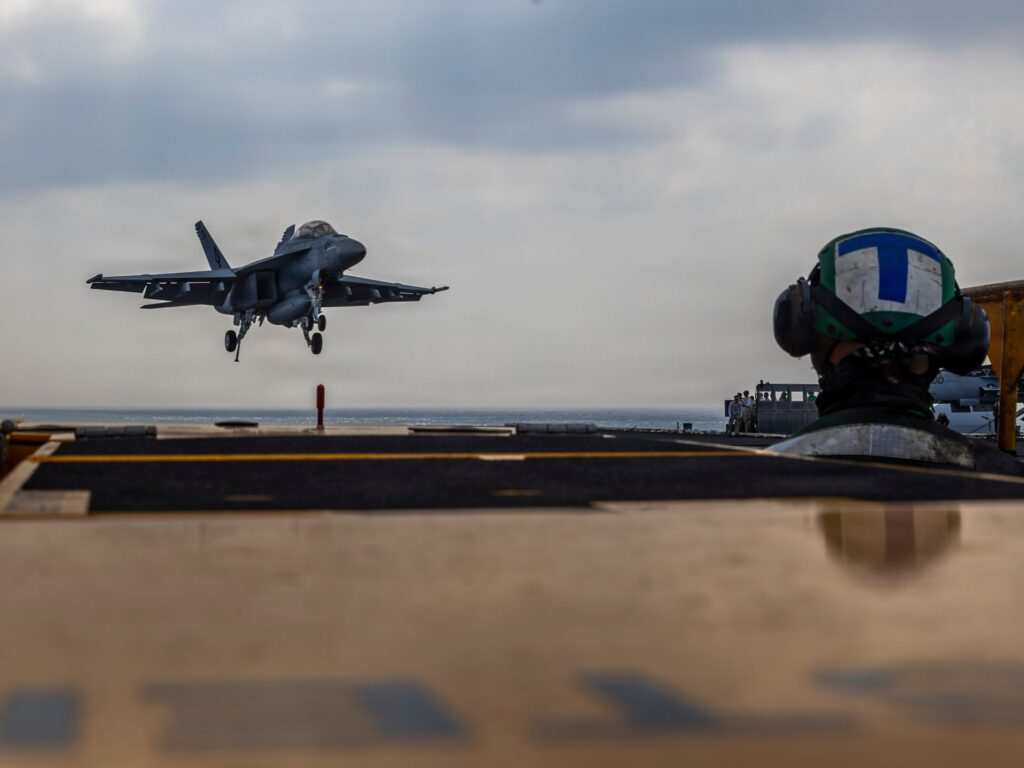
Tensions between the United States and Iran are intensifying as both nations ramp up their rhetoric against each other, coinciding with the arrival of the USS Abraham Lincoln aircraft carrier in the Middle East. Analysts suggest that this military buildup is part of a broader strategy by the US to assert its presence in a politically volatile region.
The USS Abraham Lincoln’s deployment has sparked a series of strong statements from Tehran, which has firmly declared that the arrival of the naval vessel will not deter Iran’s resolve to defend its sovereignty and national interests. Iranian officials emphasize that their determination remains unshaken despite increasing US military visibility in the region.
This latest development comes amid ongoing concerns about security and stability in the Middle East, where the US has significant strategic interests. The term ‘big armada’ refers to an apparent increase in the number of US naval and military assets being positioned to counter perceived threats from Iran and its proxies.
The US government has stated that the deployment aims to ensure the freedom of navigation and to deter Iranian aggression, highlighting the importance of maintaining open sea lanes for global commerce. However, Iranian leaders view the presence of the carrier and its escorts as provocative actions exacerbating regional tensions.
Experts warn that the confrontation risks escalating beyond verbal exchanges, with both sides engaging in a high-stakes power play. The presence of advanced military hardware close to Iranian waters has raised alarms about the possibility of miscalculation leading to conflict.
The Middle East, already a hotspot for geopolitical rivalries, is witnessing a significant military posturing from both the US and Iran. This escalation could impact global oil markets and diplomatic relations across the region.
Political analysts interpret the US decision as a demonstration of its commitment to its allies in the Gulf and a message to Iran that any hostile actions will meet a robust response. Conversely, Iran’s rhetoric aims to project strength to its domestic audience and regional partners.
The coming days are critical as international observers call for restraint and dialogue to prevent the situation from spiraling out of control. Calls for diplomatic engagement are increasing amid fears that a military clash could have severe consequences for the entire Middle East.
Both nations continue to operate within a tense atmosphere marked by mutual distrust and opposition on multiple fronts, including nuclear negotiations and regional conflicts.
In summary, the arrival of the USS Abraham Lincoln carrier group and Iran’s resolute response symbolize a deeper strategic struggle in the Middle East. The unfolding events highlight the fragile nature of peace in the region and the challenges of navigating complex international relations.
As the situation develops, global powers and regional stakeholders alike watch closely, hoping for a de-escalation that can pave the way for negotiations and avoid the devastating impact of military confrontation.
This episode underscores the precarious balance of power in the Middle East, where diplomacy and deterrence are tested continuously amid competing national interests and security concerns.