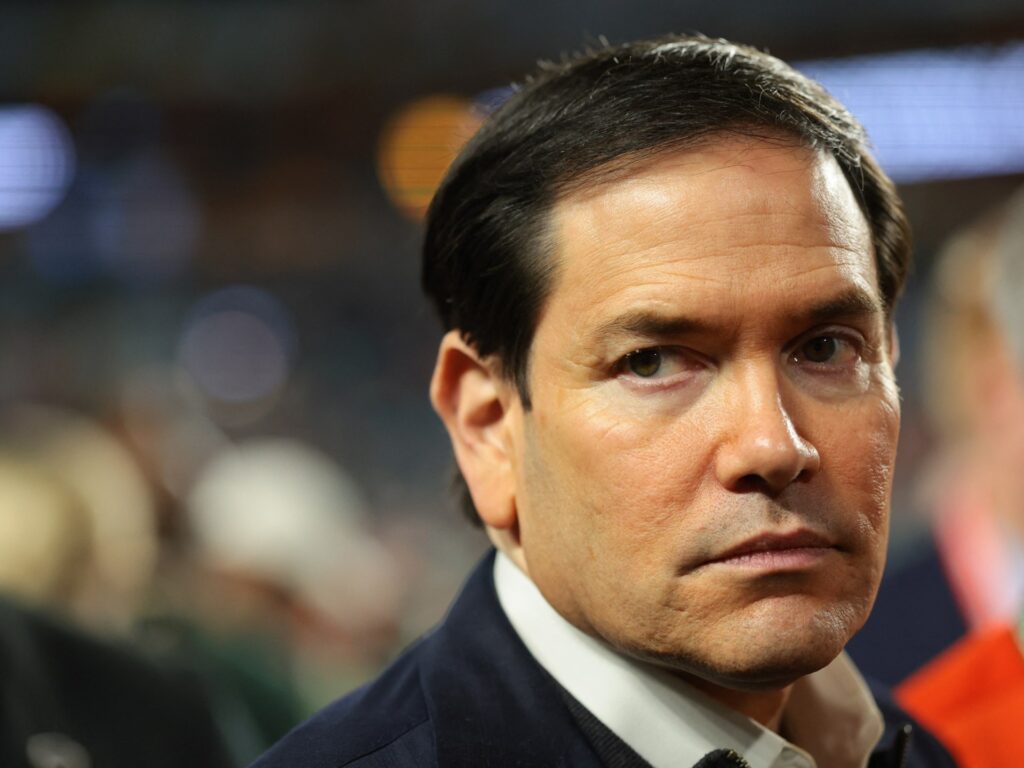
In a significant diplomatic move that underscores the growing complexities in Middle Eastern geopolitics, US Secretary of State Marco Rubio recently engaged in a critical conversation with Iraq’s Prime Minister Mohammed Shia al-Sudani. This high-level discussion comes at a pivotal time as Iraq anticipates the formation of a new government, coupled with escalating tensions between the United States and Iran.
Marco Rubio’s call marks a continuation of US efforts to stay closely connected with key regional players, particularly Iraq, which has often been a frontline state in the intricate power dynamics involving the US and Iran. The dialogue between Rubio and al-Sudani is seen as part of a broader strategy to influence and guide Iraq’s political trajectory during a sensitive transition period.
Iraq has been navigating a challenging path in recent years, balancing relationships with both the US, a long-standing ally, and Iran, a powerful neighbor with significant political and militia influence within Iraq. The anticipated new government formation in Iraq could be a turning point, influencing how Baghdad positions itself amid increasing pressures from Washington and Tehran.
The phone call likely covered a range of topics, including security cooperation, political stability, and economic assistance, as well as mechanisms to mitigate the risk of Iraq becoming a battleground or proxy for escalating US-Iran hostilities. Rubio, who has been vocal about maintaining US interests and promoting stability in the Middle East, aims to ensure that Iraq remains a sovereign actor, capable of managing its domestic affairs without external interference.
This interaction comes against the backdrop of heightened US-Iran tensions, which have seen a series of confrontations and hostile rhetoric. Efforts to revive the Iran nuclear deal have stalled, and regional incidents continue to fuel uncertainty. In this environment, Iraq’s role is critical as it hosts various political factions and armed groups with differing allegiances, making its internal stability deeply consequential for regional peace.
The US Secretary of State’s engagement reflects a keen awareness of Iraq’s strategic importance. By maintaining open lines of communication with Prime Minister al-Sudani, the US aims to promote policies that prevent the country from descending into deeper conflict. This diplomatic outreach may also signal to Iran the US commitment to counterbalance Tehran’s influence diplomatically rather than solely through military means.
On the Iraqi front, Mohammed Shia al-Sudani is expected to steer the nation towards a government that can address pressing domestic issues such as economic reform, infrastructure rebuilding, and security sector reforms, all while navigating the external pressures from these major global powers.
Overall, the conversation between Rubio and al-Sudani highlights the intricate interplay of diplomacy, power, and regional security. As Iraq stands on the cusp of a new government formation and amidst renewed US-Iran tensions, the world watches closely to see how these developments will shape the future of Iraq and the wider Middle East.