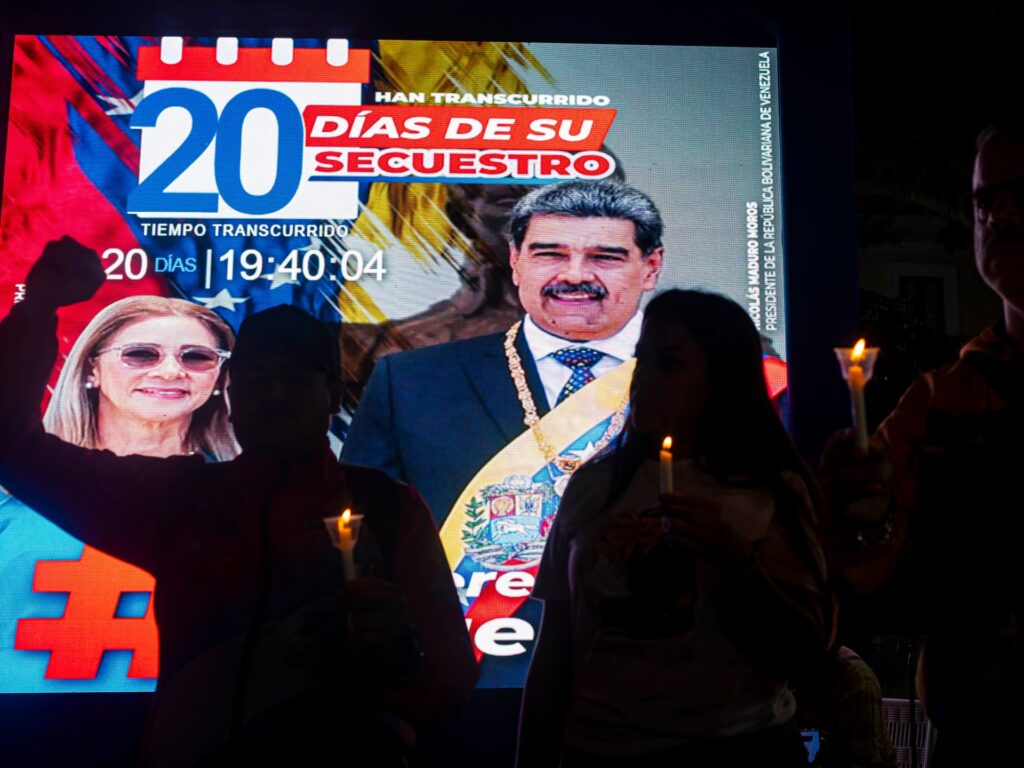
The recent abduction attempt of Venezuelan President Nicolás Maduro has cast a sharp spotlight on the United States’ strategy and approach towards Venezuela. Over the three weeks following the incident, the US has been navigating a complex political landscape marked by uncertainty and strategic maneuvering, primarily focusing on Venezuela’s critical oil sector.
The term ‘remote coercion’ has been used by analysts to describe the US tactic, indicating a reliance on indirect measures rather than direct confrontation or overt military involvement. This approach reflects a nuanced form of pressure exerted from a distance, aiming to influence outcomes in Venezuela without escalating conflict.
Since the abduction attempt, US officials have signaled plans to apply greater pressure on Venezuela’s oil industry, a vital source of revenue for the Maduro administration. The objective appears to be restricting the regime’s financial resources to weaken its hold on power. However, specifics regarding these measures remain murky, with little official detail emerging about the exact nature or timeline of sanctions or interventions.
Political analysts have highlighted the internal fault lines within Venezuela, cautioning that the country’s social and political fabric is deeply fragmented. These divisions complicate the US strategy, as any pressure tactic might have unpredictable consequences, potentially intensifying humanitarian issues or triggering deeper instability.
Observers note that the US is balancing its interests carefully, seeking to avoid actions that could exacerbate the crisis or provoke wider regional instability. The focus on Venezuela’s oil sector aligns with broader geopolitical interests, given the global importance of energy supplies.
While the US approach over the past three weeks has emphasized indirect pressure and economic measures, the lack of clarity and transparency in plans has raised questions about the effectiveness and coherence of the strategy.
As the situation evolves, it remains to be seen how the US will adjust its policies to address the ongoing challenges in Venezuela. The interplay between remote coercion tactics and the complex geopolitical realities of the region will likely shape the trajectory of US-Venezuela relations in the near future.