Hong Kong has initiated a significant national security trial targeting three prominent activists accused of ‘inciting subversion of state power’ through their roles in organising Tiananmen Square vigils. The trial marks a continuing crackdown under Hong Kong’s stringent National Security Law, introduced by Beijing in 2020, which has been widely criticized for eroding the city’s autonomy and stifling dissent.
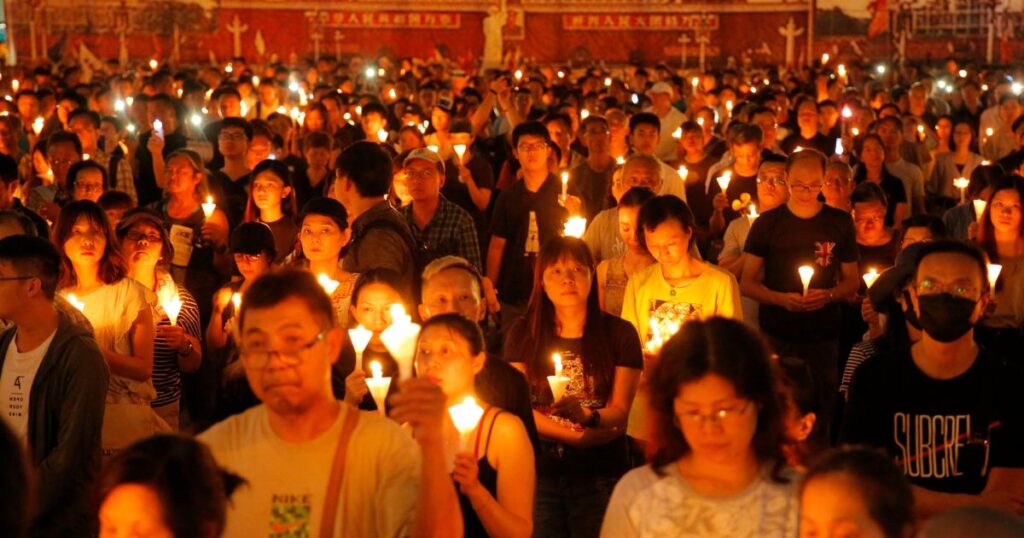
The accused individuals, well-known figures in Hong Kong’s civil society, have long been involved in commemorating the 1989 Tiananmen Square massacre, where numerous pro-democracy protesters were killed by Chinese troops. Their annual vigils have been a powerful symbol of resistance and remembrance in Hong Kong, particularly as similar commemorations have been suppressed on the mainland.
Rights groups and international observers have condemned the trial, calling it a politically motivated move designed to silence dissent and intimidate the pro-democracy movement. They argue that the charges, including ‘inciting subversion of state power,’ are overly broad and used as tools to target peaceful expression and assembly.
The National Security Law has dramatically reshaped Hong Kong’s political landscape since its enactment, leading to arrests of activists, shutdown of media outlets, and curtailment of freedoms previously guaranteed under the ‘one country, two systems’ framework.
Human rights organizations highlight that the trial undermines judicial independence and human rights protections. They stress the importance of preserving the right to commemorate and express political views without fear of reprisal.
The trial proceedings are being closely watched by the international community as a barometer of the future of Hong Kong’s civil liberties and judicial fairness. The accused face serious penalties if convicted, including potential long prison sentences.
The Tiananmen vigil, traditionally held on June 4th, has been one of the largest public gatherings in Hong Kong, drawing tens of thousands of attendees each year. It serves as a vital reminder of the struggle for democracy and human rights in China.
By prosecuting the organisers, authorities appear to be intensifying efforts to suppress dissent and erase collective memory of the events at Tiananmen. This move sends a stark warning to activists and civil society actors about the limits of permissible political engagement.
Despite the trial and increasing pressures, many in Hong Kong remain committed to remembering the victims and advocating for democratic principles. The trial represents a pivotal moment, reflecting the broader tensions between Beijing’s tightening control and the city’s fading but persistent spirit of resistance.
As the trial unfolds, observers worry about the implications for Hong Kong’s remaining freedoms and the precedent it sets for future cases involving political activism. The trial is emblematic of a broader clampdown that threatens to extinguish the space for civil society and peaceful protest in the city.
In conclusion, the national security trial of the Tiananmen vigil organisers in Hong Kong is a grave development, highlighting the severe challenges faced by activists and the ongoing erosion of rights and freedoms. It underscores the urgent need for continued international attention and support for those standing up for democratic rights under mounting pressure.