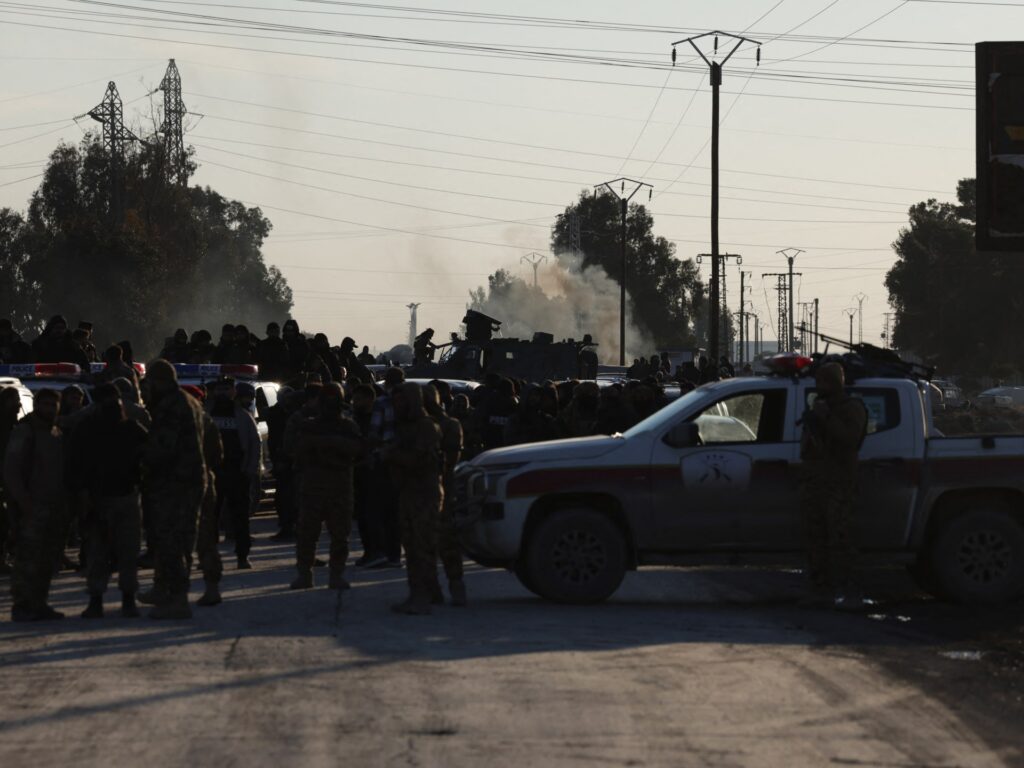
The fragile ceasefire between Syria’s government forces and the Kurdish-led Syrian Democratic Forces (SDF) is facing uncertainty following a resurgence of violent clashes and stalled negotiations. Both sides have traded accusations regarding the recent outbreak of hostilities, complicating already difficult peace efforts.
The conflict, which has persisted for years amidst Syria’s broader civil war, saw a temporary pause in fighting due to ceasefire agreements aimed at easing tensions and facilitating humanitarian access. However, this fragile calm has been undermined by new confrontations that erupted recently, casting doubt on the durability of the truce.
Syrian government officials blame the Kurdish-led SDF for initiating the clashes, accusing them of harboring escaped ISIL fighters who allegedly incited renewed violence. Conversely, the SDF condemns the government’s actions, attributing the flare-ups to aggressive military operations and breaches of the ceasefire terms.
Negotiations intended to solidify peace and address security concerns have reached a dead end, with both parties unable to reconcile differences or agree on key issues such as control over territories, prisoner exchanges, and the fate of ISIL detainees. International mediators have expressed concern over the impasse, warning that continued hostility could reignite wider conflict in the region.
The resurgence of violence threatens to derail the cautious progress made in recent years towards stability in northeast Syria. It also complicates efforts to combat the remaining ISIL elements, as cooperation between Syrian government forces and the SDF has been critical in counterterrorism operations.
The humanitarian impact is expected to worsen, with civilians caught in the crossfire facing increased displacement and limited access to aid. Human rights organizations have called on all parties to honor the ceasefire and renew dialogue to avoid further deterioration of the situation.
As the ceasefire hangs in the balance, international stakeholders emphasize the need for resumed dialogue and confidence-building measures. The situation remains fluid, with the potential for either a peaceful resolution or escalated conflict hinging on forthcoming diplomatic engagements.
This latest development underscores the complexity of Syria’s multifaceted conflict, involving various ethnic, political, and military actors. The path to peace remains fraught with challenges, requiring sustained commitment from all parties to achieve lasting stability in the war-torn nation.