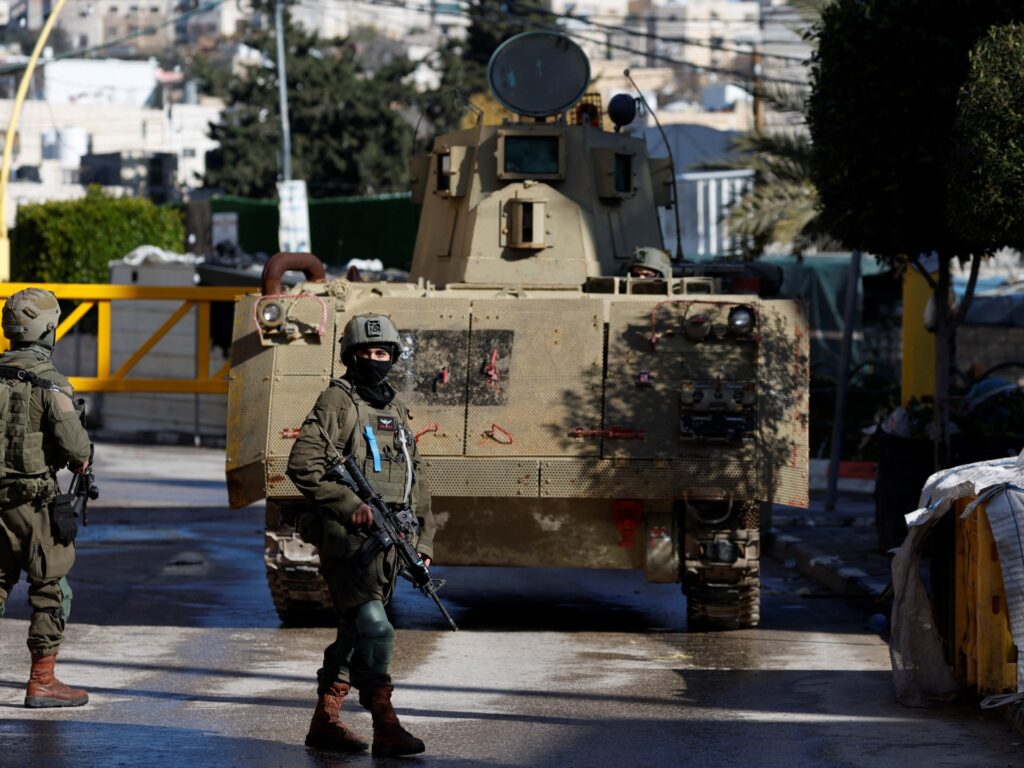
In a significant military operation, the Israeli army has launched a large-scale raid in the occupied West Bank city of Hebron. The raid involves the deployment of armoured vehicles and the imposition of a curfew, leading to the shutdown of several neighborhoods across the city. This aggressive move marks one of the most extensive military actions in Hebron in recent times, escalating tensions in the region.
Hebron, a key city in the West Bank, has long been a flashpoint in the Israeli-Palestinian conflict. The city holds religious and strategic importance, and is home to both Palestinian residents and Israeli settlers, often resulting in frequent clashes. The latest raid indicates a heightened security approach from the Israeli army, aimed at quelling perceived threats or insurgent activities.
During the operation, Israeli forces deployed numerous armoured vehicles throughout Hebron, showcasing a strong military presence. The imposition of a curfew has effectively restricted movement within the city, forcing residents to remain indoors and shutting down schools, businesses, and public transportation. This lockdown has significantly impacted daily life and heightened fears among the population.
The operation comes at a time of increased tensions in the West Bank, with rising incidents of violence and confrontations between Israeli forces and Palestinian groups. Israeli authorities maintain that the raid targets militants and is necessary to ensure security and prevent further attacks. However, Palestinians and human rights organizations have condemned the raid, citing concerns over collective punishment and excessive use of force.
Residents of Hebron have reported heavy military presence in their neighborhoods, with checkpoints and patrols intensifying. Access to healthcare and essential services has become difficult due to the curfew and road closures. Local leaders have called for calm but also voiced distress over the disruption and hardships caused by the military action.
International reactions have been mixed, with some countries urging restraint and dialogue, while others express support for Israel’s right to maintain security. The raid has once again brought global attention to the ongoing conflict and the complex realities faced by those living in the West Bank.
The Israeli army has not specified the duration of the curfew or the full scope of the operation, adding to the uncertainty and anxiety among Hebron’s residents. Analysts suggest that this large-scale raid may be part of a broader strategy to curb unrest and reinforce Israeli control in the West Bank amid a fragile political landscape.
As events unfold, the humanitarian implications remain a serious concern, with calls for international monitoring and efforts to de-escalate tensions. The situation in Hebron is a stark reminder of the longstanding and deeply rooted conflict between Israelis and Palestinians, one that continues to have profound impacts on the lives of civilians caught in the crossfire.