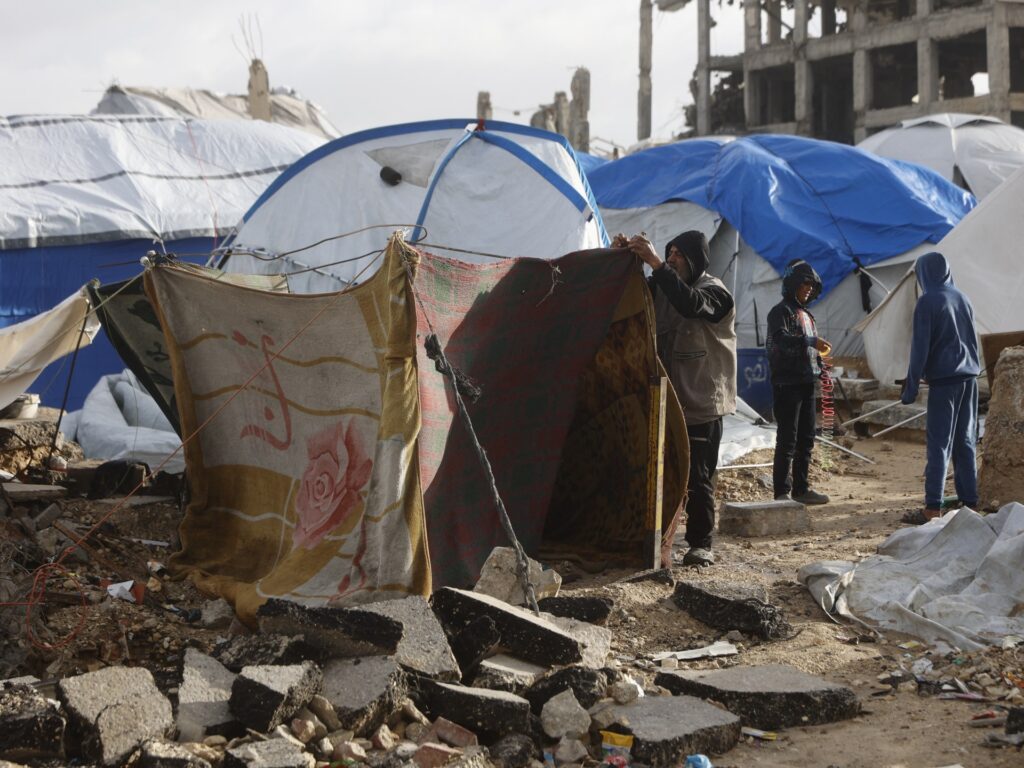
A new storm is forecasted to hit Gaza, further worsening the already dire situation for thousands of displaced people living in temporary camps. Nearly all of the flimsy tents in displacement camps have been rendered unusable due to severe winter conditions, leaving families vulnerable to the elements. The ongoing conflict and displacement have left many without adequate shelter, and the approaching storm threatens to exacerbate the humanitarian crisis.
Humanitarian workers have expressed deep concern about the impact of the storm on the displaced population. With tents destroyed and makeshift shelters inadequate against the harsh winter weather, many residents face increased risks of hypothermia, illness, and further displacement. Aid organizations are working urgently to provide emergency assistance, including blankets, warm clothing, and alternative shelter solutions.
The storm is expected to bring heavy rain, strong winds, and a significant drop in temperatures, conditions that the currently damaged camps are ill-prepared to withstand. The lack of proper drainage and shelter infrastructure has already resulted in flooding and damage to essential facilities within the camps.
Local authorities and international agencies are calling for increased support and immediate intervention to prevent a full-scale humanitarian disaster. Efforts are being coordinated to supply portable heaters, waterproof tarps, and food aid to affected families, but the scale of the need far exceeds the current resources available.
This latest natural disaster compounds the suffering of Gaza’s displaced population, many of whom lost their homes due to ongoing conflict and are now facing the relentless challenges of displacement compounded by environmental hazards. The storm underscores the urgent need for a comprehensive humanitarian response that addresses both immediate relief and long-term recovery.
In response to the crisis, several international organizations have issued calls for donations and volunteers to assist in relief efforts. Humanitarian corridors are being negotiated to allow safe passage of aid workers and supplies amidst the complex political and security landscape of the region.
The situation also highlights the broader implications of climate-related disasters on conflict-affected populations, where displacement and unstable living conditions magnify vulnerability to weather extremes.
Authorities continue to monitor weather updates and work closely with community leaders to coordinate evacuation plans where feasible and communicate safety information to affected residents.
As the storm approaches, the resilience of displaced communities is being tested yet again. Ensuring their safety and well-being requires urgent, coordinated humanitarian action backed by sustained international support to address the root causes of displacement and to build resilience against future crises.