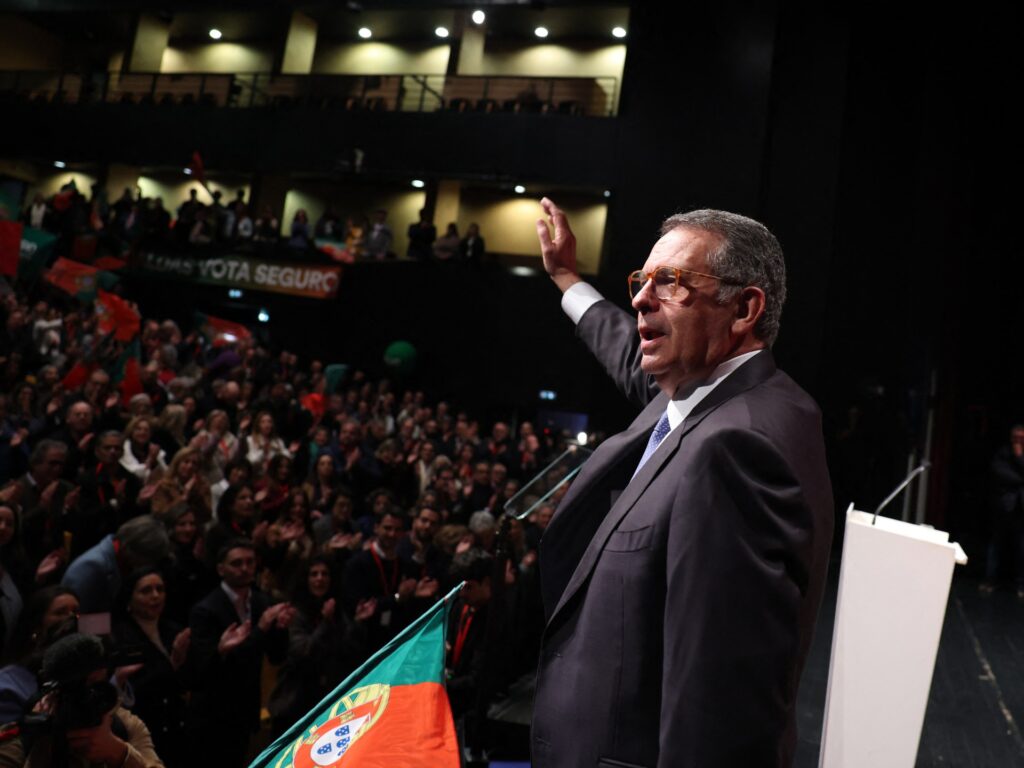
Portugal is gearing up for a historic presidential run-off election, scheduled amid a highly fragmented political landscape. This will be the first run-off in the country in 40 years, signaling a pivotal moment for Portugal’s democracy.
The recent presidential election saw no candidate obtaining an outright majority, leading to this unprecedented run-off scenario. The two candidates heading to the final round represent sharply contrasting political ideologies, illustrating the deep divisions within Portuguese society.
Leading the race is the incumbent Socialist candidate, whose platform emphasizes social equity, economic reform, and stronger ties within the European Union. His campaign has drawn support from a broad spectrum of voters seeking continuity and stability.
Opposing him is the far-right candidate who has surged amidst growing public concern over immigration, national identity, and economic uncertainty. This candidate’s rhetoric focuses on strong nationalist policies, stricter immigration controls, and skepticism towards the EU’s influence.
The first round of voting reflected Portugal’s political fragmentation, with several smaller parties and independent candidates dividing the vote. Analysts note that the necessity of a run-off highlights the increasing polarization and the difficulties in achieving a clear consensus in Portuguese politics.
Historically, Portugal has seen its politics dominated by center-left and center-right parties, but recent years have witnessed a rise in support for more radical political movements on both ends of the spectrum. This trend aligns with broader European patterns where far-right groups have gained traction in response to economic and social changes.
The upcoming run-off will test the electorate’s priorities and resolve. Voter turnout is expected to be critical, as the outcome will shape Portugal’s domestic and foreign policies for the coming years.
Campaigns for the run-off have intensified, with both candidates seeking to appeal to undecided voters and those whose preferred candidates were eliminated in the first round. The Socialist candidate is focusing on a message of unity and progressive reform, while the far-right contender is rallying support through a narrative of national revival and anti-establishment sentiment.
Political commentators predict that the election results could redefine Portugal’s political landscape, potentially influencing the dynamics of the European Union, given Portugal’s role as a member state.
International observers are monitoring the situation closely, emphasizing the importance of peaceful and democratic processes in determining the country’s leadership.
As Portugal approaches this critical electoral milestone, the nation remains deeply divided yet engaged, with citizens keen to influence the direction of their country’s future.