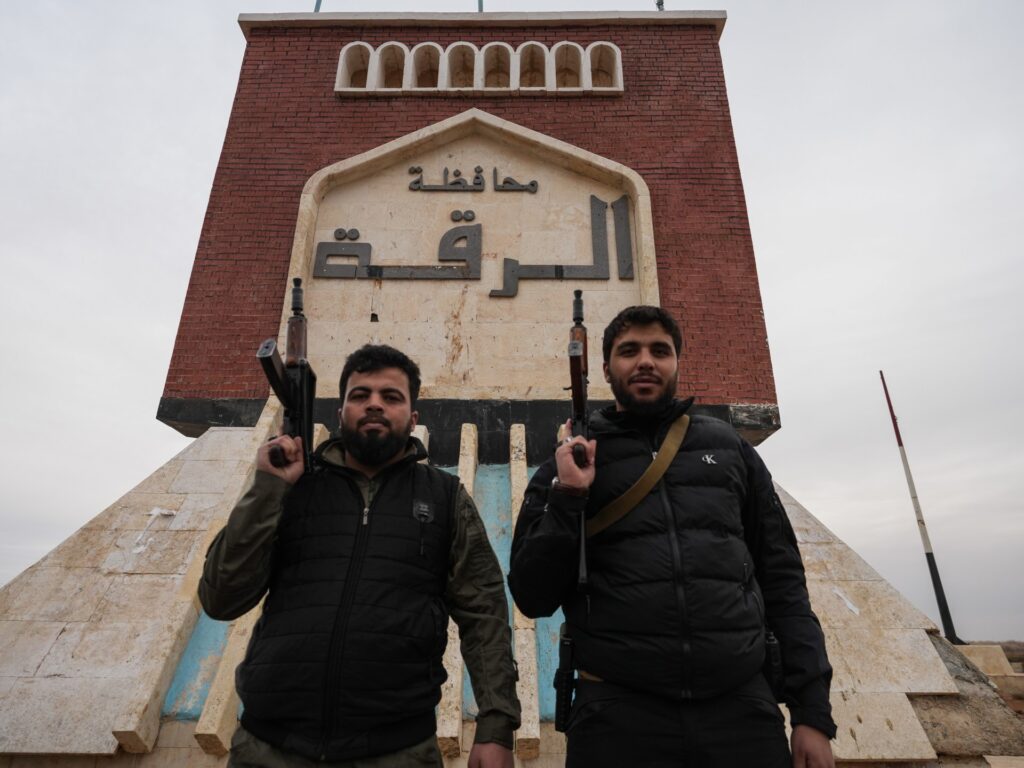
Syrian government forces have achieved a significant military victory by capturing Tabqa, a strategic town located near Raqqa, the de facto capital of the Islamic State in Syria. This operation marks a critical milestone in the Syrian army’s ongoing campaign against insurgent groups, particularly the Kurdish-led Syrian Democratic Forces (SDF).
The capture of Tabqa is especially notable because the town hosts Syria’s largest dam, a pivotal piece of infrastructure that supplies water and electricity to a vast region. Control of the dam provides the Syrian government not only with a strategic advantage but also with the ability to influence essential resources in the conflict-ridden area.
Over recent weeks, the Syrian army has rapidly intensified its offensive, pushing closer to Raqqa. This advance has forced the Kurdish-led SDF to retreat from key positions around Tabqa, indicating a shift in the balance of power in northeastern Syria.
Military analysts suggest that the Syrian army’s swift maneuvers are part of a broader strategy to regain control over critical territories previously lost to various armed groups. The retaking of such infrastructure could help restore some semblance of stability in regions long affected by conflict.
The Syrian government’s operations near Raqqa also highlight the complex dynamics on the ground, involving multiple factions, including ISIS remnants, Kurdish forces, and government troops.
The capture of the Tabqa dam is expected to have both immediate and long-term implications. In the short term, it limits the operational mobility of insurgent groups by restricting their access to resources and safe zones. In the long term, control over essential infrastructure like the dam could facilitate reconstruction efforts and the restoration of public services in war-torn areas.
Humanitarian organizations have expressed cautious optimism but also concern over the potential for renewed clashes in the region. Control of the dam also raises questions about water management and safety, as damage to the facility could lead to severe flooding and disrupt water supplies for millions.
The international community continues to monitor developments closely, recognizing that the Syrian conflict remains one of the most complex and multifaceted wars in recent history. The ongoing power struggle around Raqqa symbolizes the wider battle for control in Syria.
As the Syrian army consolidates its hold on Tabqa, experts emphasize the need for political solutions to accompany military gains to ensure lasting peace and stability. The recapture of strategic points like the largest dam may offer some hope for recovery, but the path ahead for Syria remains uncertain and fraught with challenges.