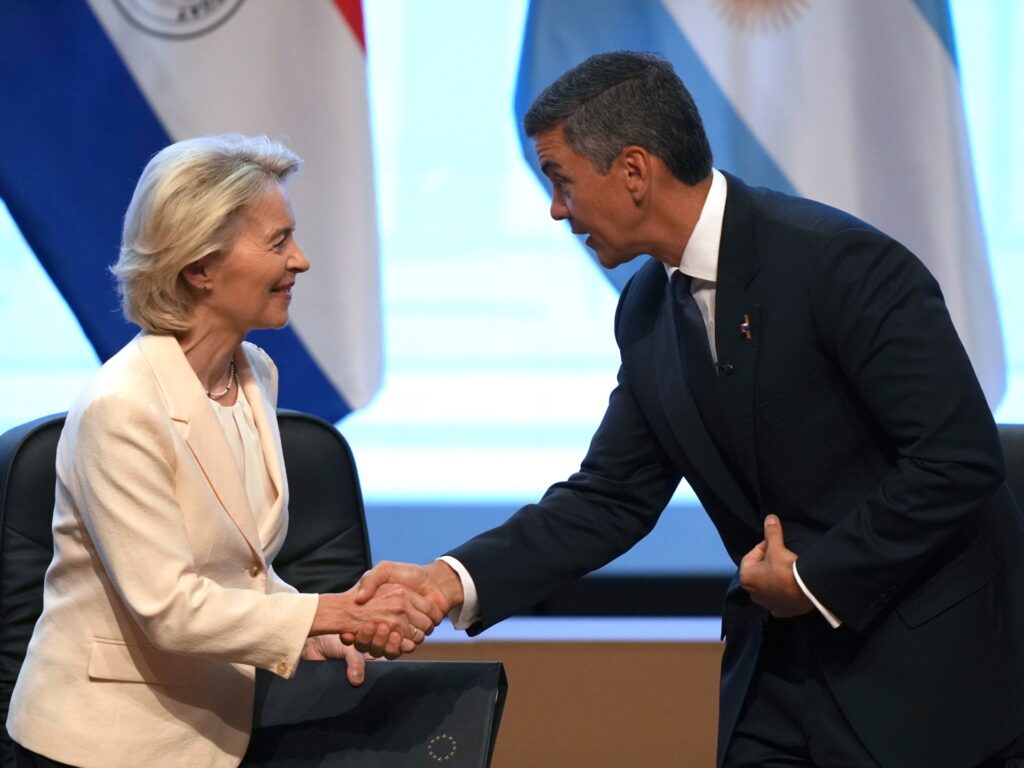
After a quarter of a century of intricate negotiations, the European Union (EU) and the Mercosur trade bloc have finally inked a long-awaited free trade agreement. This landmark pact, hailed by leaders from both sides as a significant milestone, aims to enhance economic ties between Europe and South America, fostering growth and cooperation amid growing global trade uncertainties.
The Mercosur bloc, comprising Argentina, Brazil, Paraguay, and Uruguay, represents a substantial economic partnership with the EU, one of the world’s largest trading entities. The accord is expected to facilitate tariff reductions, reduce trade barriers, and open new markets for goods and services, thereby boosting exports and imports between the regions.
European Commission President Ursula von der Leyen emphasized the deal’s importance, stating that it sends a “clear signal” against the backdrop of rising global tariffs and growing isolationism. She noted that the agreement exemplifies the EU’s commitment to open, fair, and rules-based trade, reinforcing multilateralism in the international arena.
From the Mercosur side, leaders expressed optimism about the pact’s potential to stimulate economic development and integration with global markets. The agreement is anticipated to enhance competitiveness, attract investments, and create jobs throughout the member countries.
The journey to this historic deal has been fraught with challenges, with negotiations spanning 25 years due to complex political and economic interests on both sides. Key sticking points included agricultural exports, environmental protections, and labor standards. Addressing these concerns involved extensive dialogue and compromises aimed at balancing economic growth with sustainable development and social responsibility.
The deal includes provisions for protecting intellectual property rights, supporting small and medium enterprises (SMEs), and aligning regulatory standards to facilitate smoother trade flows. Environmental sustainability is a crucial aspect of the agreement, with commitments to uphold the Paris Agreement on climate change and enforce responsible agricultural practices.
Critics of the deal have voiced concerns about potential environmental impacts, particularly regarding deforestation in the Amazon rainforest. In response, the EU and Mercosur have pledged to strengthen cooperation on environmental monitoring and enforcement mechanisms to mitigate these risks. Transparency and accountability measures are set to ensure adherence to environmental and labor commitments.
Trade experts highlight that this deal could serve as a blueprint for future multilateral trade negotiations, balancing economic interests with ecological and social considerations. The agreement symbolizes a strategic partnership that reflects the evolving dynamics of global trade, where diversification and sustainability gain prominence.
Economists predict that the free trade pact will increase bilateral trade flows by billions of euros annually, providing a significant boost to industries such as agriculture, manufacturing, and technology. Consumers on both continents may benefit from a wider range of products at more competitive prices.
In a broader context, the EU-Mercosur agreement reinforces alliances amid a shifting geopolitical landscape marked by trade disputes and protectionist policies worldwide. It underscores a collective commitment to open markets and international cooperation, positioning these regions as proactive players in shaping the future of global commerce.
Leaders from both sides have called on their respective parliaments to ratify the deal promptly to expedite its implementation. If ratified successfully, the agreement will not only transform trade relations but also deepen cultural and political ties, fostering long-term unity and partnership between Europe and South America.
In conclusion, the signing of the EU-Mercosur free trade agreement after 25 years of negotiations marks a pivotal moment in international trade diplomacy. It exemplifies the potential for cooperation between diverse economic regions to overcome challenges and embrace shared goals of prosperity, sustainability, and connectivity in an increasingly interconnected world.