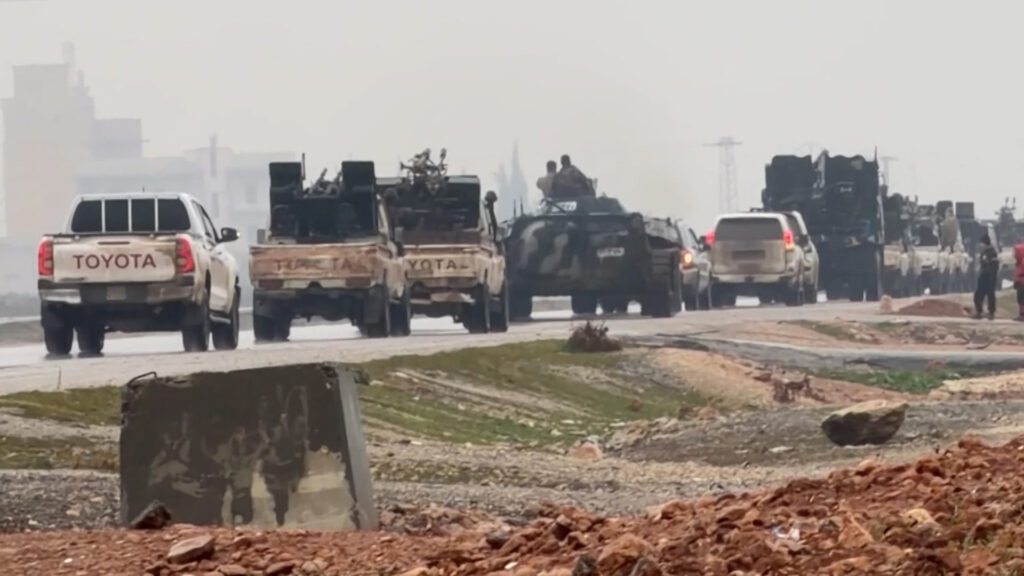
The Syrian army has officially declared a rural area east of Aleppo as a “closed military zone,” marking a significant escalation amid increasing tensions in the region. This move comes amidst reports that the Syrian Democratic Forces (SDF) have destroyed several bridges in the area, sparking fears of renewed clashes between the two factions.
Aleppo, Syria’s largest city before the civil war, has long been a focal point of conflict involving various military and political groups. The declaration of a closed military zone in the rural areas surrounding Aleppo indicates a strategic move by the Syrian army to tighten control and prevent further incursions or conflicts from escalating.
The destruction of bridges by the SDF aims to disrupt military and logistical movements, potentially limiting the Syrian army’s ability to maneuver effectively in these rural zones. Bridges are crucial for transportation and supply lines, and their destruction could hinder reinforcements or resupply efforts.
This chain of events underscores the fragile security situation in northern Syria, particularly in Aleppo’s outskirts, where control has often shifted between government forces, rebel groups, and autonomous forces like the SDF.
Security experts suggest that the Syrian army’s declaration of the military zones could be a pre-emptive measure to prepare for possible confrontations or to impose tighter security measures in response to the SDF’s actions.
Local residents in rural Aleppo have expressed concern about escalating violence and the impact on civilian life. The establishment of military zones often leads to restrictions on movement, curfews, and increased military presence, which can disrupt ordinary life and local economies.
The Syrian conflict, now over a decade long, involves complex alliances and rivalries. The Kurdish-led SDF controls significant parts of northeastern Syria and has been a key partner of the US-led coalition against ISIS. However, its relations with the Syrian government have been tense and marked by occasional clashes.
The situation in rural Aleppo is a microcosm of the broader tensions that continue to affect Syria, with multiple actors vying for territory and influence. The declaration of military zones by the Syrian army signals a preparedness to assert control and respond decisively to any threats.
Analysts warn that the destruction of infrastructure like bridges not only affects military dynamics but also impacts humanitarian conditions, complicating aid delivery to vulnerable populations in the conflict zone.
International observers and humanitarian organizations have called for restraint and dialogue to prevent further escalation, urging all parties to prioritize civilian protection.
As this situation develops, monitoring the movements and announcements from both the Syrian army and the SDF will be crucial in understanding the next phases of conflict or potential negotiation.
This renewed tension in rural Aleppo highlights the ongoing challenges in reaching a lasting peace in Syria, where localized conflicts continue to flare despite broader international efforts for resolution.