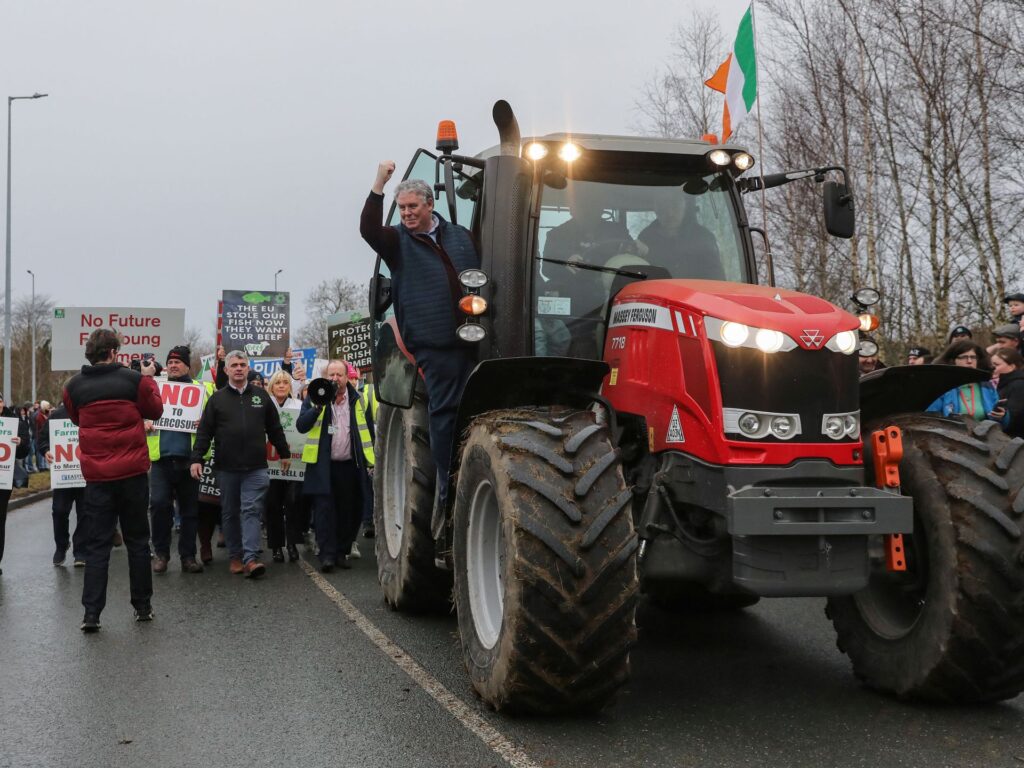
Thousands of Irish farmers have taken to the streets of Athlone, Ireland, to protest against the European Union’s Mercosur trade deal. The protest highlights widespread concerns over the deal’s potential impact on Ireland’s beef industry, a crucial sector for the country’s economy and rural communities.
The Mercosur trade agreement, which involves the EU and South American countries including Brazil, Argentina, Paraguay, and Uruguay, aims to reduce tariffs and increase trade between the regions. However, many Irish farmers fear that the deal will flood the Irish market with cheaper South American beef, which is produced under different regulatory standards.
Farmers argue that this import surge would undermine local producers by driving down prices and threatening the viability of Irish beef farming. Ireland’s beef industry is renowned globally for its high-quality, grass-fed beef, which contrasts with the mass-produced beef from Mercosur countries.
The protest, which saw thousands gathering in Athlone, included farmers from across Ireland, many of whom drove tractors to the demonstration to emphasize their message. The farmers called on the Irish government and EU officials to reconsider or renegotiate aspects of the trade deal that could harm domestic agriculture.
In addition to economic concerns, farmers raised issues related to environmental standards and animal welfare, fearing that the Mercosur products do not meet the same stringent criteria as those produced in the EU. They argued that allowing cheaper imports produced under lower standards would disadvantage Irish farmers who comply with higher environmental and animal welfare regulations.
The protest also touched on the broader issue of protecting rural livelihoods and sustaining Ireland’s agricultural heritage. Many participants emphasized that the beef industry supports not only farmers but also rural communities through employment, local businesses, and cultural traditions.
Government representatives attending the protest acknowledged the concerns but pointed out the potential economic benefits of the trade deal, including expanded markets for other Irish products.
The Mercosur deal remains a contentious subject in Ireland, with ongoing debates about balancing trade opportunities with the protection of local industries. The farmers’ protest in Athlone marks another significant moment in this national conversation, underscoring the need for dialogue between policymakers and the agricultural sector.
As negotiations continue, stakeholders from all sides watch closely, seeking solutions that can safeguard Ireland’s beef industry while allowing for international trade growth. The protest is a testament to the passionate and united front presented by Irish farmers in defense of their livelihoods and the future of Irish agriculture.