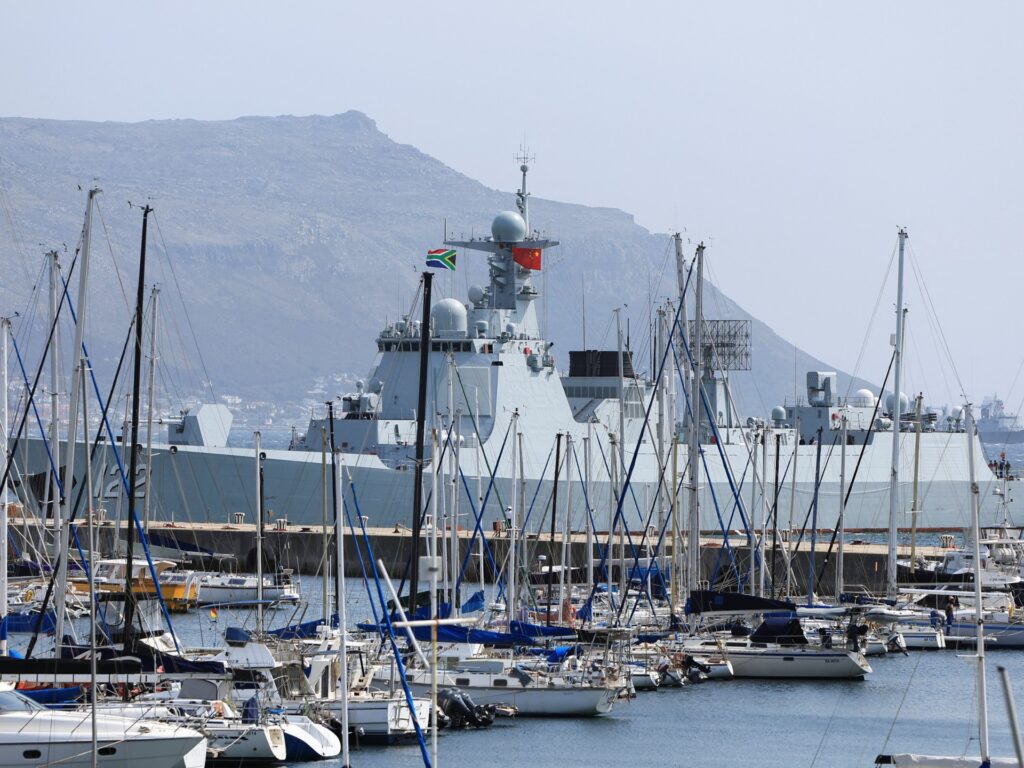
In a significant demonstration of international military cooperation, naval forces from China, Russia, and Iran have arrived in South Africa to participate in joint naval exercises. This deployment of warships to South African waters marks a strategic display of power and alliance, coming at a time when global geopolitical tensions are markedly heightened.
The joint naval drills are set against the backdrop of recent US military interventions in Venezuela, which have escalated regional tensions. The intervention, perceived by many as a move to curb Venezuela’s political allies, has led to a series of geopolitical repercussions, including the seizure of several oil tankers suspected of violating sanctions or other international regulations.
The arrival of the Chinese, Russian, and Iranian naval vessels in South Africa is seen by experts as a counterbalance to Western military activities and influence in the region. Each participating country has distinct strategic interests in demonstrating naval capabilities and forming tighter defense cooperations with partners in key maritime regions.
China, with its expanding maritime ambitions, seeks to establish stronger naval presence and secure trade routes essential for its energy imports and export markets. Russia aims to project its military influence beyond its traditional sphere, showcasing its ability to collaborate with other major powers and rival the naval strength of NATO countries.
Iran’s participation underscores its desire to forge international alliances and enhance its naval capabilities amid ongoing tensions with Western powers, particularly the United States. By joining these drills, Iran signals its continued resistance to isolation and its readiness to participate in broader security frameworks.
South Africa’s strategic location along vital sea lanes makes it an ideal partner for hosting such exercises. The South African government has welcomed the naval drills, highlighting the importance of maintaining peace and security in the region. The drills also provide an opportunity for South Africa to enhance its naval skills and interoperability with other global powers.
The joint exercises will include a range of tactical drills such as anti-piracy operations, coordinated maneuvers, communications exercises, and simulated combat scenarios. These drills are designed to improve operational coordination, share best practices among navies, and bolster mutual understanding.
Observers note that these drills come at a time when international maritime security faces numerous challenges, including piracy, territorial disputes, and the potential for conflict escalation due to unresolved political crises.
The presence of these warships in South African waters reflects broader trends in global power realignment, where emerging alliances challenge Western dominance, particularly in regions critical to international trade and security.
Analysts suggest that this naval cooperation could pave the way for further military and diplomatic partnerships between China, Russia, Iran, and African nations, fostering an alternative geopolitical bloc with significant influence on future security dynamics.
As the drills progress, all eyes will be on how this demonstration of naval strength and solidarity impacts regional stability and the balance of power in the international arena. The exercises symbolize a shift towards multipolarity in global security relations, emphasizing the complex interplay of national interests and collective defense strategies among diverse world powers.