Former U.S. President Donald Trump has stated that the United States’ role in Venezuela could extend over a prolonged period, possibly lasting for years. This statement comes amid escalating tensions and recent controversial developments in the South American country.
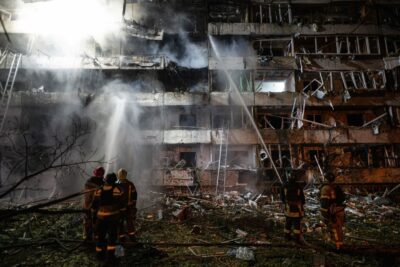
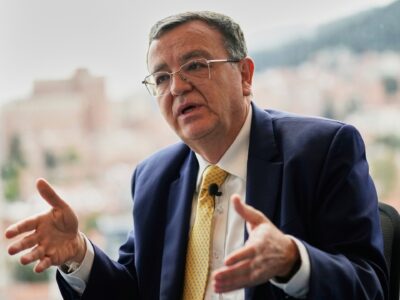
Venezuela’s interior minister has made serious claims regarding a U.S.-led operation aimed at abducting President Nicolás Maduro. According to the minister, the operation resulted in the deaths of 100 people and left dozens more wounded. These figures highlight the violent nature of the incident and the high human cost associated with the operation.
The situation in Venezuela has been fraught with political instability and economic difficulties for years. The U.S. has been involved in various capacities, supporting opposition forces and imposing sanctions against the Maduro government. Trump’s remarks suggest a continued U.S. strategic interest in influencing outcomes in Venezuela.
Critics of the U.S. involvement argue that such operations exacerbate violence and undermine diplomatic efforts to resolve Venezuela’s crisis through peaceful means. Supporters, however, contend that such actions are necessary to undermine what they describe as a dictatorial regime that threatens democratic principles and regional security.
The reported U.S. operation to capture President Maduro adds a significant chapter to the ongoing geopolitical tensions in the region. It raises questions about the legality and morality of such actions, potentially impacting international relations and the stability of Venezuela.
Human rights organizations and international observers have expressed concern over the reported casualties and urged for investigations into the incident. The heavy toll on civilians and combatants alike has been condemned by various groups calling for restraint and dialogue.
Meanwhile, the Venezuelan government officially condemned the operation as an act of aggression and a violation of its sovereignty. This condemnation aligns with previous accusations of foreign interference in Venezuela’s internal affairs.
The potential for a prolonged U.S. involvement, as indicated by Trump, signals that Venezuela’s crisis may remain a focal point for international policy and intervention strategies. The complexities of Venezuelan politics, combined with external influences, will likely continue to challenge efforts toward stability and reconstruction.
As the world watches closely, the unfolding events in Venezuela could have far-reaching consequences not only for the country but for the broader Latin American region and global geopolitical dynamics. The intersection of military action, political ambitions, and humanitarian issues presents a multifaceted crisis requiring careful navigation.
In conclusion, the recent statements and reported events underscore a critical juncture for Venezuela. The path forward is uncertain, with significant implications for regional peace, U.S. foreign policy, and the lives of millions of Venezuelans caught amid conflict and political turmoil.