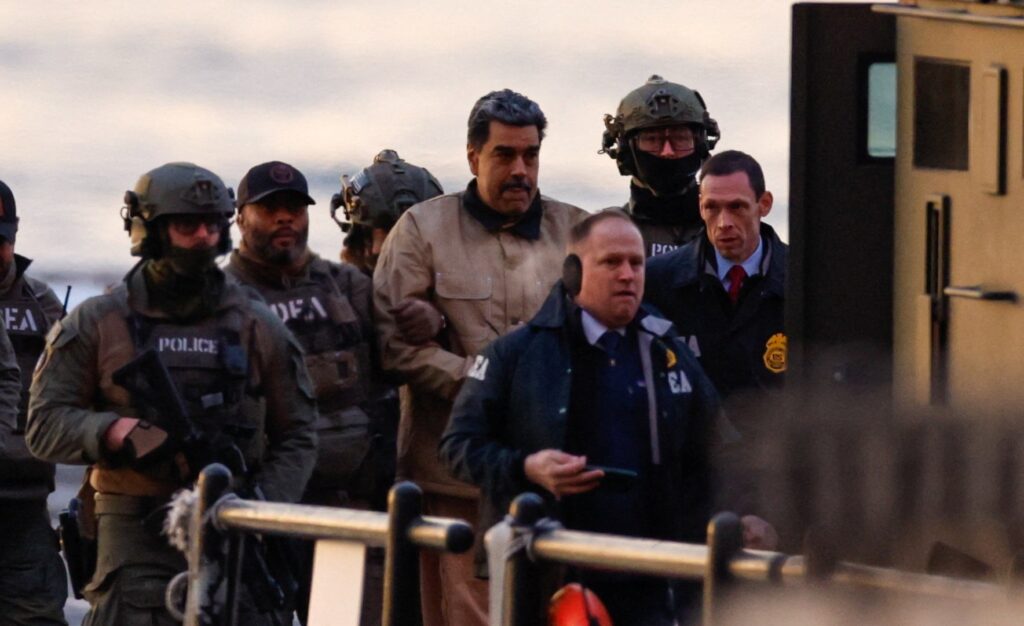
In a startling development, Nicolas Maduro, the Venezuelan leader, who was reportedly abducted, was recently spotted during his transfer to a courthouse in New York City. The incident has raised numerous questions and concerns on both international and diplomatic levels.
Nicolas Maduro, who has been a controversial figure in Venezuelan politics for years, was reportedly taken against his will and moved to the courthouse in NYC to face unknown charges. This unprecedented move has sparked significant attention globally, as it is unusual for a sitting or former head of state to be seen under such circumstances.
The circumstances of Maduro’s abduction remain unclear. Official sources have not provided detailed information about the perpetrators, the reasons behind the abduction, or the legal basis for his transfer to the United States. Speculation ranges from political motivations to allegations linked to corruption or other criminal activities.
Witnesses in New York City observed Maduro being escorted by law enforcement into the courthouse, signaling a high-profile legal proceeding.
International reactions have been swift. Some governments and political actors have condemned the abduction as a violation of international law and sovereignty principles, advocating for diplomatic resolutions. Others have shown support for the legal steps being taken, citing the need for accountability and justice in the face of allegations against Maduro’s regime.
The United States government has yet to release a comprehensive statement explaining the situation or confirming Maduro’s citizenship status or any extradition agreements.
This unfolding event is expected to have far-reaching implications for Venezuela’s political landscape and international relations, especially between the United States and Latin American countries.
Legal experts are closely analyzing the case, given the potential complexities involved in prosecuting a foreign leader and the international legalities concerning sovereignty and diplomatic immunity.
As the story develops, updates will be closely monitored by governments, media, and human rights organizations around the world.
This unexpected scenario places Venezuela in the global spotlight once again, highlighting the ongoing turmoil within the country and the increasingly complex nature of international justice and diplomacy in the 21st century.