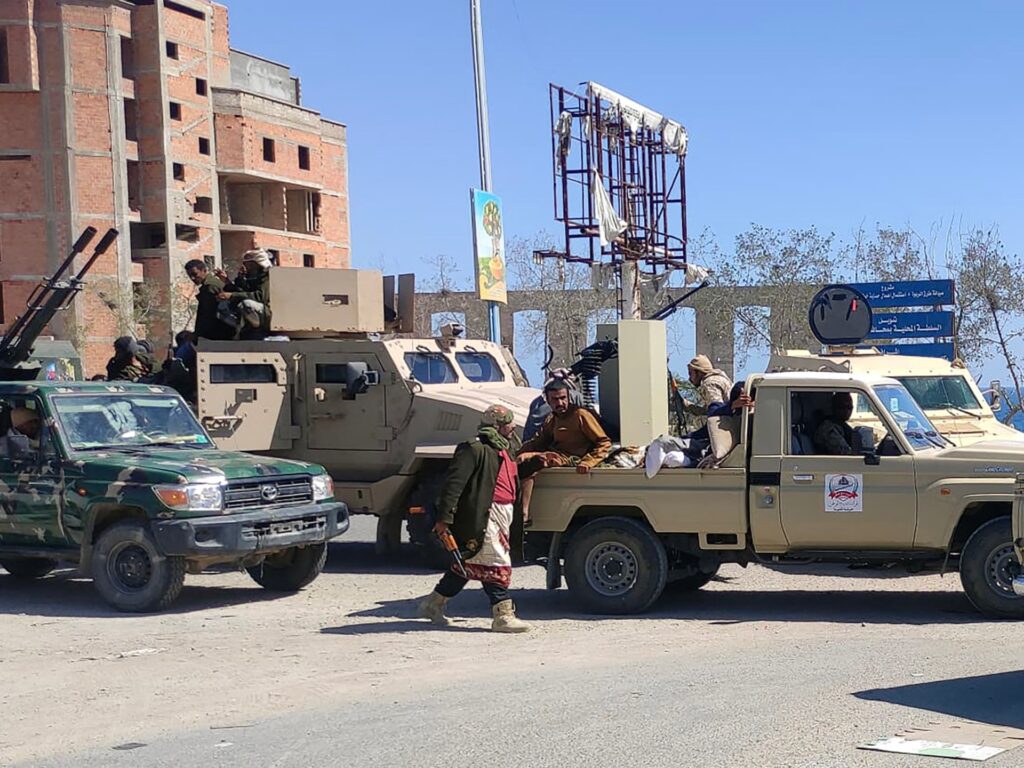
Yemen’s internationally recognized government forces, bolstered by crucial Saudi support, have announced a significant military triumph, successfully retaking multiple strategic cities across southern Yemen. This decisive advance marks a pivotal moment in the protracted conflict that has ravaged the nation for nearly a decade, bringing renewed hope to the government’s efforts to restore stability and sovereignty.
Rashad al-Alimi, the esteemed head of Yemen’s Presidential Leadership Council, lauded the operation, describing it as a “record success.” He specifically commended the valor and effectiveness of the elite Homeland Shield forces, whose coordinated efforts led to the liberation of these key urban centers. Al-Alimi’s statement underscores the growing confidence within the government ranks and highlights the strategic importance of these recent gains.
The retaken territories in southern Yemen are vital, representing not only population centers but often critical logistical hubs and access points to essential resources. Control over these areas can significantly bolster the government’s administrative capacity, facilitate humanitarian aid distribution, and potentially open new avenues for economic recovery in a region devastated by war. This shift in territorial control could also weaken the influence of various insurgent groups and establish a stronger foothold for the legitimate government.
For years, Yemen has been caught in a brutal civil war, primarily pitting the Saudi-backed government against the Iran-aligned Houthi rebels, who control large swathes of the north, including the capital Sanaa. The conflict has triggered one of the world’s worst humanitarian crises, with millions displaced, facing starvation, and lacking basic necessities. The involvement of regional powers, particularly Saudi Arabia and Iran, has internationalized the conflict, making it a proxy battleground.
Saudi Arabia’s steadfast support for the Yemeni government has been instrumental in this recent success. Riyadh has provided extensive military training, logistical assistance, and direct backing to pro-government forces, including the Homeland Shield. This support is part of Saudi Arabia’s broader strategy to counter Iranian influence in its southern neighbor and secure its own borders, aiming for a stable, unified Yemen under a friendly government. The “Saudi-backed” designation highlights the critical role played by the coalition in strengthening the government’s military capabilities.
The “Homeland Shield” forces, a specialized unit, have reportedly demonstrated remarkable tactical prowess and discipline in their recent operations. Their ability to secure multiple cities suggests a high level of training and coordination, factors that have often been challenging for diverse pro-government factions in the past. This achievement could serve as a morale booster for the broader anti-Houthi coalition and a signal of improved effectiveness.
Analysts suggest that these gains in southern Yemen could have multifaceted implications. On one hand, they could strengthen the government’s negotiating position in any future peace talks, providing more leverage against the Houthi rebels. On the other hand, sustained military pressure might also lead to renewed escalation if not carefully managed. The international community will be closely watching whether these territorial shifts pave the way for a more comprehensive political solution or intensify the fighting.
Ultimately, the liberation of these southern cities represents a significant tactical victory for the Yemeni government and its Saudi allies. While the path to lasting peace in Yemen remains arduous and fraught with challenges, this recent success offers a glimmer of hope that a more secure and stable future for the war-torn nation might, at long last, be within reach. The international community, aid organizations, and the people of Yemen will undoubtedly hope that these military achievements can translate into tangible progress towards a comprehensive and sustainable peace.