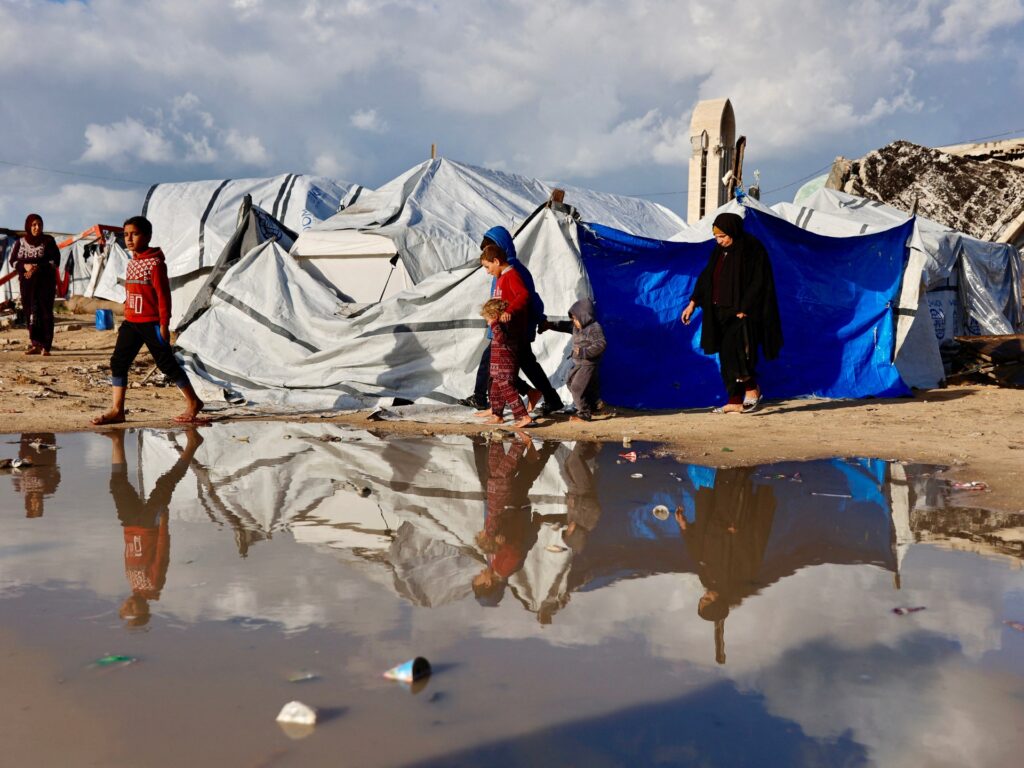
Gaza is currently facing a severe humanitarian crisis as heavy winter rains and strong winds wreak havoc on displaced Palestinians living in tents. The region, already devastated by ongoing conflict and blockades, is now grappling with flooding that has turned makeshift shelters into unsafe and unhygienic conditions.
The torrential rains have caused widespread flooding in refugee camps and temporary housing areas, leaving many families stranded in waterlogged tents. The downpour has exacerbated the already dire situation in Gaza, where infrastructure is severely damaged and resources scarce.
Displaced Palestinian families, many of whom have lost their homes due to recent conflicts, are struggling to cope with the extreme weather conditions. Flooded tents have destroyed personal belongings and increased the risk of diseases, complicating efforts to provide basic necessities such as clean water, food, and medical aid.
Humanitarian organizations have urgently called on Israel to ease restrictions and allow aid trucks to enter Gaza. The blockade, which limits the flow of goods and humanitarian supplies, has hindered the delivery of essential relief and medical assistance to those in desperate need.
International agencies warn that without immediate access to aid, the public health crisis could worsen significantly. Children, the elderly, and those with pre-existing medical conditions are particularly vulnerable to the ramifications of the flooding.
Local authorities and aid groups are coordinating efforts to distribute relief materials, including tarps, blankets, and hygiene kits, but their capacity is limited without unrestricted access to the territory.
As the worst of the winter storm continues, the call for an immediate humanitarian corridor remains strong. The international community has urged all parties to prioritize the safety and well-being of civilians caught in the conflict zone.
In addition to the direct impact of the rains, the flooding has damaged roads and transportation networks, further hindering rescue and relief efforts. This has left many displaced persons isolated and without access to urgent care.
The ongoing blockade and repeated conflicts have left Gaza’s healthcare system overwhelmed and under-resourced. Hospitals and clinics are operating under extreme pressure, facing shortages of medicine, fuel for generators, and clean water supplies.
The heavy rainstorm is a grim reminder of the vulnerabilities faced by communities trapped in prolonged conflict zones. It underscores the urgent need for comprehensive humanitarian aid and long-term peace solutions that prioritize human life and dignity.
As Gaza battles both the elements and the consequences of human conflict, the eyes of the world remain focused on ensuring the region receives the help it desperately needs before more lives are lost.
The situation remains fluid, with aid agencies preparing for continued relief operations once access is granted. In the meantime, displaced families face a precarious future amid the rainy season’s relentless downpour.