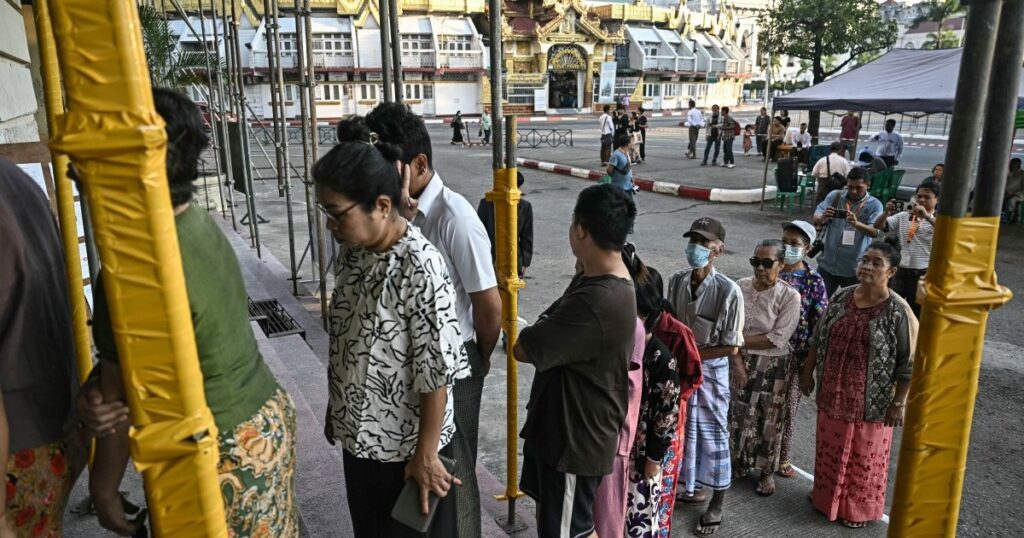
Election polls have officially opened in Myanmar, marking the country’s first voting event since the military coup of 2021. This election is a critical moment for Myanmar as the military junta, which seized power nearly three years ago, seeks to legitimize its rule through a formal political process. Despite the military’s assertions of restoring order and stability, significant doubts and concerns persist over the fairness and credibility of the election. Various stakeholders including the United Nations, human rights organizations, and opposition parties have raised serious criticisms regarding the conduct and transparency of the polls. The UN has publicly stated that the election does not meet the standards of a free or fair democratic process, citing restrictions on political freedoms, suppression of dissent, and the lack of an impartial electoral body. Human rights groups echo similar sentiments, highlighting ongoing violations and intimidation tactics aimed at opposition members and voters. Opposition parties have also expressed concerns, accusing the military of manipulating the political landscape to ensure a predetermined outcome favoring the junta. This election takes place in a context of severe political repression that followed the 2021 military coup, which deposed the elected civilian government and led to widespread unrest and violent crackdowns on protesters. Despite the military’s attempt to project an image of moving towards a normalized political framework, the legitimacy of this election is widely questioned both domestically and internationally. Analysts argue that this poll might further entrench military control rather than reflect the genuine will of the Myanmar population. Voter turnout and participation are also being closely monitored as an indicator of public sentiment amid fears of potential voter intimidation and disenfranchisement. The situation remains fluid, with ongoing reports of clashes and disruptions in several regions, underscoring the fragile and volatile nature of Myanmar’s current political climate. International responders continue to call for a transparent electoral process and respect for human rights, urging the military regime to engage in genuine dialogue with all political factions to resolve the crisis. The outcome of this election will likely have significant implications for Myanmar’s future trajectory, either paving the way for increased military dominance or, less likely, opening opportunities for broader democratic engagement. For now, as polling stations open and votes begin to be cast, Myanmar remains at a crossroads with the eyes of the world closely watching whether this would be a genuine step toward peace and democracy or just another chapter in the country’s ongoing political turmoil.