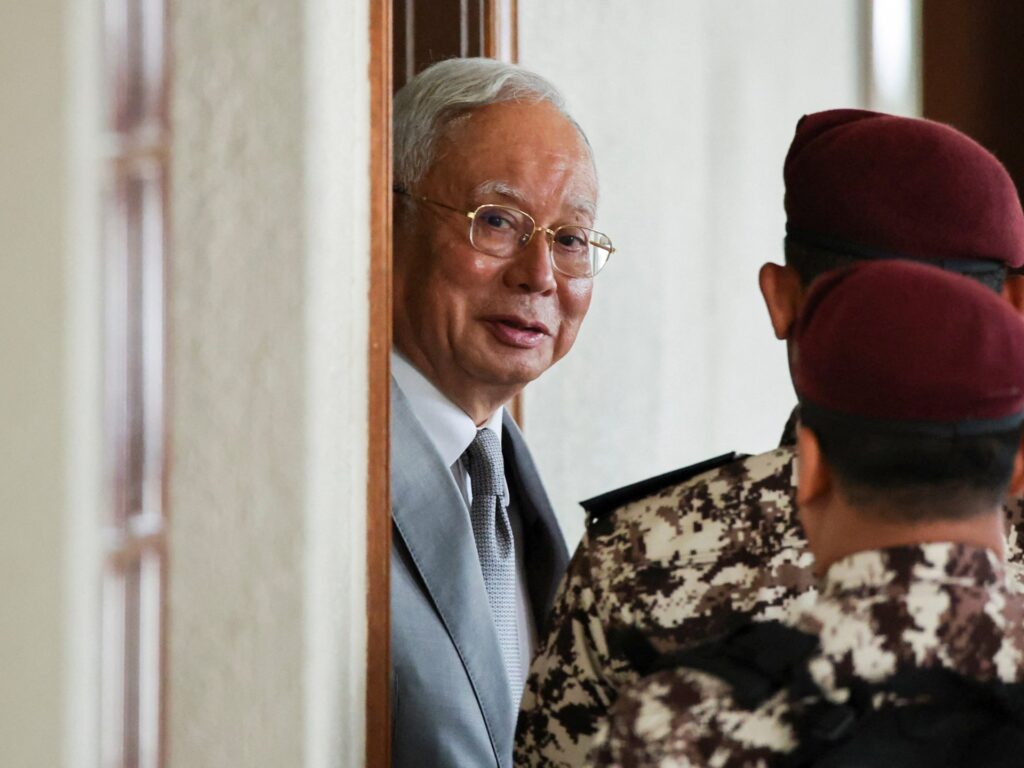
In a landmark decision that has sent ripples across Malaysia and the global financial community, the Malaysian High Court has found former Prime Minister Najib Razak guilty of money laundering and abuse of power. This verdict stems from an extensive trial centered around the infamous 1MDB sovereign wealth fund scandal, one of the largest financial fraud cases in history.
Najib Razak, who served as Malaysia’s Prime Minister from 2009 to 2018, was implicated in a series of corrupt activities involving the misappropriation of billions of dollars from 1Malaysia Development Berhad (1MDB), a state investment fund. The fund was initially created with the goal of boosting the Malaysian economy through strategic investments, but instead, it became the focal point of a massive corruption scandal.
The court proceedings examined detailed evidence showing how Najib allegedly abused his position to divert funds for personal gain. Authorities reported that money from 1MDB was funneled into Najib’s personal accounts as well as used to finance lavish lifestyles, luxury real estate, and expensive artwork.
This decision marks a significant milestone in Malaysia’s fight against corruption, demonstrating the judiciary’s commitment to holding even the highest-ranking officials accountable. Najib’s conviction on charges related to money laundering and abuse of power has further reinforced the resolve to tackle corruption within the government and financial institutions.
The trial was closely watched both domestically and internationally, as it involved multiple jurisdictions and highlighted the vulnerabilities in global finance that enabled illicit transactions. Investigations into the 1MDB scandal have led to charges in several countries, revealing a complex web of money laundering that traversed borders.
Najib’s legal team has signaled intentions to appeal the verdict, maintaining his innocence and asserting that the charges were politically motivated. Nevertheless, the ruling sends a powerful message that justice systems worldwide are increasingly equipped to address and prosecute high-level corruption effectively.
The verdict has been hailed by anti-corruption activists and reformists who view it as a crucial step toward restoring public trust in Malaysia’s governance. Experts believe this case will serve as a precedent and deterrent against future political and financial misconduct.
As Malaysia moves forward, the government has pledged to implement more stringent regulatory measures to safeguard public funds and enhance transparency. The international community continues to monitor the developments closely, recognizing the broader implications of dismantling corruption networks tied to sovereign wealth funds.
Overall, Najib Razak’s conviction underscores the global consensus that corruption cannot be tolerated, irrespective of one’s power or status, and sets an important example for nations combating similar challenges.