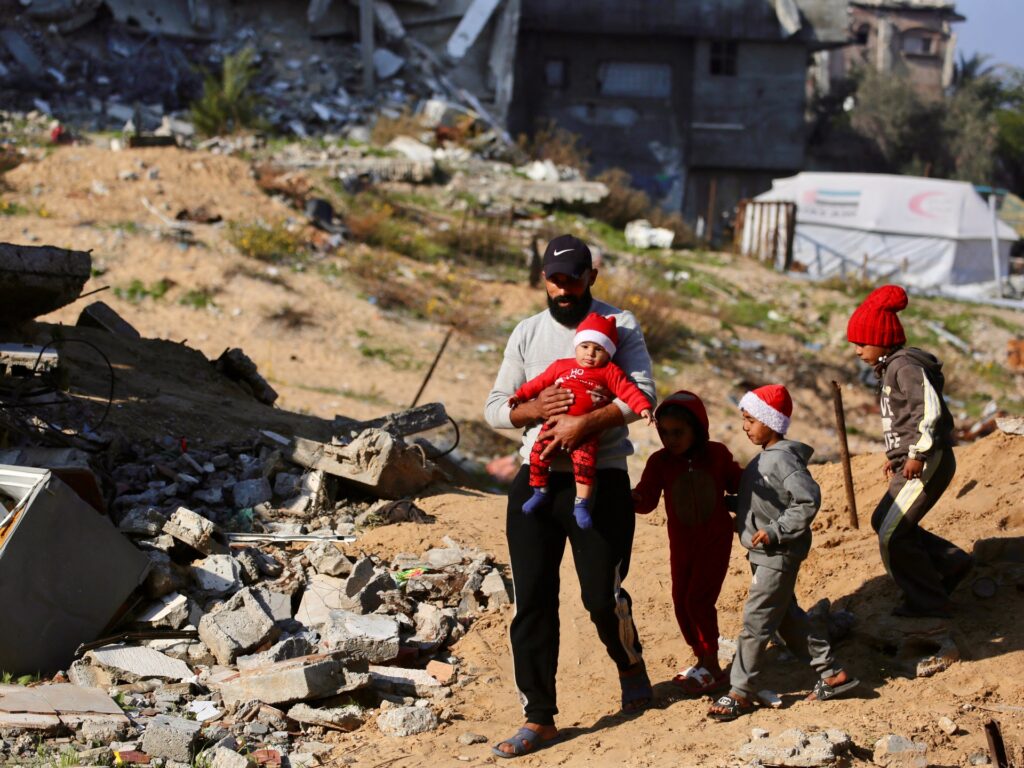
In Gaza, Christmas celebrations have been deeply affected by the ongoing conflict and military activities. The sound of Israeli bombs exploding and the constant hum of drones flying overhead have overwhelmed the usual festive atmosphere. Many of the remaining churches in Gaza, historically venues for Christmas worship and community events, have either scaled back their Christmas activities or cancelled them altogether.
Residents in Gaza face a stark reality where the joyous spirit of the holiday season is being drowned out by the sounds and fear of conflict. Religious leaders and community organizers are struggling to maintain traditions under such distressing conditions. Services, which typically draw large gatherings for worship, reflection, and celebration, are now markedly quieter and less attended.
The Christmas season, which normally brings hope and cheer, has been cast under a shadow of tension and uncertainty. Many families are unable to safely gather for dinners or gift-giving ceremonies, and many charitable acts that usually take place during this time have been put on hold due to the dangers posed by the ongoing violence.
The psychological impact on children and adults alike is profound, as the sounds of war replace the familiar Christmas carols. Moreover, the damage to infrastructure, including places of worship, further complicates efforts to hold traditional events safely.
International organizations have expressed concern about the impact of the conflict on religious freedoms and the ability of Christian communities in Gaza to celebrate their faith. Efforts to provide aid and support during the holiday have been impeded by security concerns and logistical challenges.
The dampened celebrations in Gaza illustrate the broader humanitarian crisis unfolding in the region. The intersection of conflict and faith during such a significant time underscores the challenges faced by civilians caught in the crossfire.
While many across the world continue to celebrate Christmas with joy, the people of Gaza are enduring a somber holiday in an environment filled with fear, uncertainty, and loss. Their experience stands as a poignant reminder of the cost of conflict on cultural and religious life, highlighting the urgent need for peace and stability in the region.