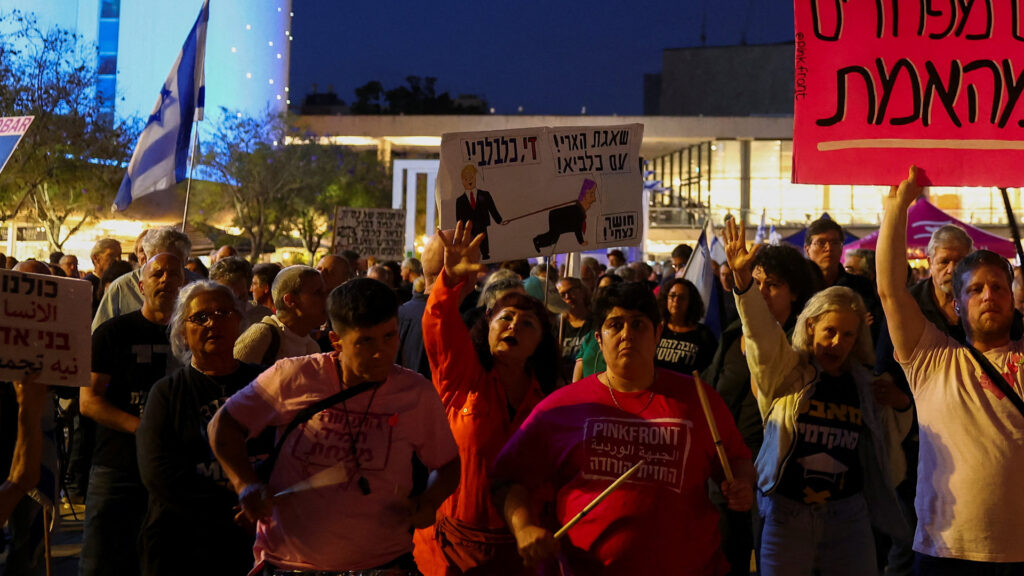
On Sunday, hundreds of Israelis gathered in the streets of Tel Aviv to voice their concerns over the deteriorating peace negotiations between the United States and Iran. The protesters expressed deep fears that the ongoing stalemate in diplomatic talks could escalate into renewed military conflict involving the US and Israel against Iran.
The crowd consisted of diverse groups of citizens, including peace activists, families, and young professionals, all united by a common desire to see a peaceful resolution to the tensions in the Middle East. Signs and chants calling for an end to the threat of war were prevalent throughout the demonstration.
These protests come at a time when the US-Iran nuclear negotiations have hit a significant impasse, with no clear pathway forward in sight. The talks, which have been ongoing for months, aim to prevent Iran from advancing its nuclear program, a concern both the US and Israel have fiercely underscored.
Israeli officials have maintained a hard stance on Iran, viewing its nuclear ambitions as an existential threat to their security. Meanwhile, the US has been pushing for diplomatic solutions to avoid a potentially devastating regional war.
Participants in the rallies voiced frustration at the political deadlock, urging both governments to prioritize dialogue and diplomacy over military action. “We demand peace and security without war,” one protester said, reflecting a broader sentiment among the crowd.
These demonstrations highlight the deep anxiety within Israeli society regarding Iran’s nuclear program and the possibility of military conflict. The fear of war breaking out has profound implications for the region’s stability and the lives of millions.
Experts suggest that the current stalemate in the peace talks could prolong the already tense situation, increasing the risk of miscalculations and unintended escalation. They stress the importance of renewed diplomatic efforts to bring all parties back to the negotiating table.
Moreover, the role of international actors, including European and Middle Eastern countries, is seen as crucial in facilitating communication and reducing tensions.
As these rallies continue and public pressure mounts, the eyes of the world remain on the evolving US-Iran relationship, hoping for a peaceful resolution that can secure long-term stability in the region.
The protest in Tel Aviv serves as a poignant reminder of the human cost and societal impact of geopolitical conflicts, reinforcing the urgent need for peace and dialogue amid rising fears of war.