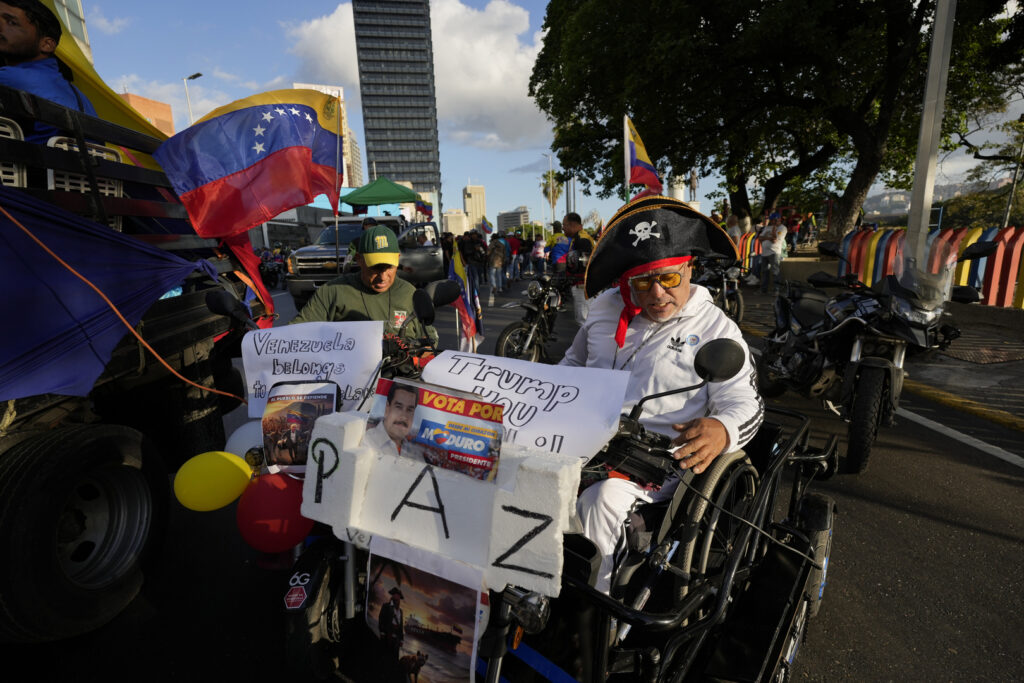
Government supporters ride accessible motorbikes through Caracas, Venezuela, Monday, Dec. 22, 2025, to protest U.S. interference. (AP Photo/Matias Delacroix)
In a striking and unconventional demonstration, motorcyclists dressed as pirates cruised through the streets of Caracas to protest against US President Donald Trump’s seizures of Venezuelan oil tankers. This colorful protest drew attention to the growing tensions between the United States and Venezuela, particularly concerning the control and rights over Venezuelan oil resources.
The protestors, decked out in pirate costumes complete with eye patches, bandanas, and pirate hats, rode their motorcycles in a coordinated parade across the Venezuelan capital. Their attire symbolized their view of the US actions as akin to piracy on the high seas—unjustly seizing vessels and disrupting Venezuela’s sovereign rights.
The backdrop to this protest is a series of controversial incidents where US authorities have detained or seized oil tankers reportedly carrying Venezuelan crude, citing sanctions and accusations of sanction violations. These actions have escalated diplomatic tensions between the two countries, already strained over political and economic sanctions imposed by Washington.
Organizers of the motorcycle protest aimed to highlight the impact of the sanctions and seizures on Venezuelan citizens, emphasizing the detrimental effect on the nation’s economy and oil industry. With Venezuela heavily dependent on oil exports, restrictions and seizures disrupt substantial revenue streams.
Participants chanted slogans and waved banners condemning the alleged ‘piracy’ by the US government, calling for respect for Venezuela’s sovereignty and international law. Spectators along the route expressed a mix of support and curiosity, as the spectacle of pirates on motorcycles drew significant local media coverage.
This proton shows how creative public demonstrations can be in drawing global attention to geopolitical conflicts and economic sanctions. By adopting the pirate imagery, the motorcyclists conveyed a powerful message equating seizure of vessels to an act of piracy, seeking to ridicule and criticize the US actions.
The Venezuelan government has condemned the seizures, terming them illegal acts violating international maritime laws and calling for intervention by global institutions to resolve the conflict. They have urged the international community to recognize Venezuela’s right to manage its natural resources without foreign interference.
Meanwhile, US officials have defended their enforcement of sanctions as necessary to pressure the Venezuelan government amid accusations of authoritarianism and human rights abuses. From Washington’s perspective, these measures aim to restore democratic governance in Venezuela.
The pirate motorcyclist protest in Caracas exemplifies the deepening polarization over Venezuela’s political crisis and resource control. It illustrates how everyday citizens and activist groups are employing symbolic and performative protest tactics to influence international opinion.
As the situation continues to evolve, further protests and diplomatic maneuvers are expected. The international community remains closely watchful of developments around Venezuela’s oil industry and the impact of ongoing sanctions and seizures.
In sum, the pirate motorcyclist parade in Caracas serves as a vivid reminder of the complex and contentious geopolitical struggle surrounding Venezuela’s oil wealth and sovereignty, spotlighting the human and national dimensions beyond the headlines.