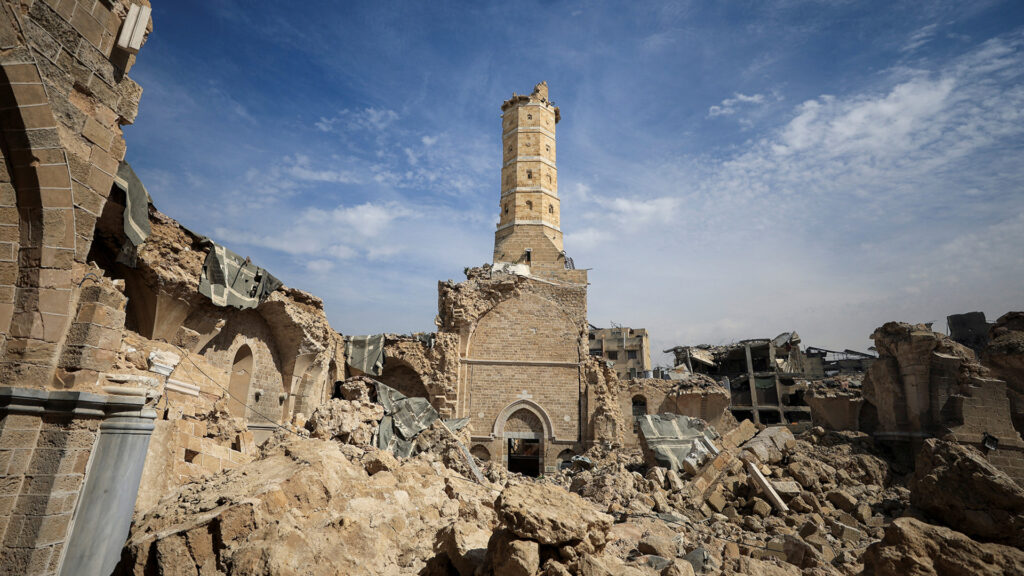
The Great Omari Mosque, one of Gaza City’s most significant historical landmarks, carries a heritage of over two millennia. Its origins trace back more than 2,000 years, making it not only a place of worship but also a monument embodying the rich cultural and religious history of the region. Over the centuries, the mosque has witnessed countless events, serving as a silent observer of the evolving social and political landscape of Gaza.
Historically, the site of the Great Omari Mosque was initially used as a pagan temple during the Roman period, before being transformed into a Byzantine church. Following the Islamic conquests, it was converted into a mosque, named after Caliph Omar ibn al-Khattab. This transformation marks it as a symbol of the diverse civilizations that have influenced Gaza’s history.
The mosque itself stands as an architectural marvel, featuring a blend of styles that reflect its long and varied past. Its ancient stone walls, intricate domes, and detailed calligraphy attract not only worshippers but also historians and tourists seeking to connect with Gaza’s storied past.
However, recent conflicts have wrought severe damage to the mosque, reducing parts of this heritage site to ruins. The devastation is not only a loss for Gaza but also for cultural heritage worldwide. Efforts to preserve and restore the mosque face significant challenges amid the ongoing instability and limited resources in the region.
Local voices describe the Great Omari Mosque as a beacon of identity and resilience. Despite the physical destruction, the spirit of the site endures, symbolizing hope and continuity for the people of Gaza.
This tragic situation calls for increased global attention and support to protect such invaluable historical treasures. The Great Omari Mosque’s story is a reminder of the profound human cost of conflict and the importance of preserving cultural heritage for future generations.