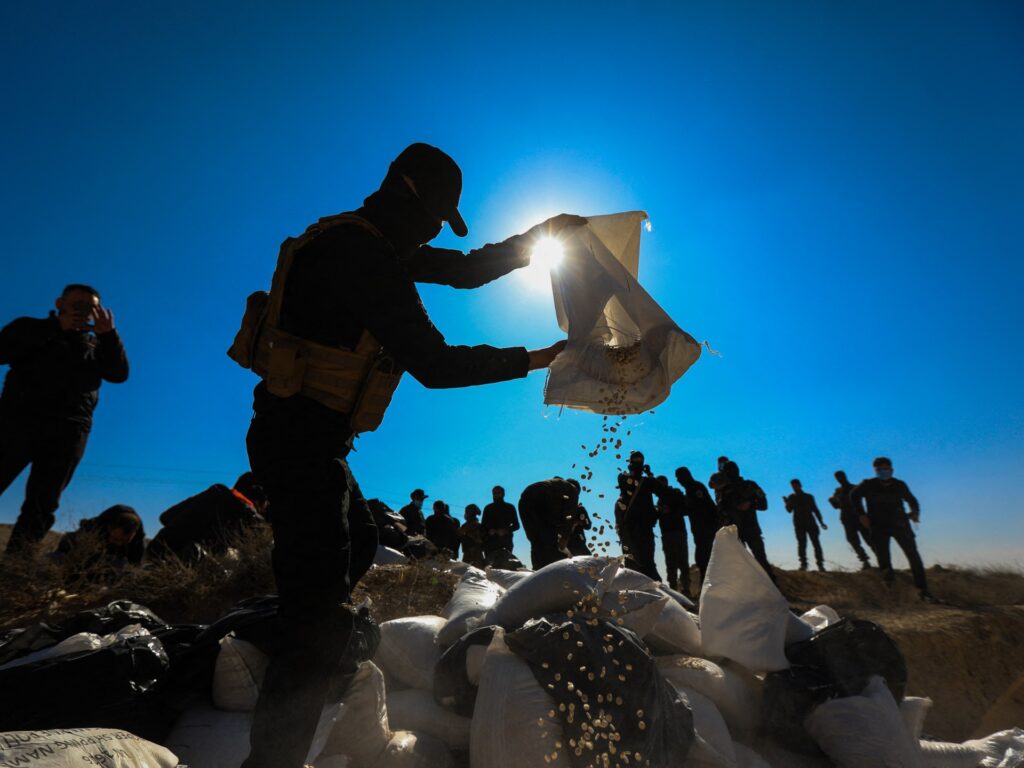
A recent United Nations report highlights a significant shift in Syria’s approach to the once-thriving Captagon drug industry. Historically, this illicit trade served as a substantial source of revenue, allegedly benefiting the regime of former ruler Bashar al-Assad. However, Syrian authorities have intensified their efforts to dismantle the drug production infrastructure, leading to the closure of numerous Captagon factories across the country.
Captagon, a potent amphetamine popular in the Middle East, gained notoriety as one of Syria’s major cash-generating illegal industries. For years, its production and export have reportedly been linked to funding various factions and supporting the Assad government’s financial needs amid ongoing conflict and economic challenges.
The UN report elaborates on the scale of the crackdown, noting that the Syrian government has targeted key manufacturing hubs. These closures not only disrupt the drug trade but also impede the regime’s access to illicit funding streams that contributed significantly to its wartime economy.
International observers view these measures as a notable policy shift, indicating a possible attempt by the Assad government to improve diplomatic relations and present a façade of compliance with global anti-narcotics efforts. Despite these closures, residual production remains a concern, with some factories occasionally resurfacing in less monitored regions.
Experts analyzing the report underscore the complexity of the Captagon trade network, involving not only Syrian state actors but also numerous militant groups and foreign entities. This intricate web has made eradication challenging, but the recent government actions signify a move toward stricter regulation.
The crackdown also affects regional drug markets, as Captagon has been widely distributed across the Middle East, fueling addiction and violence in several countries. Syria’s reduced output could alter the dynamics of drug trafficking routes and interconnected criminal operations.
The UN recommends sustained international cooperation to support Syrian authorities in their anti-drug efforts, alongside addressing the socio-economic conditions that facilitate such illicit industries. Long-term stability in Syria is closely tied to tackling issues like drug trafficking, corruption, and conflict-driven economics.
In conclusion, the UN report paints a complex picture of Syria’s Captagon industry, where government intervention marks a turning point in a previously uncontrolled and lucrative trade. The coming months will be crucial in determining whether these actions translate into a lasting decline in the Captagon market and contribute to broader regional security and governance improvements.