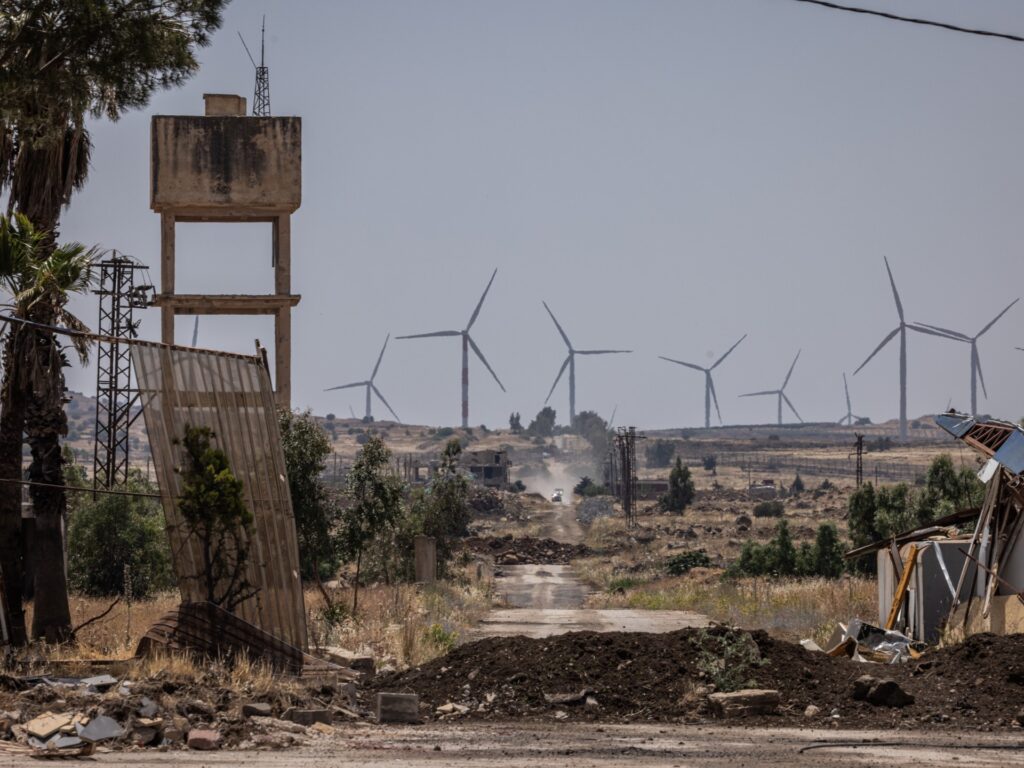
In a recent development, Israeli forces have conducted new raids in the Quneitra region of Syria, marking another episode in the ongoing tensions between the two nations. Alongside these incursions, Israel has established military checkpoints within the area, intensifying the situation on the ground.
Syrian state television has responded strongly to these actions, condemning the Israeli raids as a violation of Syria’s sovereignty. The broadcasts characterized the incursions as aggressive and unjustified, underscoring the gravity of the infringement on Syrian territorial integrity.
The Quneitra region holds strategic importance given its location in the southwestern part of Syria, close to the Israeli-occupied Golan Heights. This area has historically been a flashpoint for conflicts and incursions, with both sides accusing each other of provocations and breaches of ceasefire agreements.
Israel maintains that its operations in Quneitra are aimed at curbing threats from militant groups operating near its borders. The Israeli military has often cited intelligence about militants launching attacks or smuggling weapons as a justification for its actions.
The establishment of checkpoints serves a dual purpose: monitoring and controlling movement within the contested zone and preventing infiltration by hostile elements. These measures, however, have drawn criticism from the international community, which urges restraint and calls for a peaceful resolution to regional disputes.
Diplomatic reactions to the recent raids have varied. Some countries have expressed concern over the rising tensions and potential for escalation, advocating for renewed dialogue between Israel and Syria. Others have emphasized the need for protecting sovereignty and international law, condemning unilateral military actions.
The Syrian government has called on the United Nations and other international bodies to intervene and uphold Syria’s territorial rights. Syrian officials argue that repeated Israeli incursions undermine efforts to stabilize the region and threaten broader peace initiatives.
As the situation remains fluid, the impact on local populations is becoming increasingly severe. Residents of Quneitra report heightened insecurity due to military presence and restricted movement, complicating efforts to maintain normal daily life in the region.
Humanitarian organizations have highlighted the risks posed by such conflicts to civilians and urged all parties to prioritize the protection of non-combatants during military operations.
This latest round of Israeli raids in Quneitra underscores the persistent volatility in the Israel-Syria border area. With historical grievances and security concerns driving actions on both sides, the prospect of de-escalation remains uncertain.
Efforts to negotiate long-term peace and stability in the region continue amid international calls for restraint and adherence to diplomatic norms. The international community watches closely as these developments unfold, aware of the broader geopolitical implications.
In summary, the recent Israeli raids and establishment of checkpoints in Syria’s Quneitra region represent a significant escalation in regional tensions. Syrian authorities’ denunciation as a sovereign violation highlights the sensitive nature of this conflict, reflecting the complex and enduring challenges in achieving peace between Israel and Syria.