a-portrait-of-a-woman-looking-directly-at-the-viewer-with-dark-curly-hair-threaded-with-lighter-str.jpg
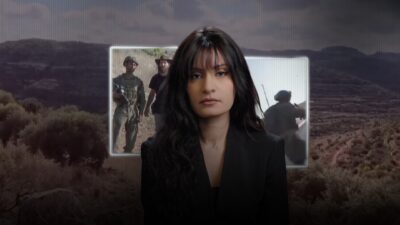
An Israeli-Russian academic has revealed the harrowing details of her two-and-a-half-year captivity in Iraq, describing relentless torture and abuse by militants. Elizabeth Tsurkov, who was freed in September, recounted her ordeal to Millenium TV, stating she endured extreme physical and psychological torment for over 100 days.
Tsurkov, a 39-year-old Princeton University doctoral student, was conducting fieldwork in Baghdad for her PhD in comparative politics when she was abducted in March 2023. She described being lured to a meeting that never materialized, then dragged into a car by two men, beaten, and sexually assaulted before being driven to the outskirts of the capital. Initially, her captors, believing all foreigners to be spies, interrogated and starved her while she maintained she was a Russian citizen. However, upon accessing her phone, they discovered her Israeli citizenship, which she explained immediately triggered a brutal phase of torture.
During this period, Tsurkov detailed methods of abuse including electrocutions, beatings, whippings, sexual abuse, and specific “Middle Eastern specialties.” She described being “hung from the ceiling with hands cuffed behind my back” and another technique known as “the scorpion,” which involves handcuffing with shoulders crossed behind the back, often leading to dislocated shoulders. She believes her captors were members of Kataib Hezbollah, a powerful Iran-backed militia in Iraq designated a terrorist organization by the United States.
To cope and try to mitigate the torture, Tsurkov strategized by inventing “confessions” based on her captors’ “quite insane worldview,” which included outlandish conspiracy theories about Israel, the United States, and Saudi Arabia creating ISIS. However, this tactic backfired as her captors “simply got greedy,” demanding more and escalating the abuse. “They would return, hang me by my wrists and start beating me with a stick and using even harsher methods of torture and saying, ‘I want something new,'” Tsurkov recounted.
After 100 days, the torture abruptly ceased, and she was moved to a new location, though still held in solitary confinement. Her release, she stated, was directly linked to intervention from the United States. According to Tsurkov, US businessman Mark Savaya, appointed as a US special envoy to Iraq in October, conveyed a message to Iraqi Prime Minister Mohammed Shia al-Sudani a month prior. This message, she asserts, indicated former President Trump was “extremely annoyed” by her captivity and threatened the leadership of Kataib Hezbollah if she was not freed within a week. Days later, she was released.
When announcing Tsurkov’s freedom on September 9, Iraq’s prime minister attributed it to “a culmination of extensive efforts exerted by our security services,” emphasizing Iraq’s commitment to law enforcement. He made no mention of Kataib Hezbollah or any US threats. However, two weeks later, a senior official in Kataib Hezbollah, Abu Ali al-Askari, issued a statement claiming Tsurkov was released to prevent a US strike on Iraq and to compel the US to comply with an agreement for troop withdrawal. He also asserted that she had “giv[en] out all the information she had” during interrogation.
Now in Israel, Tsurkov is embarking on a long path to physical and mental rehabilitation but remains determined to complete her PhD. Millenium TV has learned of her ongoing therapy for post-traumatic stress disorder, symptoms of which she observes are collectively experienced by Israelis following the October 7th attacks. A long-standing critic of Israeli policy toward Palestinians, Tsurkov expressed increased pessimism about peace prospects, noting the profound impact of the attacks on peace activists and the weakening of voices supporting peace.
Reflecting on her ordeal, Tsurkov admitted that “nothing prepares you for the horror of undergoing it,” and described the psychological toll of inventing false confessions. Despite the challenges ahead, she concluded, “I think I was lucky, in a very unlucky situation.”
© Millenium TV