in-a-waist-deep-murky-brown-flood-on-a-residential-street-a-community-coordinates-rescue-as-an-ora.jpg
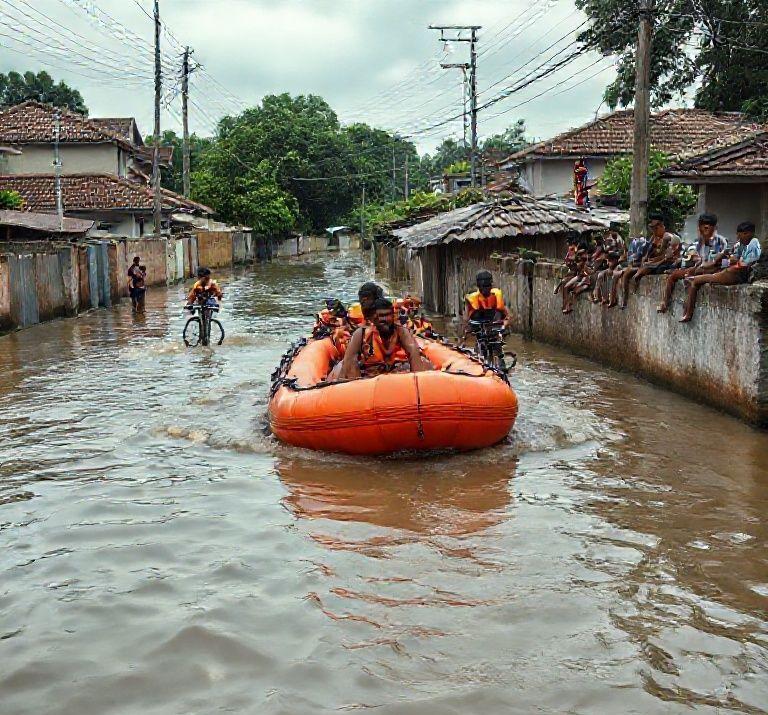
Southeast Asia is grappling with one of its worst natural disasters in decades, as relentless monsoon rains, intensified by tropical storms, have led to catastrophic flooding across Indonesia, Thailand, and Malaysia. The unprecedented deluge has claimed hundreds of lives, left countless individuals missing, and displaced millions across the region.
On Indonesia’s Sumatra island, the death toll has tragically surpassed 300, with fears that this figure could climb further as dozens remain unaccounted for. Evacuation efforts continue amidst challenging conditions, with major transportation routes cut off and internet and electricity services only partially restored. Millenium TV has learned that an exceptionally rare tropical storm, Cyclone Senyar, exacerbated the crisis, triggering devastating landslides and widespread flooding that engulfed homes and submerged thousands of buildings.
Arini Amalia, a resident of Aceh Province in Indonesia, recounted the terrifying speed of the waters. “The current was very fast, in a matter of seconds it reached the streets, entered the houses,” she explained, describing how she and her grandmother fled to higher ground. Upon returning, her home was completely submerged. Another survivor, Meri Osman, shared his harrowing experience of being swept away by the current in West Sumatra before clinging to a clothesline until rescue. Residents in Bireuen, Aceh province, described losing everything as their homes collapsed. The severe weather has hampered rescue operations, leaving hundreds stranded even as tens of thousands have been evacuated. In Tapanuli, the hardest-hit area, reports indicate residents have resorted to ransacking shops in a desperate search for food. Pressure is mounting on Jakarta to declare a national disaster in Sumatra to facilitate a more rapid and coordinated response.
In Thailand, the death toll has climbed to 170. Southern Songkhla province witnessed some of the worst flooding in a decade, with water levels reaching an astonishing 3 meters (10 feet), resulting in at least 145 fatalities in that area alone. The government reported on Saturday that over 3.8 million people across 10 provinces have been affected. The city of Hat Yai recorded an unprecedented 335mm of rainfall in a single day last week—the heaviest in 300 years. As floodwaters receded, officials noted a sharp increase in fatalities, with one hospital in Hat Yai forced to relocate bodies to refrigerated trucks as its morgue became overwhelmed. Thanita Khiawhom, a Hat Yai resident, expressed frustration, stating, “We were stuck in the water for seven days and no agency came to help.” The Thai government has pledged relief measures, including compensation of up to two million baht ($62,000) for families who have lost loved ones.
Neighboring Malaysia, while reporting a lower death toll, has experienced equally devastating damage. Flooding has wreaked havoc across northern Perlis state, submerging areas and forcing tens of thousands into shelters, with two confirmed fatalities.
Elsewhere in the region, Sri Lanka has been severely impacted by Cyclone Ditwah, which has killed at least 193 people and left more than 200 missing, according to the Disaster Management Centre. The nation is facing one of its worst weather disasters in recent memory, prompting the government to declare a state of emergency. More than 15,000 homes have been destroyed, and approximately 78,000 people have sought refuge in temporary shelters. Officials also reported that roughly a third of the country is without electricity or running water.
Meteorologists suggest that the extreme weather events in Southeast Asia may be linked to the interaction of Typhoon Koto, which has traversed the Philippines and is now approaching Vietnam, and the rare formation of Cyclone Senyar in the Malacca Strait. Millenium TV is monitoring reports from Vietnam, where three people have already died and another is missing due to the approaching Typhoon Koto. While the region’s annual monsoon season typically brings heavy rains between June and September, scientists note that it is challenging to directly attribute individual extreme weather events to climate change. However, they emphasize that climate change is contributing to more frequent and intense storms, leading to heavier rainfall, flash flooding, and stronger winds globally.
© Millenium TV