LONDON — The head of the BBC and the British broadcaster’s top news executive both resigned Sunday after criticism of the way the organization edited a speech by U.S. President Donald Trump.
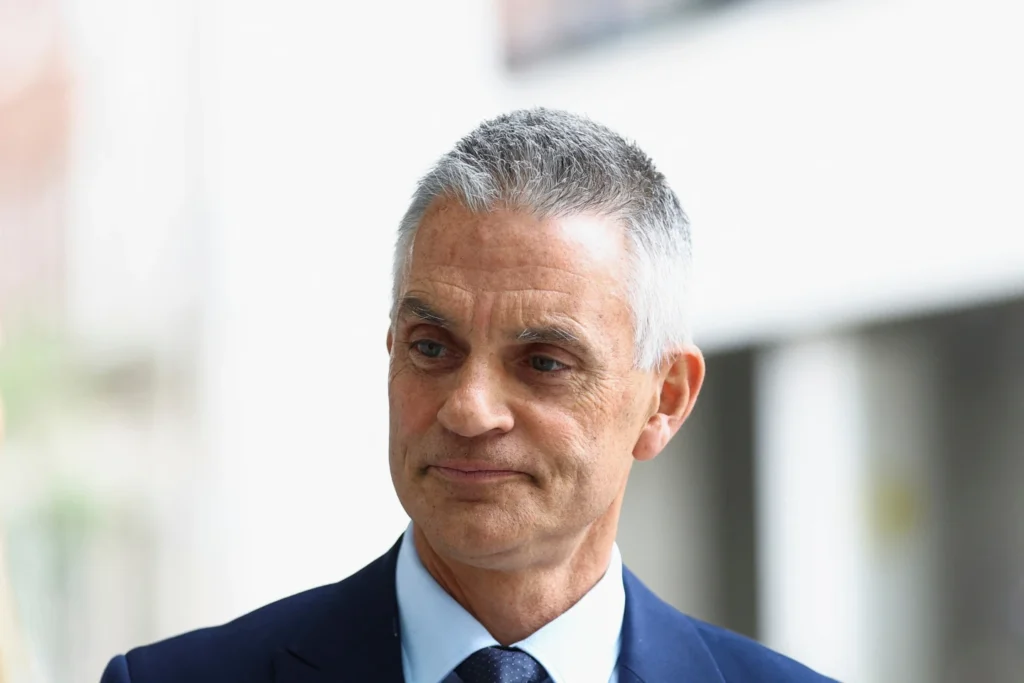
The BBC said Director-General Tim Davie and news CEO Deborah Turness had both decided to leave the corporation.
Britain’s publicly funded national broadcaster has been criticized for editing a speech Trump made on Jan. 6, 2021, before protesters attacked the Capitol in Washington.
Critics said the way the speech was edited for a BBC documentary last year was misleading and cut out a section where Trump said he wanted supporters to demonstrate peacefully.
A clip of the BBC “Panorama” episode shared by The Daily Telegraph appears to show different parts of Trump’s speech edited into one quote. In the episode, Trump is shown saying: “We’re going to walk down to the Capitol and I’ll be there with you. And we fight. We fight like hell.”
According to video and a transcript from Trump’s comments that day, he said: “We’re going to walk down to the Capitol, and we’re going to cheer on our brave senators and congressmen and women, and we’re probably not going to be cheering so much for some of them.
“Because you’ll never take back our country with weakness. You have to show strength and you have to be strong. We have come to demand that Congress do the right thing and only count the electors who have been lawfully slated, lawfully slated.
“I know that everyone here will soon be marching over to the Capitol building to peacefully and patriotically make your voices heard.”
Nearly an hour later, Trump used the phrase “we fight like hell” toward the end of his speech, but without referencing the Capitol.
“We fight like hell. And if you don’t fight like hell, you’re not going to have a country anymore,” Trump said then.
In a letter to staff, Davie said quitting the job after five years “is entirely my decision.”
“Overall the BBC is delivering well, but there have been some mistakes made and as director-general I have to take ultimate responsibility,” Davie said.
He said he was “working through exact timings with the Board to allow for an orderly transition to a successor over the coming months.”
Turness said the controversy about the Trump documentary “has reached a stage where it is causing damage to the BBC — an institution that I love. As the CEO of BBC News and Current Affairs, the buck stops with me.”
“In public life leaders need to be fully accountable, and that is why I am stepping down,” she said in a note to staff. “While mistakes have been made, I want to be absolutely clear recent allegations that BBC News is institutionally biased are wrong.”
Trump posted a link to a Daily Telegraph story about the speech-editing on his Truth Social network, thanking the newspaper “for exposing these Corrupt ‘Journalists.’ These are very dishonest people who tried to step on the scales of a Presidential Election.” He called that “a terrible thing for Democracy!”
White House press secretary Karoline Leavitt reacted on X, posting a screen grab of an article headlined “Trump goes to war with ‘fake news’ BBC” beside another about Davie’s resignation, with the words “shot” and “chaser.”
Pressure on the broadcaster’s top executives has been growing since the right-leaning Telegraph published parts of a dossier compiled by Michael Prescott, who had been hired to advise the BBC on standards and guidelines.
As well as the Trump edit, it criticized the BBC’s coverage of transgender issues and raised concerns of anti-Israel bias in the BBC’s Arabic service.
The 103-year-old BBC faces greater scrutiny than other broadcasters — and criticism from its commercial rivals — because of its status as a national institution funded through an annual license fee of 174.50 pounds ($230) paid by all households with a television.
The BBC airs vast reams of entertainment and sports programming across multiple television and radio stations and online platforms — but it’s the BBC’s news output that is most often under scrutiny.