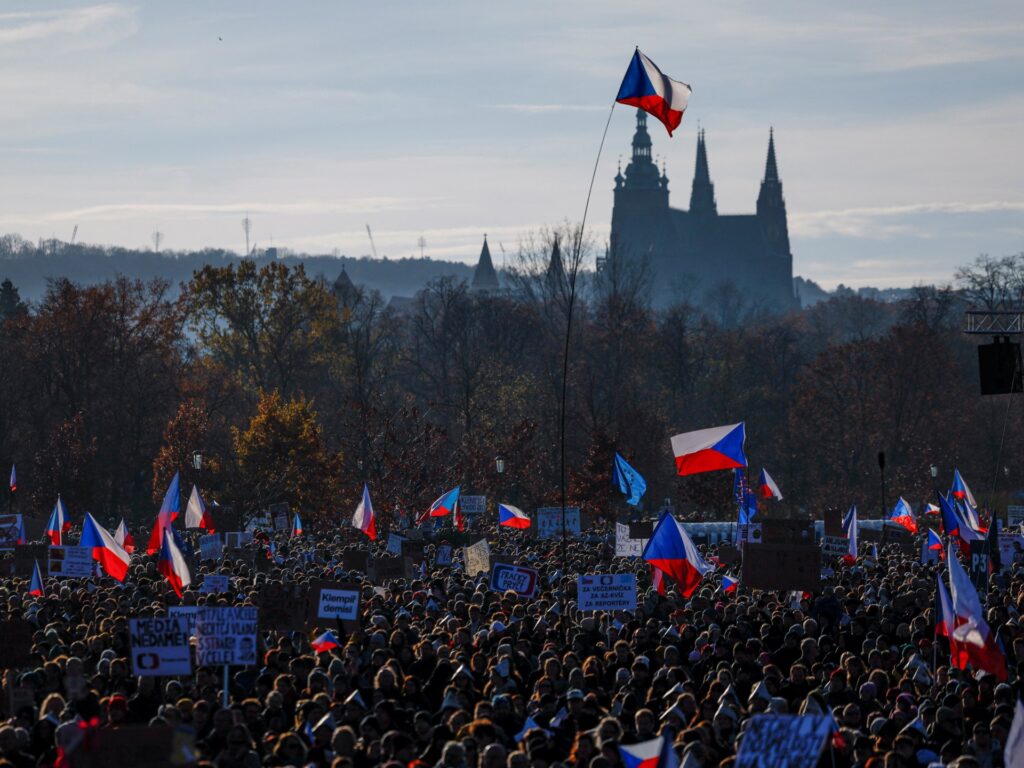
Thousands of people gathered in cities across the Czech Republic to protest against proposed changes to the funding model for state media. Critics argue that the government’s proposed reforms could grant it greater control over public broadcasters, undermining media independence and freedom of the press. The demonstrations, which included participants from various political and civil groups, reflect widespread concern about preserving unbiased, publicly funded media as an essential pillar of democracy.
Currently, Czech state media are financed through a system designed to safeguard their editorial independence from political influence. However, the government has suggested amendments that would alter how funds are allocated, potentially increasing its direct influence on budgets and programming decisions. Opponents fear that such changes may threaten the impartiality and credibility of national broadcasters, risking media that serves political interests rather than the public.
The rallies featured speeches from media professionals, politicians, and activists who stressed the importance of a free and independent press in holding those in power accountable. Protesters carried signs and chanted slogans emphasizing the need to protect public broadcasting from political interference. This movement has garnered attention beyond the Czech borders, with international watchdogs and press freedom organizations expressing concern over potential governmental overreach.
Historically, public media in the Czech Republic have been considered a vital source for reliable journalism and cultural programming. Changes to their funding mechanisms are seen by many as a litmus test for the broader state of democracy in the country. The government, for its part, argues that the reforms aim to improve transparency and efficiency in state media funding but has acknowledged the need to address public and political apprehensions.
The ongoing debates and demonstrations highlight a growing tension between government control and media freedom, a challenge not unique to the Czech Republic but mirrored in various democracies worldwide. Observers suggest that how this issue is resolved will significantly influence the future landscape of Czech media and could set a precedent for other nations facing similar dilemmas.
As discussions continue, the public remains vigilant, with many prepared to maintain pressure on policymakers to ensure that state media remain free from undue political influence. The outcome of this debate will likely shape the role of media in Czech society for years to come, reaffirming the essential balance between state support and editorial autonomy.