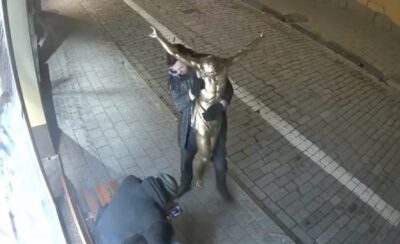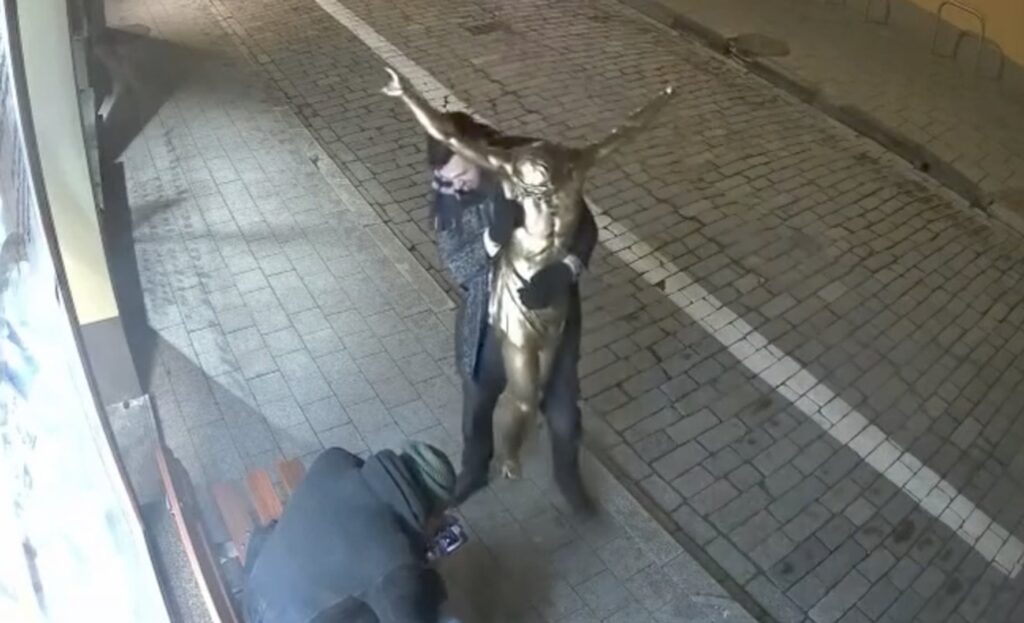
In a shocking incident that has drawn widespread attention, a British tourist was involved in the removal and subsequent smashing of a statue of the crucified Jesus outside a church in Vilnius, the capital of Lithuania. The statue, a significant religious symbol, was taken off its place outside the church and was destroyed when it fell to the ground.
According to witnesses, the man approached the statue and forcibly removed it, causing it to crash down and break. The act has been condemned by local authorities and religious communities who view the statue as a cherished emblem of faith and heritage.
The incident occurred in a busy area around one of Vilnius’ historic churches, a location that regularly attracts both locals and tourists. The statue, known for its artistic and spiritual value, had been a fixture for many years and served as a place of reflection and reverence for parishioners and visitors alike.
Local police were quickly alerted to the event and have launched an investigation into the circumstances surrounding the destruction. The British tourist is currently cooperating with law enforcement, and it remains unclear whether his actions were intentional or a result of misunderstanding or accident.
Community members have expressed a mix of shock and sadness over the incident. Many see it as a disrespectful act towards their faith and cultural heritage. Religious leaders have called for calm and urged respect for sacred symbols that are integral to the religious and historical identity of the city.
The Lithuanian Ministry of Culture has also responded, emphasizing the importance of protecting cultural heritage sites and artifacts. Proposals are now underway to reinforce security measures around key religious landmarks in Vilnius to prevent future occurrences.
Some locals and experts suggest that this episode serves as a reminder of the delicate balance between tourism and preservation, highlighting the need for awareness and sensitivity to cultural and religious values by visitors to historic sites.
The incident has sparked a conversation about the responsibilities of tourists and the protections needed for religious and cultural monuments worldwide. Authorities are considering legal consequences and appropriate restitution to mitigate the impact of the damage.
Meanwhile, efforts to restore or replace the statue are being discussed with local artisans and religious authorities, aiming to preserve the spiritual ambiance of the church and its surroundings.
This troubling event underscores the importance of mutual respect and understanding in a world where diverse cultures and beliefs often intersect, especially in places of worship that serve as custodians of community memory and identity.