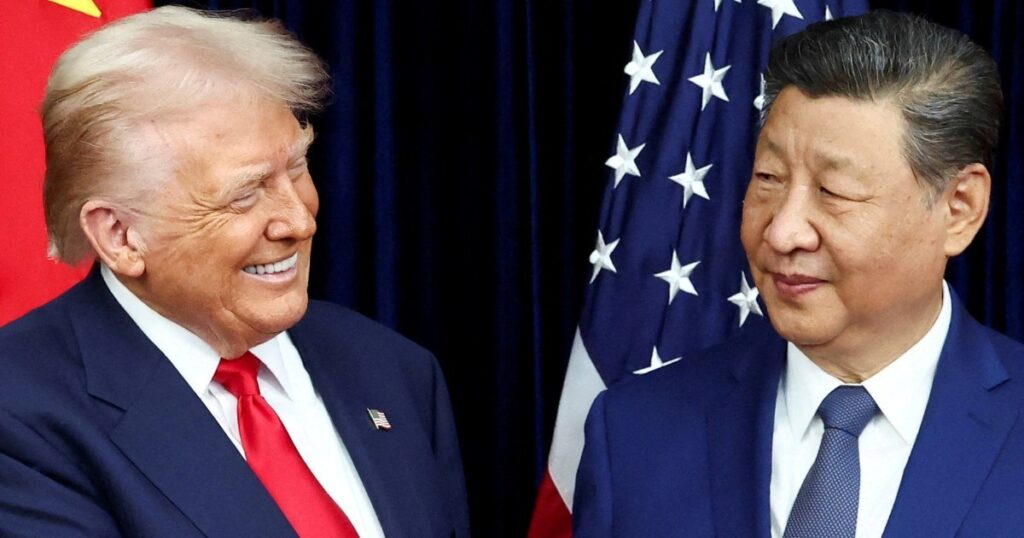
The upcoming trilateral meeting between US President Donald Trump, Chinese President Xi Jinping, and Russian President Vladimir Putin during the Asia-Pacific Economic Cooperation (APEC) summit is attracting significant global attention. This rare gathering of three of the world’s most powerful leaders sets the stage for discussions that could shape international relations and security dynamics in the coming years.
One of the central issues expected to be addressed is the future of nuclear arms control. With the New START treaty between the US and Russia nearing expiration, this meeting provides an opportunity to discuss the renewal or modification of this critical nuclear arms reduction agreement. China, as a growing nuclear power, is also keen to be involved in these talks, making the trilateral dialogue vital for modernizing global nuclear governance.
In addition to nuclear arms control, the US’s approach to the ongoing conflicts in the Middle East, particularly regarding Iran, is poised to be a major discussion point. The US has intensified its stance against Iran, which has raised concerns for both Russia and China due to their strategic and economic ties with Tehran. Resolving these tensions through diplomatic channels could be a key outcome sought by all three leaders.
Economic cooperation and trade will also feature in the talks. With global trade under strain from tariffs and protectionist policies, there is mutual interest among the US, China, and Russia to find pathways for economic stability and growth within the Asia-Pacific region. The APEC framework itself emphasizes collaboration on economic integration, making the trilateral talks a potential catalyst for renewed economic dialogue.
Security issues beyond nuclear treaties, such as cyber security, counterterrorism, and regional conflicts, are expected to be part of the broader agenda. Each country faces its own unique security challenges that often spill across borders, necessitating cooperative measures.
Observers note that the tripartite meeting is not just about resolving conflicts but also about managing competition. US-China-Russia relations have been marked by rivalry, but dialogue remains crucial to avoid unintended escalations and to promote global stability.
Human rights and democratic governance, although more contentious, could also be subtly addressed as these often underpin broader diplomatic relations.
Ultimately, this trilateral meeting at APEC is a high-stakes engagement where major geopolitical issues intersect. The outcomes could influence future alliances, treaties, and economic policies. Stakeholders worldwide await with anticipation to see how these leaders navigate complex challenges to foster peace, security, and cooperation in one of the most critical regions of the world.