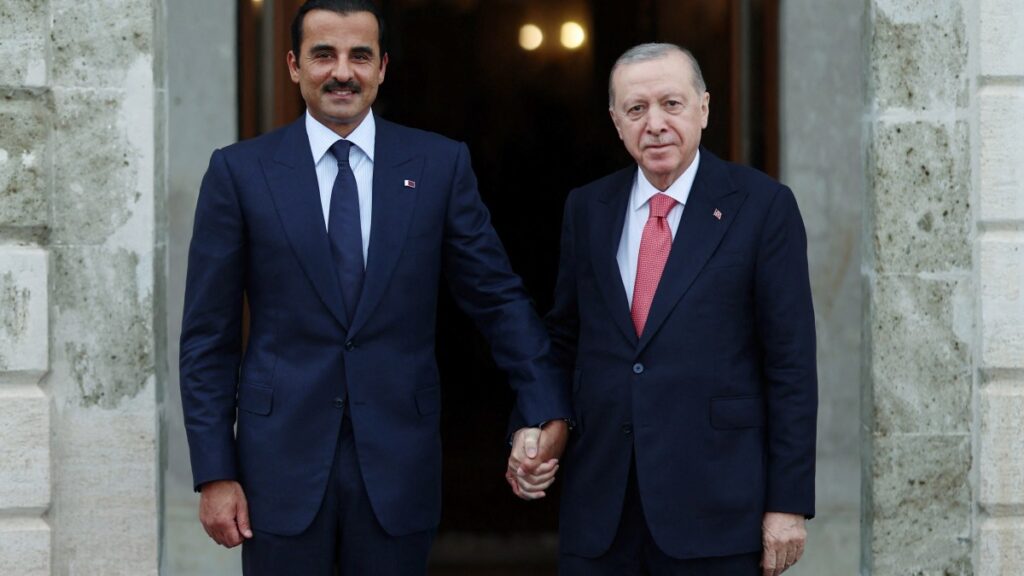
In a significant development in Middle Eastern geopolitics, Qatar and Turkiye have signed a mutual defence pact aimed at strengthening their security cooperation amid rising regional tensions. Analysts interpret this pact not as the foundation of an offensive military alliance, but rather as a strategic deterrent to potential attacks, particularly in the context of the ongoing US-Iran conflict that has escalated concerns in the region.
The agreement between Qatar and Turkiye marks a step towards closer military collaboration. Both countries have voiced the necessity to safeguard their national security interests given the complex and unstable geopolitical environment. With the US-Iran war creating a precarious security situation, the pact aims to ensure mutual support should either party face external threats.
This pact reflects a broader trend among Middle Eastern and neighboring countries seeking to bolster their defence ties in response to growing uncertainties. While details of the pact have not been fully disclosed, experts note its primary function as a deterrence mechanism, signaling to regional adversaries that attacks on one side would prompt a coordinated defensive response.
Qatar, an influential Gulf state with significant geopolitical leverage, and Turkiye, a key NATO member with strong regional ambitions, bring together complementary strategic capabilities. Turkiye’s military strength and Qatar’s wealth and diplomatic clout may create a balanced partnership focusing on defensive readiness rather than offensive operations.
Analysts also emphasize that the timing of the pact is crucial. The US-Iran conflict, characterized by proxy engagements and direct confrontations, has heightened risks of broader regional instability. By signing this pact, Qatar and Turkiye appear to be solidifying a security umbrella that discourages escalations near their borders.
This development may also reshape alliances and power dynamics in the Middle East. With Turkiye balancing between Western alliances and regional interests, and Qatar engaging in diplomatic mediation roles, their pact could influence broader diplomatic and military equations. The pact sends a message to both US and Iranian actors about a unified front of defence within this volatile theatre.
In conclusion, the mutual defence pact between Qatar and Turkiye is a strategic maneuver aimed at enhancing deterrence amid the volatile US-Iran war. It underscores a commitment to collective security, deterring aggression while maintaining a defensive posture. Observers will closely watch how this alliance influences regional security architecture and whether it prompts additional cooperative defence agreements in the Middle East.