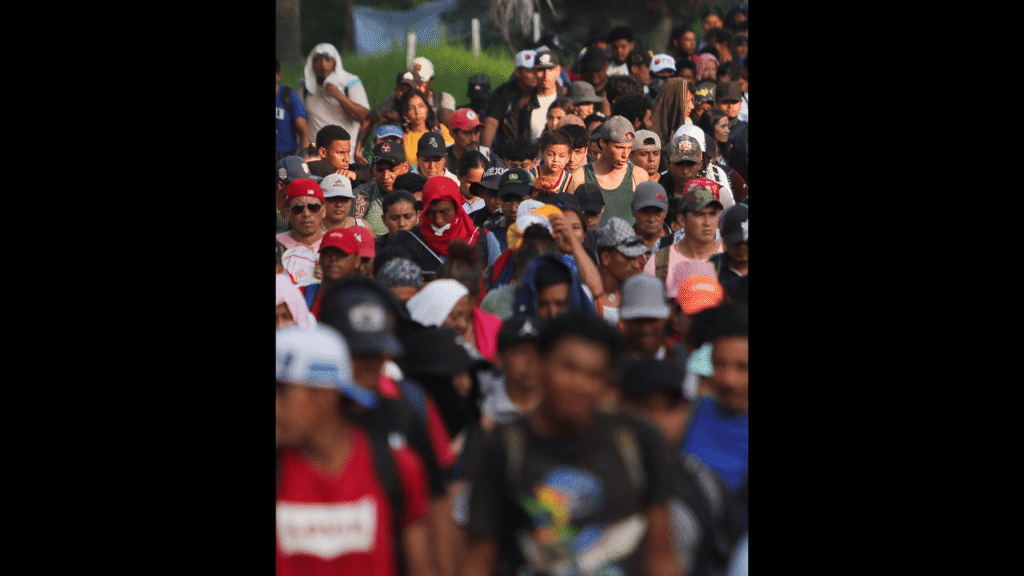
A migrant caravan consisting of over a thousand individuals has set off from southern Mexico, making its way toward the United States border. This movement comes on the heels of the recent midterm elections in the US, where Democrats secured significant wins. The caravan, composed of families, individuals, and children, is motivated by hopes for better economic opportunities, safety, and the possibility of asylum or legal status in the United States.
The caravan’s journey is both a humanitarian and political issue, capturing attention from immigration officials, advocacy groups, and politicians across the spectrum. Organizers of the caravan have cited the election results as a source of optimism, believing that the incoming Democratic leadership may adopt more accommodating immigration policies.
Historically, migrant caravans have formed as a collective response to violence, poverty, and unstable conditions in their home countries, primarily in Central America. Traveling in large groups provides some safety against crime and exploitation on the journey northward.
US border and immigration authorities are preparing for increased crossings and heightening security measures to manage the influx. The Biden administration has expressed a commitment to comprehensive immigration reform but faces challenges in balancing border security with humanitarian considerations.
Critics of the caravan warn about potential strains on resources and border infrastructure, arguing for strict enforcement and expedited processing of migrants. Meanwhile, supporters emphasize the need for empathy, legal pathways, and meaningful reform to address the root causes of migration.
The caravan’s advance is being closely followed by media worldwide, with debates intensifying around immigration policy, border security, and the political implications linked to the midterm election outcomes.
As the caravan approaches the US border, the situation remains fluid and complex. It highlights ongoing challenges and differing perspectives in the US immigration debate, encompassing economic, social, and humanitarian dimensions.
The United States continues to grapple with the balance between welcoming migrants seeking safety and prosperity and enforcing laws designed to regulate entry.
This caravan exemplifies the broader patterns of migration influenced by political developments both within the US and in the migrants’ home regions. The coming weeks will reveal how the government responds and what impact this movement will have on the future of US immigration policy.