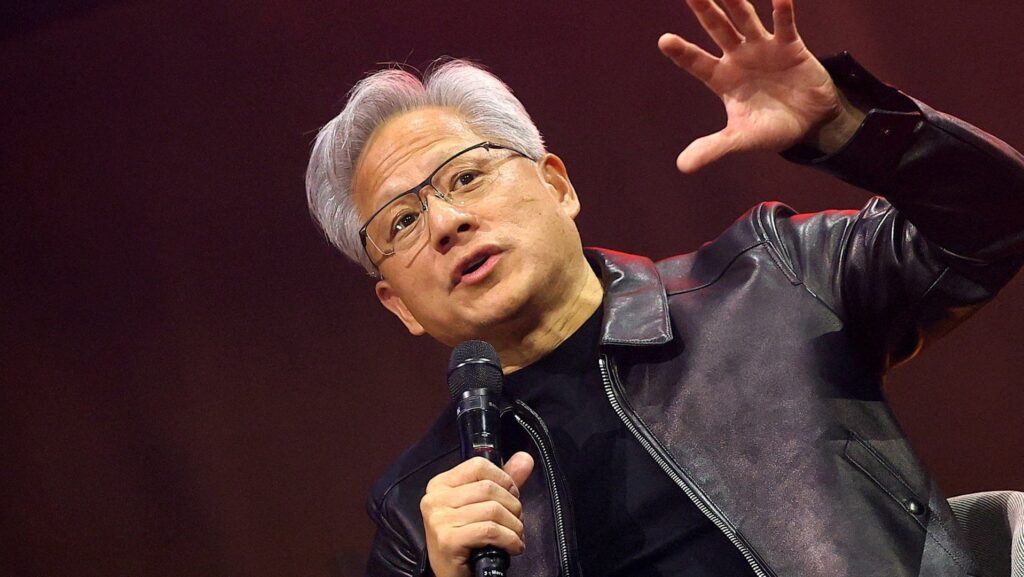
Former President Donald Trump has publicly defended Nvidia’s CEO Jensen Huang in the wake of allegations involving a suspected spy scandal. Trump told reporters that he believes Huang had no knowledge or involvement concerning claims that his alleged mistress was a suspected Chinese spy. The controversy has stirred significant media attention, highlighting concerns over foreign espionage activities targeting influential tech leaders.
Jensen Huang, co-founder and chief executive of Nvidia, is a prominent figure in the global technology sector, renowned for his leadership in the development of graphics processing units (GPUs) and contributions to artificial intelligence and computing technologies. Despite the allegations, Trump emphasized his confidence in Huang, who he perceives as a victim rather than a participant in any covert activities.
The allegations center around Huang’s purported relationship with a woman suspected of engaging in espionage on behalf of the Chinese government. The accusations have not been substantiated by any official investigation publicly at this time, and Nvidia has not issued a formal statement addressing these claims.
Trump’s defense came during a media briefing where he was asked about the scandal. He asserted that Huang’s reputation and dedication to American technology innovation should not be overshadowed by unproven accusations. According to Trump, the CEO’s track record of business success and patriotic contribution to the U.S. economic landscape warrant support amid these troubling reports.
Experts on intelligence and cybersecurity have noted that the allegations, if confirmed, could have serious implications for the U.S. technology industry, particularly given Nvidia’s critical role in advancing semiconductor technologies essential to national security and economic competitiveness.
However, until a thorough investigation is completed, the focus remains on verifying the factual basis of the claims and understanding the extent of any potential security breaches. The case underscores the challenges faced by corporations and government agencies in safeguarding sensitive information from foreign intelligence operations.
For now, Jensen Huang remains at the helm of Nvidia, continuing his leadership as the company navigates this difficult situation. Stakeholders, including investors and government officials, are closely monitoring developments, hoping for clarity and resolution.
Trump’s remarks add a layer of political support for Huang during a time when public perception and trust are critical. Whether this support will influence official investigations or public opinion remains to be seen.
In the broader context, the incident highlights the ongoing concerns about espionage and cybersecurity in an increasingly interconnected and technologically reliant world. It also reflects the delicate balance for CEOs and corporations in managing international relationships while protecting national interests.
As the story develops, both Nvidia and relevant authorities are expected to provide updates. Meanwhile, Trump’s statement serves as a prominent voice defending a major figure in American technology against potentially damaging allegations.