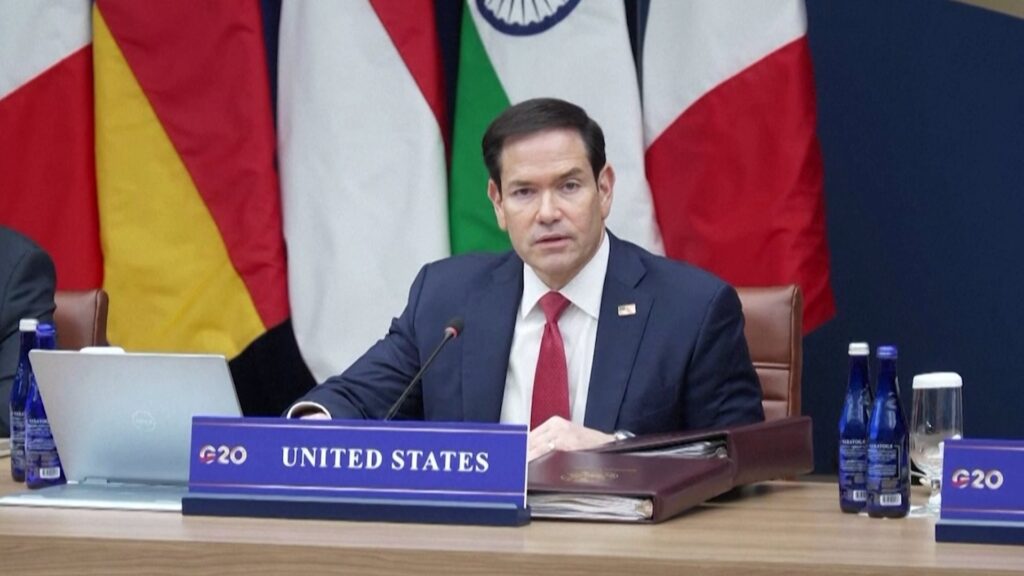
US Secretary of State Marco Rubio hosted pivotal talks at the G20 summit where economic collaboration and security were at the forefront of discussions. Rubio called on G20 officials to unite in addressing threats to the current global economic order, emphasizing a cooperative approach to ensure stability and growth across member nations. His call came amid heightened tensions sparked by the presence of Russian Foreign Minister Sergey Lavrov at the summit. Lavrov’s participation has been a point of contention due to ongoing geopolitical conflicts involving Russia, leading to a divided atmosphere among summit attendees.
During the talks, Rubio highlighted the importance of defending the international rules-based economic system from disruptive forces, which include aggressive economic policies and conflicts that destabilize markets and supply chains. He urged countries to uphold transparency, accountability, and open markets to foster resilience amid global economic uncertainties.
Meanwhile, Lavrov represents Russia at the G20 amidst widespread criticism and sanctions imposed on Russia by several G20 members in response to its actions in Ukraine. His presence underscored the diplomatic rifts within the group, with some countries advocating for continued dialogue while others called for stronger measures against Moscow.
The G20 meeting served as a platform for Rubio to also address issues such as inflation, energy security, and digital economy development. He stressed the need for a collective strategy to manage inflation pressures and promote sustainable energy policies that balance economic growth with environmental protection.
Energy security was a particularly contentious topic, as Russia is a major energy supplier and the ongoing conflict influences global energy markets. Rubio encouraged diversification of energy sources and investment in renewables to reduce dependency on politically unstable regions.
In addition to economic discussions, security concerns were prominent, with Rubio emphasizing the interconnected nature of economic and geopolitical stability. He urged the G20 to work collectively to counter threats posed by cyberattacks, misinformation, and other non-traditional security challenges that have far-reaching economic impacts.
Throughout the summit, Rubio sought to steer the dialogue towards constructive engagement despite the evident strains caused by Russia’s contentious policies and ongoing global conflicts. His leadership aimed to reinforce the G20’s role as a forum for addressing the world’s most pressing economic and security challenges through multilateral cooperation.
The presence of Lavrov amid rising tensions highlighted the fragile nature of international diplomacy in the current geopolitical landscape. As the G20 countries navigate these complexities, the summit underscored the critical need for dialogue, mutual understanding, and coordinated action to preserve economic stability and peace.
Looking ahead, the outcomes of the G20 talks hosted by Rubio will likely influence how member countries manage economic recovery and security threats in a rapidly evolving global environment. The summit reiterated the significance of unity in confronting shared challenges to build a more resilient and prosperous future for all.