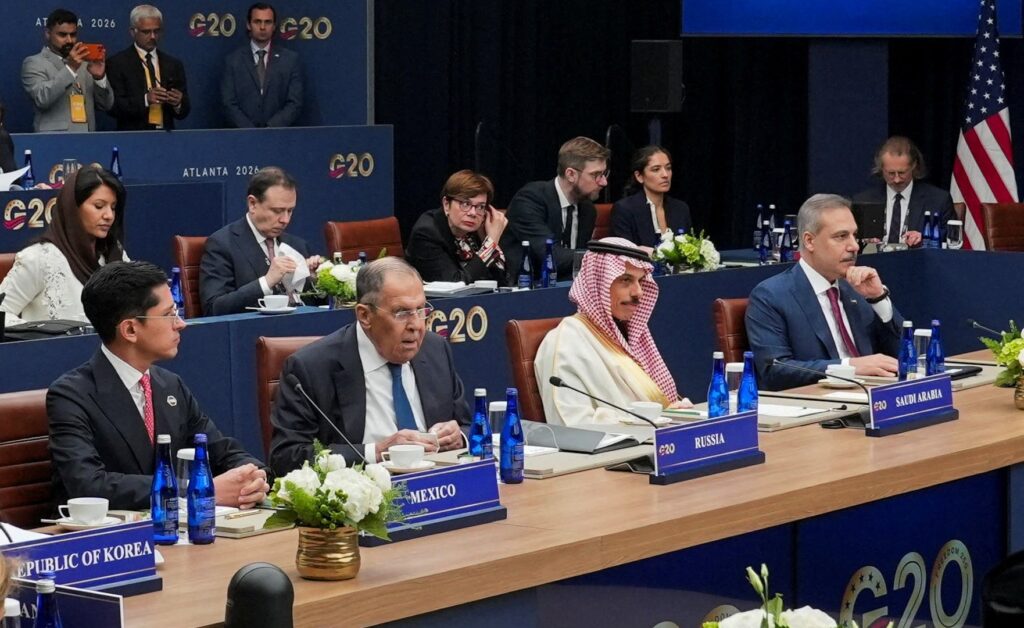
The recent G20 summit held in Atlanta witnessed a significant diplomatic incident as European leaders collectively refused to stand next to Russian Foreign Minister Sergey Lavrov for the traditional group photo. This move led to the unprecedented decision to drop the group photo altogether, underscoring the deep divisions among G20 members.
Sergey Lavrov, who remains under international sanctions, attended the summit despite widespread controversy. His presence was marked by visible rifts within the group, particularly concerning ongoing global conflicts and geopolitical crises.
Central to the discord were differing perspectives on the Iran war, disruptions in the Strait of Hormuz, and the ongoing conflict in Ukraine. The summit’s agenda highlighted these critical issues, yet consensus remained elusive.
European leaders expressed strong disapproval of Russia’s role in the Ukraine conflict, leading to their refusal to pose alongside Lavrov. This act signified a broader diplomatic isolation of Russia within key international forums.
The absence of the group photo — a symbolic act meant to signify unity and cooperation — reflected the fractured nature of international relations amid rising tensions. It also demonstrated Europe’s firm stance on upholding sanctions and diplomatic pressure against Russia.
Meanwhile, discussions at the summit emphasized the need for de-escalation in the Iran conflict and ensuring the security of vital maritime routes in the Strait of Hormuz. The disruptions there threaten global energy supplies and economic stability.
The G20 summit proceedings revealed how complex and fraught the global diplomatic landscape has become. Member countries grappled with balancing economic collaboration against political and ethical concerns.
The refusal by European leaders to share the spotlight with Lavrov sent a clear message: geopolitical actions have consequences, and international solidarity is contingent upon respect for territorial sovereignty and human rights.
Observers noted that this incident could set a precedent for future international gatherings, potentially redefining protocols when engaging with representatives of sanctioned states.
Despite the tensions, the summit continued with dialogues focused on resolving economic and security challenges. However, the group photo controversy overshadowed these efforts, drawing significant media and public attention.
Experts suggest that such symbolic gestures, while seemingly minor, play a crucial role in the conduct of diplomatic relations and global governance.
The Atlanta summit will be remembered not only for the topics discussed but also for the stark illustration of geopolitical divides shaping the current world order.
As global crises persist, international forums like the G20 must navigate an increasingly complex spectrum of alliances, conflicts, and strategic interests.
The incident underscores the ongoing challenge faced by global leaders: how to maintain dialogue and cooperation when underlying conflicts threaten the fabric of multilateralism.
In sum, the G20 summit’s decision to forego the group photo in response to European leaders’ boycott serves as a potent symbol of contemporary diplomatic tensions and the evolving nature of international relations in an era of geopolitical uncertainty.