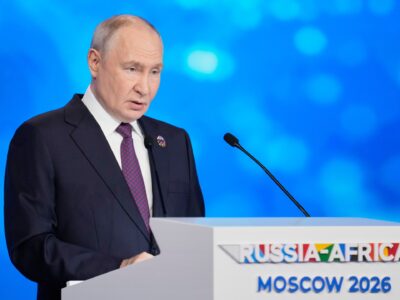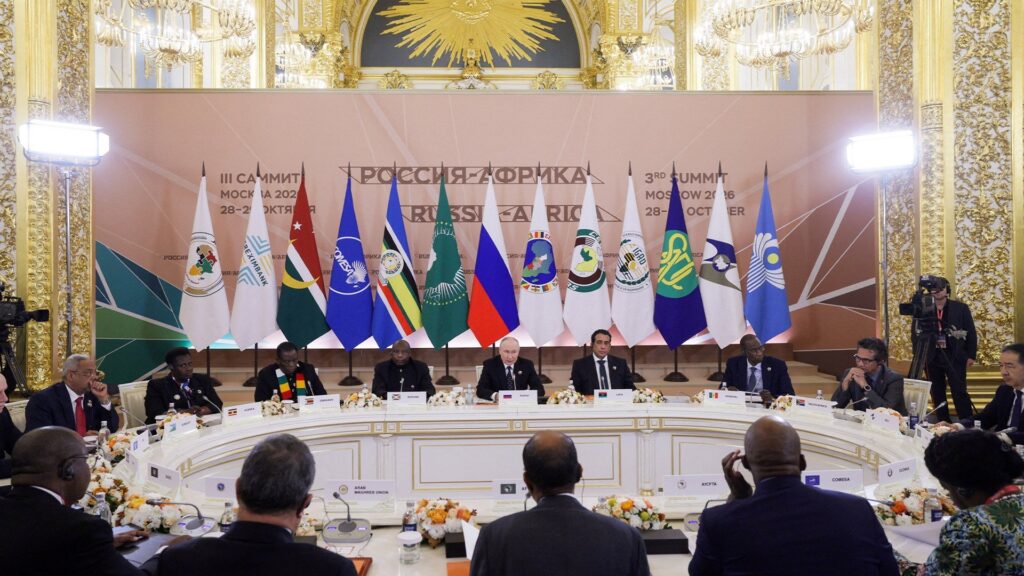
In a significant diplomatic address, Russian President Vladimir Putin positioned Russia as the African continent’s prime partner, distinctly separating Moscow’s intentions from those of the Western nations, which he referred to as the ‘colonial’ West. Speaking to leaders from dozens of African countries, Putin emphasized the strong partnership Moscow seeks to cultivate with Africa, highlighting cooperation based on mutual respect and sovereignty.
Putin’s remarks come amidst growing global competition for influence and resources in Africa. The Russian president criticized Western countries for their historical and ongoing exploitative relationships with the continent, portraying Russia as an alternative that respects Africa’s independence and developmental choices.
During the summit, Putin outlined various initiatives aiming to boost economic ties, infrastructure development, and security collaboration between Russia and African countries. He stressed that Moscow’s engagement is not driven by colonial ambitions but by a desire to support the continent’s progress through equal partnerships.
The Russian leader also underscored Moscow’s commitment to working with African nations in sectors such as energy, mining, agriculture, and technology transfer. These efforts are part of a broader strategy to enhance Russia’s geopolitical presence while promoting sustainable development in Africa.
African leaders attending the summit appeared receptive to Putin’s message, indicating a willingness to diversify international partnerships beyond traditional Western allies. Many viewed Russia’s approach as an opportunity to advance national interests without the strings often associated with Western aid and investment.
However, analysts caution that Moscow’s increased activity in Africa is also motivated by strategic interests, including access to natural resources and military influence. The characterization of Russia as a non-colonial partner is part of a narrative intended to contrast with Western powers’ historical colonialism and contemporary economic policies.
This diplomatic engagement reflects a larger pattern of Russia seeking to expand its global footprint through partnerships that challenge Western dominance. By portraying itself as a respectful and equal partner, Russia aims to cultivate long-term relationships that benefit both the continent and its own strategic objectives.
The summit’s outcomes included agreements on joint ventures, educational exchanges, and increased trade, signaling a commitment to deepening ties. Furthermore, Russia proposed new frameworks for African countries to collaborate more closely on global issues such as climate change and security challenges.
Putin’s address and the subsequent discussions at the summit marked a notable moment in Russia-Africa relations, reinforcing Russia’s portrayal as an alternative partner amid the shifting dynamics of global power and cooperation. This stance contrasts with the legacy of Western involvement in Africa, which is often criticized for perpetuating dependency and inequality.
Overall, Russia’s positioning as Africa’s best partner highlights a strategic effort to redefine international partnerships on the continent and influence its future trajectory, raising questions about the long-term implications for African development and sovereignty.