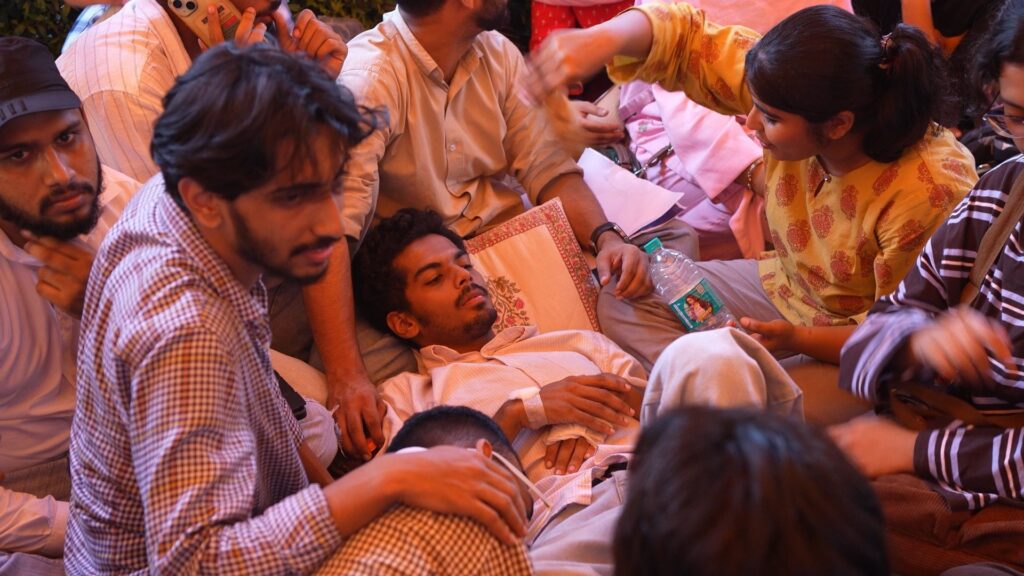
In a determined display of activism, students at Jamia Millia Islamia University in New Delhi have initiated a hunger strike to demand the restoration of their student union. The students assert that the union is essential for representing their voices and safeguarding their rights within the campus environment.
The Jamia Millia Islamia, a prominent central university in India’s capital, has long been a hub of student activism. However, in recent years, the student union body was dissolved, leading to discontent and a sense of deprivation among the student community.
The hunger strike commenced as a peaceful form of protest against what the students describe as a suppression of democratic rights on campus. They emphasize the role of a student union in voicing student concerns about academic, social, and administrative issues.
Participants in the hunger strike include students from various faculties and backgrounds, unified in their cause. Their demands are straightforward: the reinstatement of an autonomous student union that can act without interference, providing a legitimate platform for dialogue with the university administration.
University authorities have not released an official statement regarding the protest yet, but the hunger strike has drawn attention from media outlets, human rights activists, and student organizations across India.
Historically, student unions have played a pivotal role in Indian universities, advocating for educational reforms, student welfare, and broader social issues. The absence of such a platform has left students feeling marginalized and voiceless.
The strike has garnered solidarity from several external groups and other universities, highlighting a nationwide concern about the declining space for student representation.
Despite the physical strain, the striking students remain resolute, underscoring their belief that the struggle for a student union is crucial for democracy within the educational institutions.
This ongoing protest at Jamia Millia Islamia reflects wider debates about student rights, governance, and participation in India’s higher education sector, shining a light on the challenges and aspirations of today’s student activists.