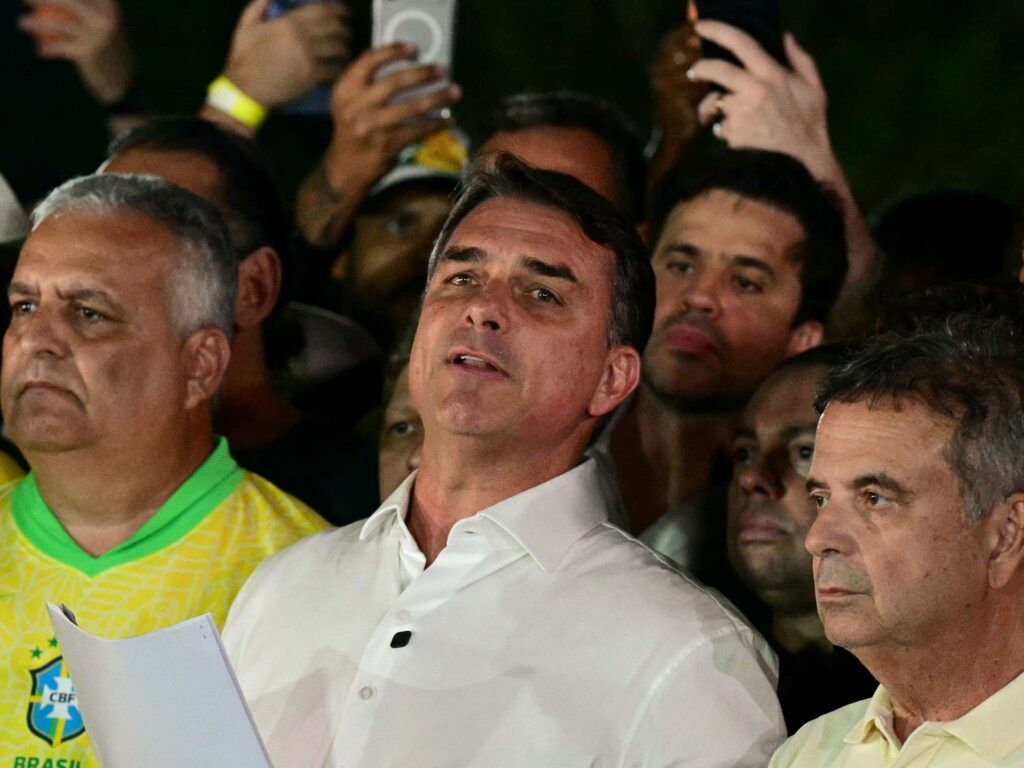
In a dramatic turn of events following his recent election defeat, Flavio Bolsonaro, son of former Brazilian President Jair Bolsonaro, has reportedly fled Brazil. This development comes just one day after Brazil’s Supreme Court ordered him to surrender his passports as part of a money-laundering investigation involving his financial activities.
Flavio Bolsonaro’s departure from Brazil has sparked significant political and legal discussions both domestically and internationally. The timing of his exit, closely linked to the Supreme Court’s order, suggests a strategic move to avoid potential legal repercussions amid the ongoing probe.
The money-laundering investigation that has led to the court’s order involves allegations of illicit financial transactions and attempts to obscure the origins of funds. Authorities have been intensifying their scrutiny on Bolsonaro and his associated networks, aiming to expose any financial misconduct linked to his tenure and personal dealings.
In a related announcement, the United States government has reportedly stated that it will grant Flavio Bolsonaro a visa, allowing him to enter and remain in the country. This decision is seen as a significant development, providing the former political figure with a potentially safer haven amid the mounting legal pressures in Brazil.
The US stance on granting the visa underscores the complex interplay between international diplomacy and domestic legal matters. While Brazil pursues its lawful investigations, Flavio’s move to the US adds layers of geopolitical and legal complexity to the situation.
Domestic reactions in Brazil have been mixed, with some factions viewing Flavio’s departure as an evasion of justice, while supporters argue it is a protective measure against political persecution. This event has further polarized the already divided Brazilian political landscape.
Legal experts note that Flavio Bolsonaro’s fleeing the country does not exempt him from legal proceedings, as international cooperation and extradition treaties could come into play depending on the evidence and charges filed.
The Supreme Court’s involvement signals the seriousness of the allegations and the judiciary’s determination to uphold the rule of law regardless of political affiliations. This high-profile investigation may pave the way for further inquiries into financial irregularities involving prominent figures in Brazilian politics.
As this situation develops, observers will be keenly watching how the Brazilian government navigates the delicate balance between enforcing judicial orders and managing the political fallout. Similarly, international reactions and the US government’s role in offering sanctuary will be scrutinized.
Flavio Bolsonaro’s case exemplifies the broader challenges Brazil faces in tackling corruption and ensuring accountability among its elite. It also highlights the potential for legal systems to intersect with political dynamics in a highly charged environment.
With Flavio now outside Brazil’s borders and the legal process ongoing, the coming weeks are expected to be critical in determining his future, the progress of the investigations, and the broader implications for Brazilian politics and governance.
The unfolding story serves as a reminder of the persistent issues of transparency and justice within Brazil, as well as the complexities of international legal cooperation in politically sensitive cases. It remains to be seen how these developments will influence public trust and the political climate moving forward.