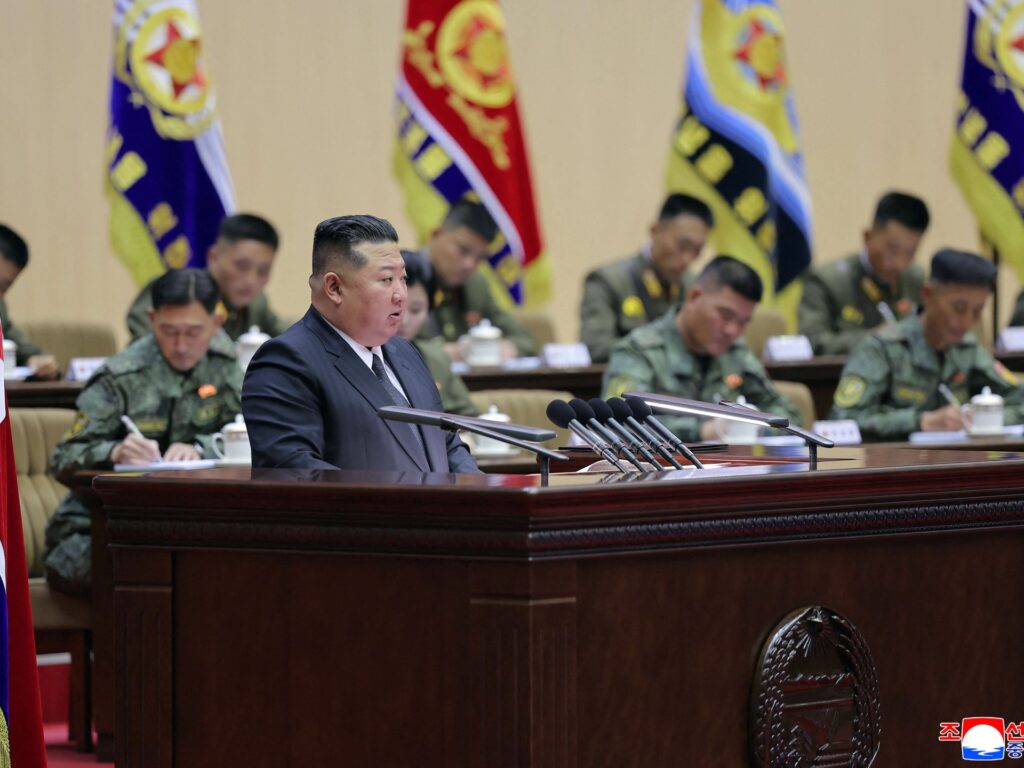
In a significant diplomatic event, North Korea’s leader Kim Jong Un has made a notable visit to China by crossing into the Chinese border city of Dandong using the newly opened New Yalu River Bridge. This bridge, which was officially inaugurated around a week ago, marks a key infrastructural development between the two neighboring countries.
The visit underscores the ongoing relationship between North Korea and China, two historically allied nations with deep economic and strategic ties. The New Yalu River Bridge replaces an older, less capable crossing and represents enhanced connectivity and cooperation. By choosing this route for his journey, Kim Jong Un highlights the importance of this new link in facilitating stronger bilateral relations.
The New Yalu River Bridge connects Dandong in China with Sinuiju in North Korea, serving as a crucial artery for trade, diplomacy, and travel. This bridge is expected to boost commerce by easing the movement of goods and people, potentially revitalizing economic exchanges that have been hampered by various sanctions and logistical challenges over recent years.
Kim Jong Un’s visit to China via the new bridge is also politically symbolic, showing a reaffirmation of the friendship and partnership between the two countries. China remains North Korea’s largest trading partner and a key diplomatic ally, providing critical support amidst the isolation faced by Pyongyang on the global stage.
The state visit involved high-level talks aimed at strengthening cooperation on economic, security, and political fronts. Both nations have faced increasing pressure from international communities, and this visit signals a united front and willingness to collaborate more closely.
The timing of the bridge’s opening and Kim’s immediate use of it for international travel indicate the strategic planning behind infrastructure investments and their role in diplomacy. As North Korea continues to navigate complex international dynamics, dependable access routes such as the New Yalu River Bridge will play a vital role.
Experts suggest that enhanced connectivity via this bridge could encourage more frequent exchanges between the two neighbors, potentially leading to economic benefits on both sides of the border. For China, revitalizing trade flows with North Korea supports regional stability and economic expansion, while North Korea benefits from increased access to essential goods and external markets.
Furthermore, this development comes amid discussions about denuclearization and regional security, where China’s involvement is crucial. The visit could pave the way for more dialogues aimed at peace and stability on the Korean Peninsula.
The opening of the New Yalu River Bridge can be seen as a physical and symbolic milestone in China-North Korea relations, emphasizing infrastructure as a tool for diplomacy and cooperation. Kim Jong Un’s journey marks a hopeful chapter for future engagements centered on mutual benefit and regional harmony.
Overall, Kim Jong Un’s crossing into China via the New Yalu River Bridge is more than a mere transit; it is a powerful statement about renewed ties and strategic partnership, promising a new era of interaction between North Korea and China.