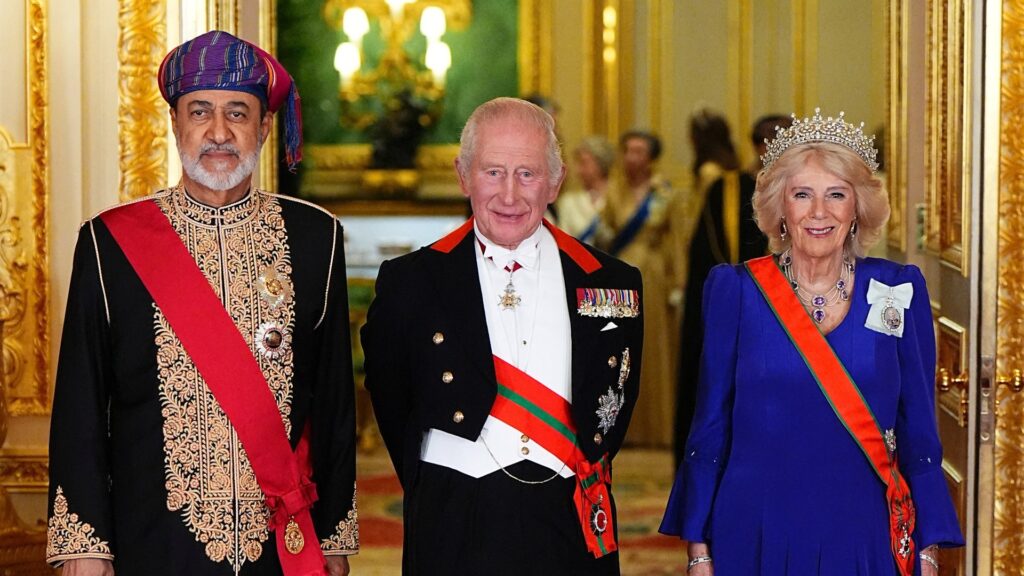
In a significant diplomatic event, Britain’s King Charles III warmly welcomed Sultan Haitham bin Tariq of Oman during a state visit—the first by an Omani ruler to the UK in 44 years. The visit marks a milestone in the strengthening of UK-Oman relations, spotlighting longstanding historical ties and mutual interests.
The state visit took place amid a backdrop of growing cooperation in several sectors, including trade, security, and cultural exchange. King Charles III, known for his commitment to interfaith dialogue and global cultural respect, underscored this by quoting Prophet Muhammad in his welcoming speech, a gesture that resonated deeply with Sultan Haitham and highlighted the shared values between the two nations.
King Charles III’s speech emphasized the importance of friendship and respect among nations, drawing on the wisdom of the Prophet Muhammad to convey themes of peace and mutual understanding. This rare inclusion of a prophetic quote in a royal welcome underscored the significance of the visit and the commitment to fostering stronger relationships in a diverse and interconnected world.
Oman, a strategic Gulf nation, has historically played a crucial role in regional diplomacy and trade, and its relationship with the UK dates back centuries. Sultan Haitham bin Tariq’s visit aimed to reaffirm these bonds and explore new avenues for collaboration, particularly in emerging areas such as renewable energy and technological innovation.
The 44-year gap since the last state visit by an Omani ruler underscores the evolution and renewal of diplomatic ties between the two countries. The visit included various official ceremonies, bilateral meetings, and cultural events designed to celebrate this renewed partnership.
Economic discussions during Sultan Haitham’s visit focused on expanding trade investments and joint ventures that could benefit both nations. There was also emphasis on security cooperation, reflecting common interests in maintaining stability in the Gulf region and beyond.
Cultural exchanges were a key part of the visit, highlighting the historical connections and shared heritage between Britain and Oman. Events included exhibitions of Omani art and history, which provided British audiences with insights into Oman’s rich cultural tapestry.
The visit also opened dialogues on environmental priorities. Both leaders recognized the urgency of addressing climate change and expressed mutual commitment to sustainability, particularly through investments in renewable energy and conservation efforts.
King Charles III’s invocation of the Prophet Muhammad’s teachings is viewed as a notable expression of respect for Oman’s Islamic heritage and an acknowledgment of the role of faith in international relations. This moment in the speech was widely praised for its sensitivity and depth.
The state visit concluded with joint statements affirming the two countries’ dedication to continued friendship and cooperation. As global politics face numerous challenges, the UK and Oman have positioned themselves as partners advocating for peace, cultural respect, and collaborative progress.
In summary, Sultan Haitham bin Tariq’s visit to the UK under King Charles III’s invitation stands out as a landmark event renewing UK-Oman ties. It blends tradition with forward-looking partnership and highlights the importance of interfaith understanding in contemporary diplomacy. This visit not only celebrates historic connections but also charts a path for future joint endeavors in various strategic fields.