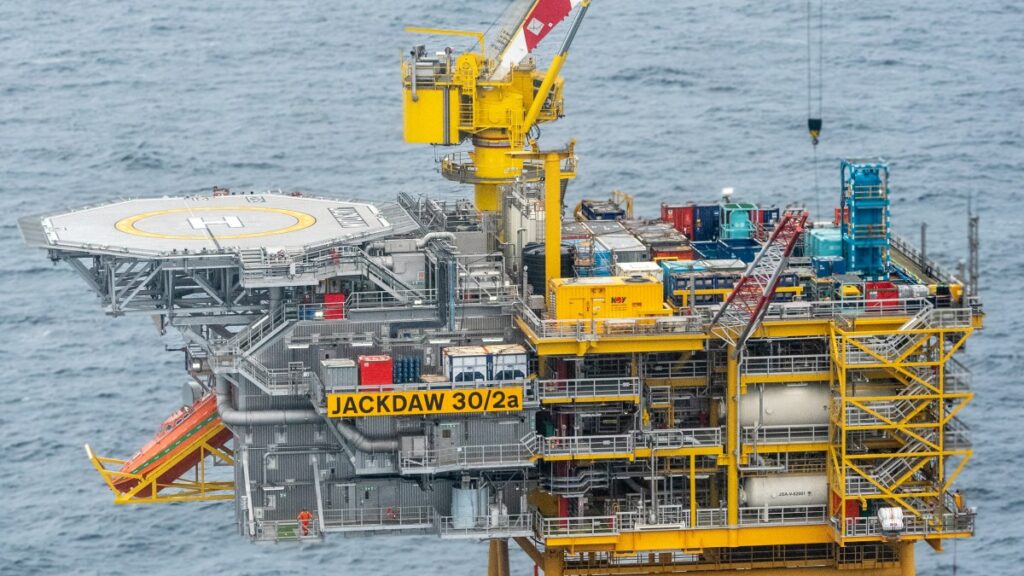
The UK government has officially approved the development of the Jackdaw gasfield in the North Sea, marking a significant move in the country’s energy sector. This decision has been met with a mixture of reactions, ranging from support within the industry to strong criticism from left-wing politicians and environmental groups.
The Jackdaw gasfield, located approximately 150 miles off the northeast coast of Scotland, is expected to produce substantial quantities of natural gas, contributing to the UK’s energy security and economic growth. Proponents argue that this development will create jobs, support local economies, and reduce reliance on imported energy.
However, the approval has ignited fierce debates concerning environmental impact and climate commitments. Left-wing politicians have voiced their concerns, arguing that expanding fossil fuel infrastructure contradicts the UK’s ambitious climate goals, particularly its commitment to achieving net-zero greenhouse gas emissions by 2050. They warn that such projects lock the country into decades of continued fossil fuel dependence.
Environmentalists have echoed these criticisms, emphasizing the urgent need to transition to renewable energy sources rather than investing in new fossil fuel extraction. Campaigners argue that the development of the Jackdaw gasfield could lead to increased carbon emissions and undermine global efforts to combat climate change.
In response, government officials have stated that the Jackdaw project aligns with a balanced energy strategy that prioritizes energy security while gradually increasing investment in renewables and low-carbon technologies. They emphasize that natural gas will play a crucial role as a bridging fuel during the transition from coal and oil to cleaner energy sources.
The project is expected to involve significant technological innovation aimed at minimizing environmental impact, including strict regulatory oversight to ensure adherence to safety and environmental standards. The developers have pledged to employ carbon management technologies and invest in offset initiatives.
Despite these reassurances, opposition groups remain unconvinced, staging protests and calling for the government to reconsider its approval. They continue to press for a faster shift away from fossil fuel-based energy production towards sustainable alternatives like wind, solar, and tidal energy.
The decision to proceed with the Jackdaw gasfield encapsulates the wider challenges faced by many countries balancing immediate energy needs with longer-term sustainability goals. As global energy demand grows amidst geopolitical uncertainties, governments must navigate complex trade-offs between economic development, energy security, and environmental responsibility.
This development also sparks a broader discussion about the future direction of UK energy policy and the extent to which fossil fuels should remain part of the energy mix during the transition to greener solutions. Its approval will likely influence investment patterns, market dynamics, and the pace of innovation within the energy sector.
The Jackdaw gasfield approval story highlights the critical crossroads at which the UK and the world stand concerning energy and climate policy. It underscores the urgent need for comprehensive strategies that balance growth with sustainability, ensuring a resilient and environmentally responsible energy future for all.