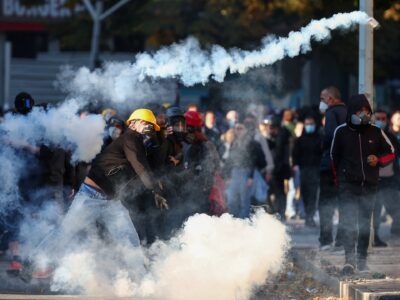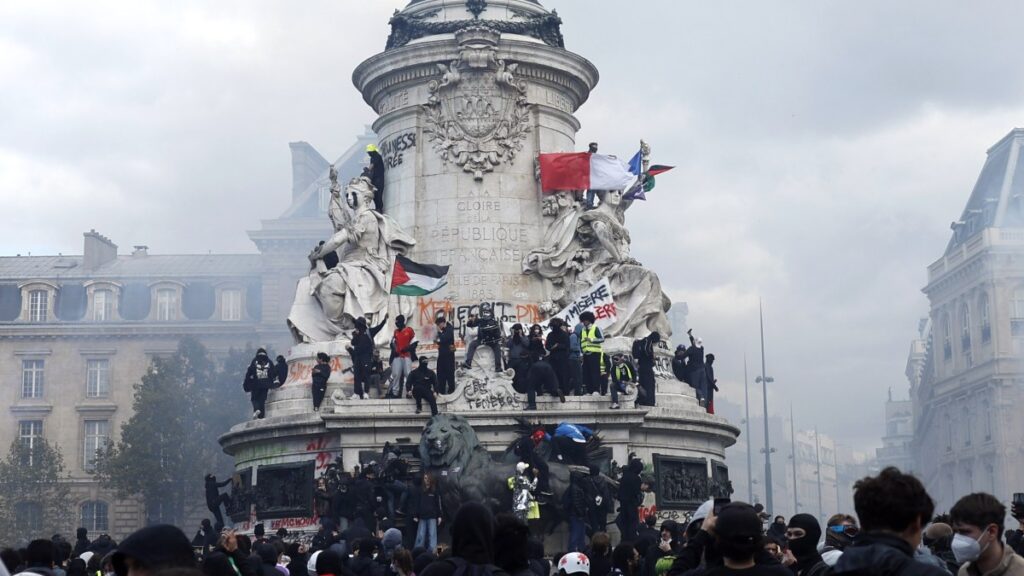
In recent weeks, France has witnessed an unprecedented wave of school protests that have rapidly escalated into a broader political crisis. What began as student demonstrations over education reforms has now united a diverse coalition including the notorious ‘yellow vest’ movement supporters, amplifying the unrest and underscoring widespread dissatisfaction across multiple social strata.
The catalyst for these protests was a set of proposed educational reforms that students argue threaten their future opportunities and the quality of their education. These reforms, viewed as a government attempt to implement austerity measures, have struck a nerve, sparking outrage among young people who feel their voices are being ignored in decisions that directly affect them.
However, the movement quickly expanded beyond student concerns. The joining of the ‘yellow vests’—a group originally galvanized by fuel tax hikes and economic grievances—has transformed these protests into a potent symbol of widespread public discontent. This alliance has brought together a multi-generational protest base, from students to older citizens, unified by shared frustrations about declining living standards, rising inequality, and a perceived disconnect between the government and ordinary citizens.
This broad coalition is fueling the political crisis in France. The government now faces the dual challenge of addressing both educational grievances and the deeper socio-economic issues that the protests highlight. The unrest has disrupted daily life, with frequent strikes, road blockades, and school shutdowns, placing significant pressure on President Emmanuel Macron’s administration.
The protests have exposed underlying tensions about social justice, economic policy, and the role of government in citizens’ lives. Many see the current unrest as symptomatic of a wider crisis of governance and representation in France, where large segments of the population feel disenfranchised and marginalized.
Political analysts note that the situation risks further polarization, with the government caught between the demands of protestors and the need to maintain order and stability. The protests have also reignited debates about the future of France’s social model, welfare state, and public services.
In response, some government officials have called for dialogue and concessions, while others advocate for a tougher stance to restore order. The outcome of this crisis remains uncertain, but its emergence highlights deep societal divisions and the challenges facing democratic governance in times of economic strain.
Ultimately, France’s school protests have become much more than a dispute over education policy. They have morphed into a symbol of national discontent, reflecting broader anxieties about economic insecurity, social inequality, and political representation. How the government navigates this crisis will likely shape the country’s political landscape for years to come.