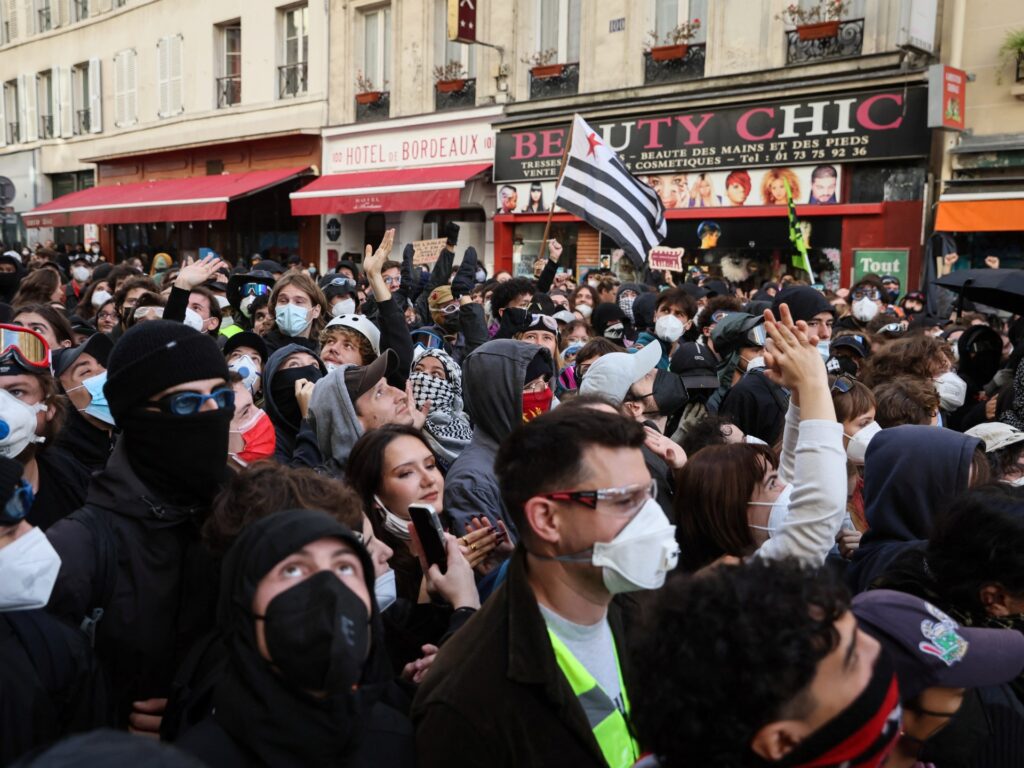
Protests originally sparked in mid-September at various schools have rapidly evolved into widespread demonstrations across France, now poised to expand further with the impending involvement of the ‘yellow vest’ movement. What began as localized unrest addressing specific issues within educational institutions has grown to encompass broader public discontent over economic and social grievances.
The initial wave of protests, ignited by students, highlighted deep concerns about education reforms, economic inequality, and youth employment challenges. These concerns resonated beyond school walls, drawing in a diverse coalition of citizens dissatisfied with government policies and social inequities.
As the demonstrations spread to major cities and towns around the country, the movement has taken on a more expansive character. Participants are voicing frustrations over rising living costs, tax burdens, and a perceived disconnect between political leaders and ordinary citizens. The potential entry of the ‘yellow vest’ activists—a group known for their distinctive high-visibility jackets and strong opposition to government fiscal policies—signals a possible intensification of the protests.
The ‘yellow vest’ movement initially emerged in late 2018 in response to fuel tax hikes but soon grew into a broader social movement marked by calls for economic justice, improved public services, and political reform. Their anticipated participation is expected to bring increased visibility and momentum to the ongoing demonstrations.
French authorities have responded with heightened security measures in key protest areas to manage escalating tensions and ensure public safety. While the government has acknowledged the legitimacy of certain protester grievances, officials have urged for dialogue and peaceful resolution to prevent disruption and violence.
Analysts note that the convergence of these protests underscores a growing polarization within French society, reflecting deep-rooted concerns about economic disparity and governance. The unfolding situation presents a significant challenge for President Emmanuel Macron’s administration, which faces mounting pressure to address the underlying causes driving civil unrest.
The expansion of the protests beyond student groups to encompass a broader demographic coalition suggests sustained mobilization and a potential turning point in French social movements. Observers continue to monitor developments closely, as the nation’s trajectory may hinge on the government’s response to these multifaceted demands and the protesters’ capacity to maintain momentum.
In summary, what started as school-based demonstrations have escalated into a nationwide movement capturing a wide spectrum of societal frustrations. With the ‘yellow vests’ poised to join, the protests could significantly impact France’s political and social landscape in the near future.