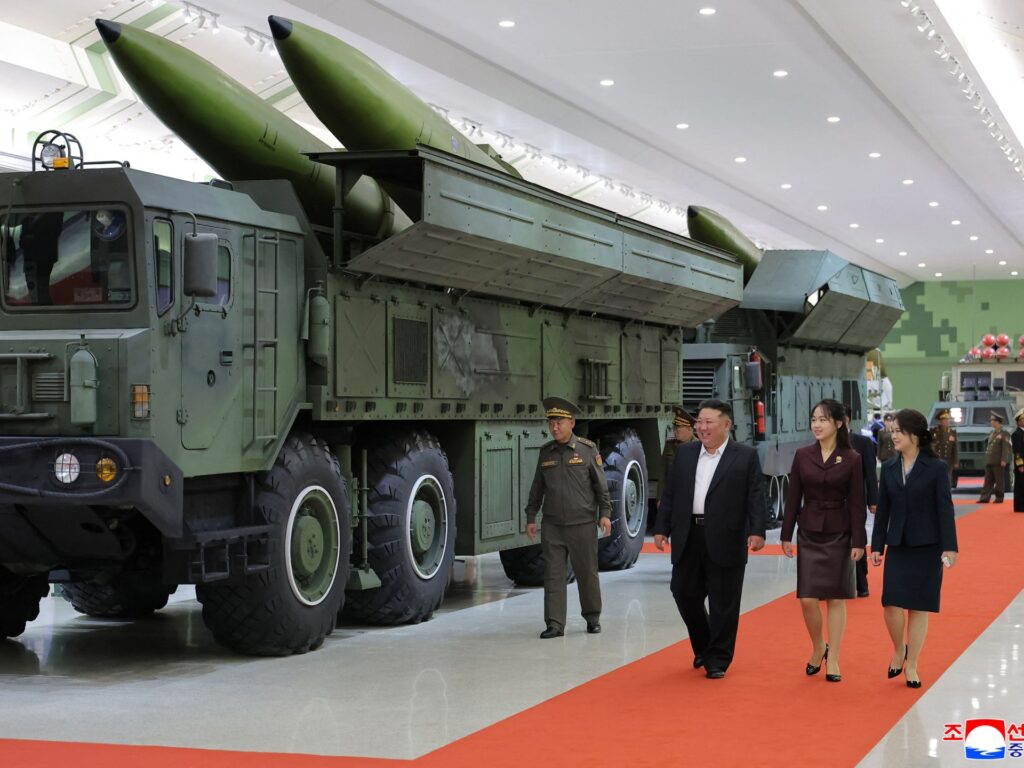
North Korea recently conducted tests of two submarine-launched ballistic missiles (SLBMs), according to reports from the state-run Korean Central News Agency (KCNA). This development highlights Pyongyang’s growing focus on strengthening its strategic military capabilities and enhancing its regional deterrent posture.
The missile tests underline North Korea’s commitment to expanding its arsenal of nuclear-capable weapons that can be launched from underwater platforms. Submarine-launched missiles offer significant tactical advantages, chiefly their ability to remain concealed and mobile, making it more challenging for adversaries to detect and preemptively neutralize a potential strike.
KCNA emphasized that these tests are part of ongoing efforts to bolster the country’s war deterrence capacity against perceived external threats, particularly from the United States and its allies in the region. Pyongyang has consistently stated that the development of its missile program is defensive and necessary for safeguarding national sovereignty.
The two tested missiles reportedly demonstrated advanced capabilities, showcasing North Korea’s technological progress in missile range, accuracy, and launch mechanisms. Experts suggest the tests may also be intended to send a strategic message amid heightened tensions on the Korean Peninsula and broader geopolitical shifts in East Asia.
Submarine-launched ballistic missiles represent a significant leap in North Korea’s military technology. Unlike land-based missiles that are more vulnerable to detection and destruction, SLBMs afford Pyongyang a second-strike capability, ensuring retaliation potential even after an initial attack.
The international community, particularly countries in the Asia-Pacific region, have closely monitored North Korea’s missile developments, often condemning such tests as provocations that destabilize regional security. Various United Nations Security Council resolutions have sought to curtail Pyongyang’s ballistic missile activities through sanctions and diplomatic pressure.
Despite international pushback, North Korea continues to prioritize its weapons programs, viewing them as essential to deterrence and bargaining power on the global stage. The submarine missile tests further complicate the strategic calculus for neighboring countries like South Korea and Japan, which rely heavily on extended deterrence guarantees provided by the United States.
Analysts believe North Korea’s SLBM tests reflect a strategic shift toward diversifying its nuclear delivery systems to enhance survivability and survivorship. This aligns with the broader trend of North Korea seeking to ensure a credible deterrence that can withstand evolving military threats.
In summary, North Korea’s recent launch of two submarine-launched ballistic missiles marks a critical advancement in its military capabilities. These developments underscore the regime’s determination to maintain a credible war deterrent and assert its strategic autonomy in a region marked by complex security challenges.