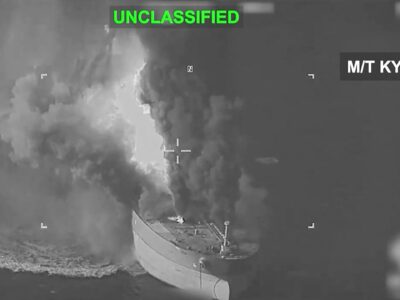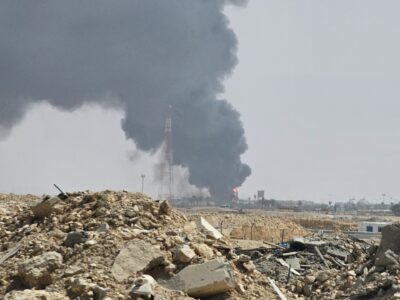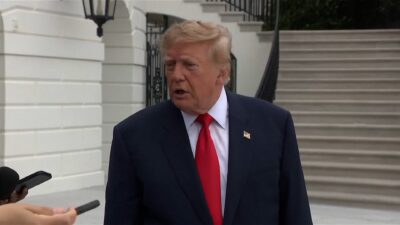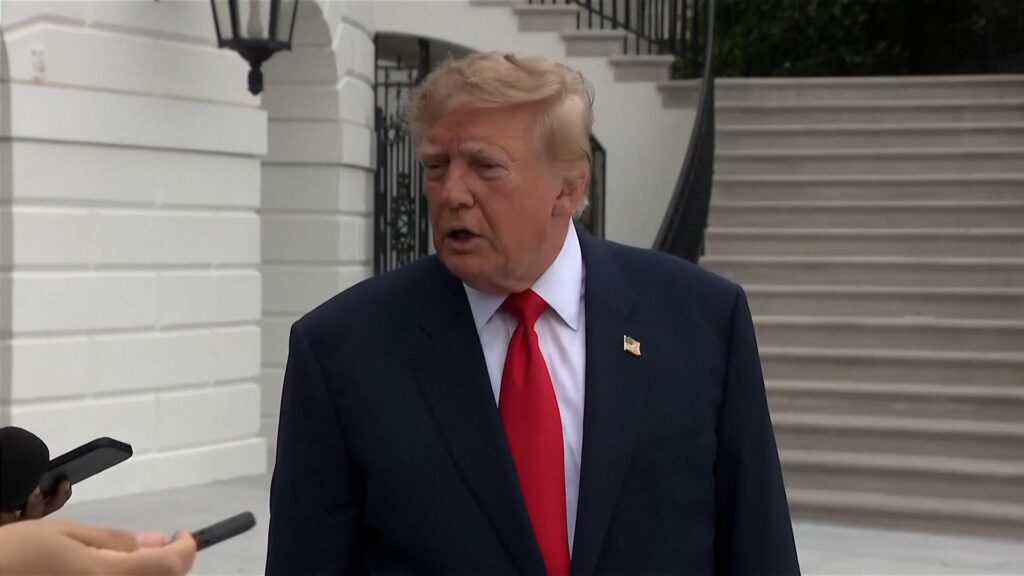
In a significant development in Middle Eastern geopolitics, President Donald Trump has indicated that the United States ‘may’ join Saudi Arabia in its military strikes against the Houthi rebels in Yemen. This announcement came in the wake of a recent attack on Riyadh’s airport, which has heightened tensions and raised security concerns in the region.
The Houthi movement, a Shiite-led rebel group based in northern Yemen, has been engaged in a prolonged conflict against the internationally recognized Yemeni government, which is backed by a coalition led by Saudi Arabia. The conflict has drawn international attention due to its severity and the humanitarian crisis it has precipitated.
The attack on Riyadh’s airport, claimed by the Houthis, was widely condemned as an act of aggression targeting civilian infrastructure. In response, Saudi Arabia launched a series of airstrikes aimed at Houthi positions within Yemen, escalating the conflict further.
President Trump’s statement expressing the possibility of US involvement marks a potential shift in American foreign policy in the region. While the US has provided logistical and intelligence support to the Saudi-led coalition in the past, direct participation in strikes represents a more active military engagement.
Analysts suggest that US involvement could be driven by multiple factors, including protecting strategic interests in the region, ensuring the security of key allies like Saudi Arabia, and countering Iranian influence, as Iran is believed to support the Houthi rebels.
Critics of the Yemen conflict highlight the devastating humanitarian impact, with millions suffering from famine, disease, and displacement. Human rights organizations have repeatedly called for an end to the hostilities and a political resolution.
The US administration’s potential decision to join Saudi strikes has sparked debate domestically and internationally. Supporters argue that it would help stabilize the region and support an ally, while opponents caution against deeper involvement in a complex civil war.
This development underscores the fragile security environment in the Middle East and the risks of escalation. It also reflects ongoing challenges in addressing terrorism, regional rivalries, and governance issues in Yemen.
As the situation evolves, the international community watches closely for further announcements from the US and Saudi Arabia. The priority remains to find a sustainable peace solution that addresses the root causes of the conflict and alleviates the humanitarian crisis.
In summary, President Trump’s indication that the US ‘may’ join Saudi strikes against the Houthis following the Riyadh airport attack signals a potential intensification of US military engagement in Yemen. This move carries significant implications for regional stability, international relations, and humanitarian conditions on the ground.
Ongoing diplomatic efforts and discussions will be critical in shaping the conflict’s trajectory and ensuring that any military action is coupled with a commitment to peace and reconstruction.